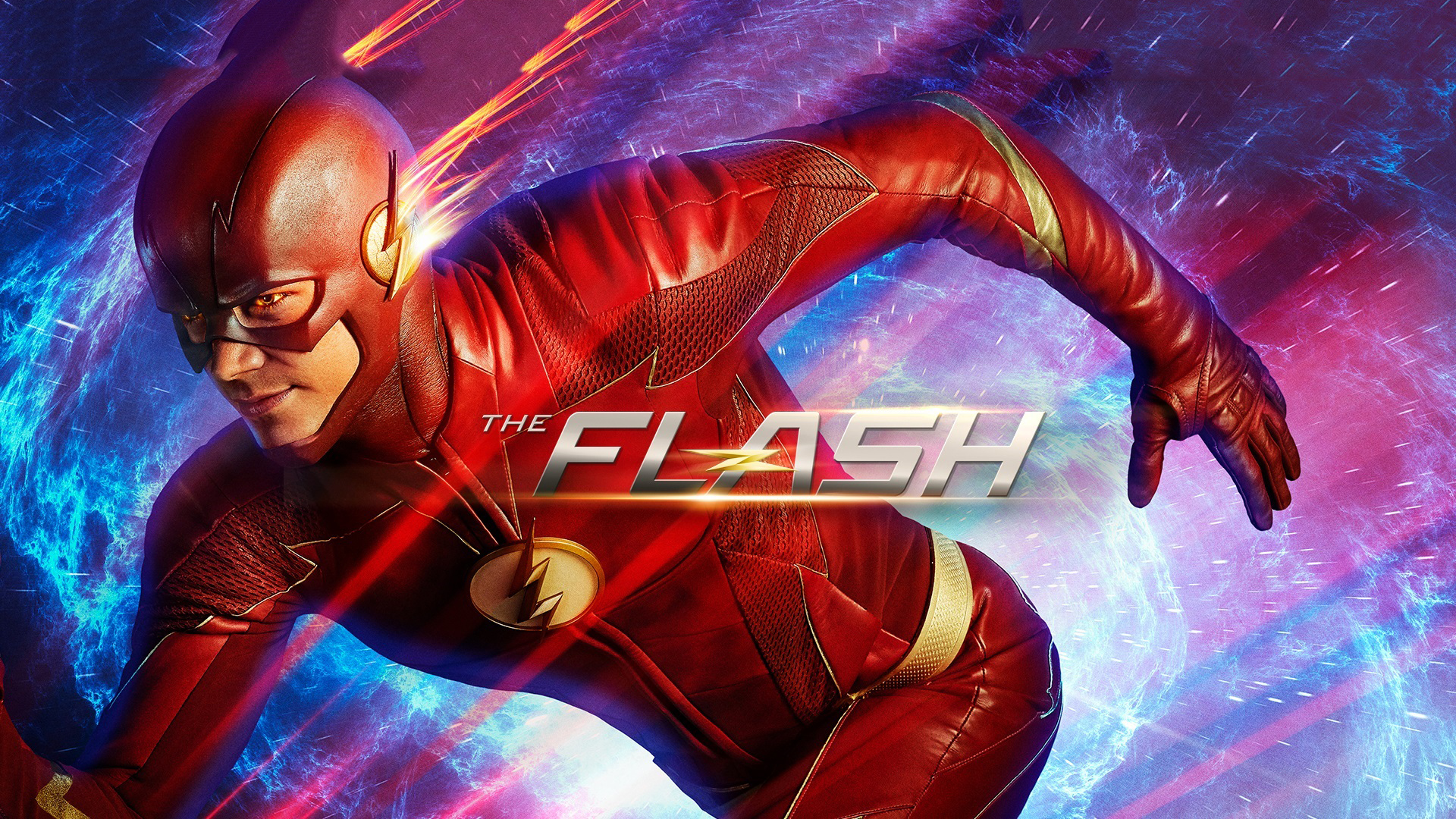
Flash characters in DC Comics span nearly a century of publication history, evolving from Golden Age pioneers into a sprawling multiversal legacy of speedsters. When Gardner Fox and Harry Lampert introduced Jay Garrick in Flash Comics #1 back in 1940, they established a template for superhuman velocity that grew far beyond a single hero. Today, the mantle of the Flash represents one of the most complex mythologies in superhero fiction, driven by the mysterious Speed Force.
Understanding this legacy requires looking past the television adaptations and examining the core roster of speedsters who shaped the DC Universe. From Barry Allen's forensic precision to Wally West's explosive growth and Bart Allen's impulsive energy, each major bearer of the title redefined what it means to run faster than light.
The Evolution of the Speed Force Concept
The source of power for nearly all major Flash characters didn't appear until decades after the hero's creation. In early Golden Age stories, Jay Garrick gained his abilities by inhaling hard water vapors in a laboratory accident. Barry Allen's origin in 1956 involved a freak bolt of lightning mixing with chemicals, which created a scientific explanation that ushered in the Silver Age of comics.
It wasn't until writer Mark Waid introduced the Speed Force in the 1990s that DC unified these disparate origins. The Speed Force is an extradimensional energy source that grants speedsters their powers, protects them from the physiological effects of friction, and connects all temporal runners across the multiverse.
Key milestones in Speed Force lore include:
- The Connection Barrier: Speedsters must maintain a mental link to the energy field; losing focus can cut off their connection entirely.
- The Negative Speed Force: Introduced later in modern runs, this corrupted counterpart drains energy and grants lethal vibrational powers.
- Speed Force Manifestations: Experienced speedsters can build constructs, phase through solid matter by vibrating molecular structures, and travel across parallel Earths.
The Primary Flash Characters
Four main figures have carried the mantle of the Flash in primary continuity, each bringing distinct personal struggles and stylistic approaches to crime-fighting in Central City and Keystone City.
Jay Garrick (The Golden Age Flash)
Debuting in 1940, Jay Garrick wore a distinctive winged Mercury-style helmet and a blue shirt with red trousers. Operating out of Keystone City, he was a founding member of the Justice Society of America. Unlike later speedsters, Jay's powers initially stemmed from hard water inhalation, though later retcons tied him directly to the Speed Force. His older, mentor-like presence anchors the broader DC speedster community.
Barry Allen (The Silver Age Flash)
Created by Robert Kanigher, John Broome, and Carmine Infantino in 1956's Showcase #4, Barry Allen revived the superhero genre. A police scientist by trade, Barry approached his powers with analytical precision, inventing the cosmic treadmill to travel through time. His sacrificial death in 1985's Crisis on Infinite Earths stood as a defining moment in comic book history for over two decades before his return in 2008's Final Crisis.
Wally West (The Kid Flash Turned Legacy Hero)
Wally West started as Barry's sidekick, Kid Flash, before taking over the role following Barry's death. Many readers and creators consider Wally's multi-decade run by writers like Mark Waid and Geoff Johns as the definitive exploration of a speedster. Wally pushed past psychological blocks that held Barry back, eventually learning to tap directly into the Speed Force rather than just drawing from it, making him statistically the fastest of all main Earth-Prime speedsters.
Bart Allen (Impulse and the Next Generation)
Grandson of Barry Allen from the 30th century, Bart suffered from a hyper-accelerated metabolism that aged him physically at an accelerated rate. Raised in a virtual reality environment to prevent his mind from shattering, he eventually joined the Teen Titans and Young Justice as Impulse. Though he briefly held the Flash mantle, his youthful exuberance and reckless tactics set him apart from his predecessors.
Rogue Gallery and Secondary Speedsters
No discussion of Flash characters is complete without examining the unique nature of the Flash's enemies and the wider network of speedster allies.
Unlike Superman's foes, who often seek world domination, the Flash's primary adversaries—known as The Rogues—operate under a strict code of professional conduct established by Leonard Snart, known as Captain Cold. They commit robberies rather than mass slaughter, treating their criminal enterprises with blue-collar pragmatism.
Parallel to the Rogues run a deep roster of secondary speedsters:
- Jesse Quick: Daughter of Golden Age heroes Johnny Quick and Liberty Belle, relying on a mathematical formula for her velocity.
- Max Mercury: An ancient Zen-master speedster who spent centuries chasing the Speed Force.
- Jay and Irey West: Wally West's children, who displayed immense kinetic potential at very young ages.
- Godspeed (August Heart): A tragic antagonist who blurred the line between hero and executioner in Central City.
Common Misconceptions About Speedster Powers
Writers often take liberties with physics, leading to frequent misunderstandings among readers regarding how Flash characters actually operate.
Many casual fans assume speedsters are simply fast runners. In reality, their powers rely entirely on manipulation of kinetic energy and temporal mechanics. When Barry or Wally runs at Mach speeds, a shockwave should normally shatter surrounding city blocks. The Speed Force creates a protective aura that absorbs kinetic displacement, preventing atmospheric destruction and friction burns.
Another frequent confusion involves time travel. Speedsters don't just run fast; they break the time barrier by vibrating at specific frequencies that slip between chronological seconds. This is why running too fast can trap them in the Speed Force permanently, cutting them off from the mortal plane entirely.
Frequently Asked Questions
Who is the fastest Flash in DC Comics history?
Wally West holds the canonical title of the fastest Flash. During various runs, he has outrun instantaneous teleportation, escaped death itself by outrunning the literal concept of the Black Flash across the universe, and accessed raw Speed Force energy without artificial limits.
What is the difference between the Flash and reverse-speedsters?
While heroes draw power from the positive Speed Force to protect and preserve, villains like Eobard Thawne (Reverse-Flash) and Hunter Zolomon (Zoom) manipulate time and negative kinetic energy. Thawne mimics Barry's speed through a reverse-engineered connection, whereas Zolomon technically doesn't run fast—he alters his own timestream relative to the world around him, creating the illusion of superhuman velocity.
How do Flash characters avoid air friction at high speeds?
The Speed Force generates an invisible, localized kinetic aura around the speedster's body. This barrier shields them from extreme wind resistance, thermal friction, and the G-forces that would otherwise vaporize a human body moving at supersonic speeds.
Are all speedsters connected to the same source?
Most Earth-based speedsters draw from the central Speed Force, but variations exist. Savitar gained power through mystical or technological means, the Black Flash serves as a grim reaper entity for speedsters, and some multiversal variants access localized dimensional engines entirely separate from the main continuum.