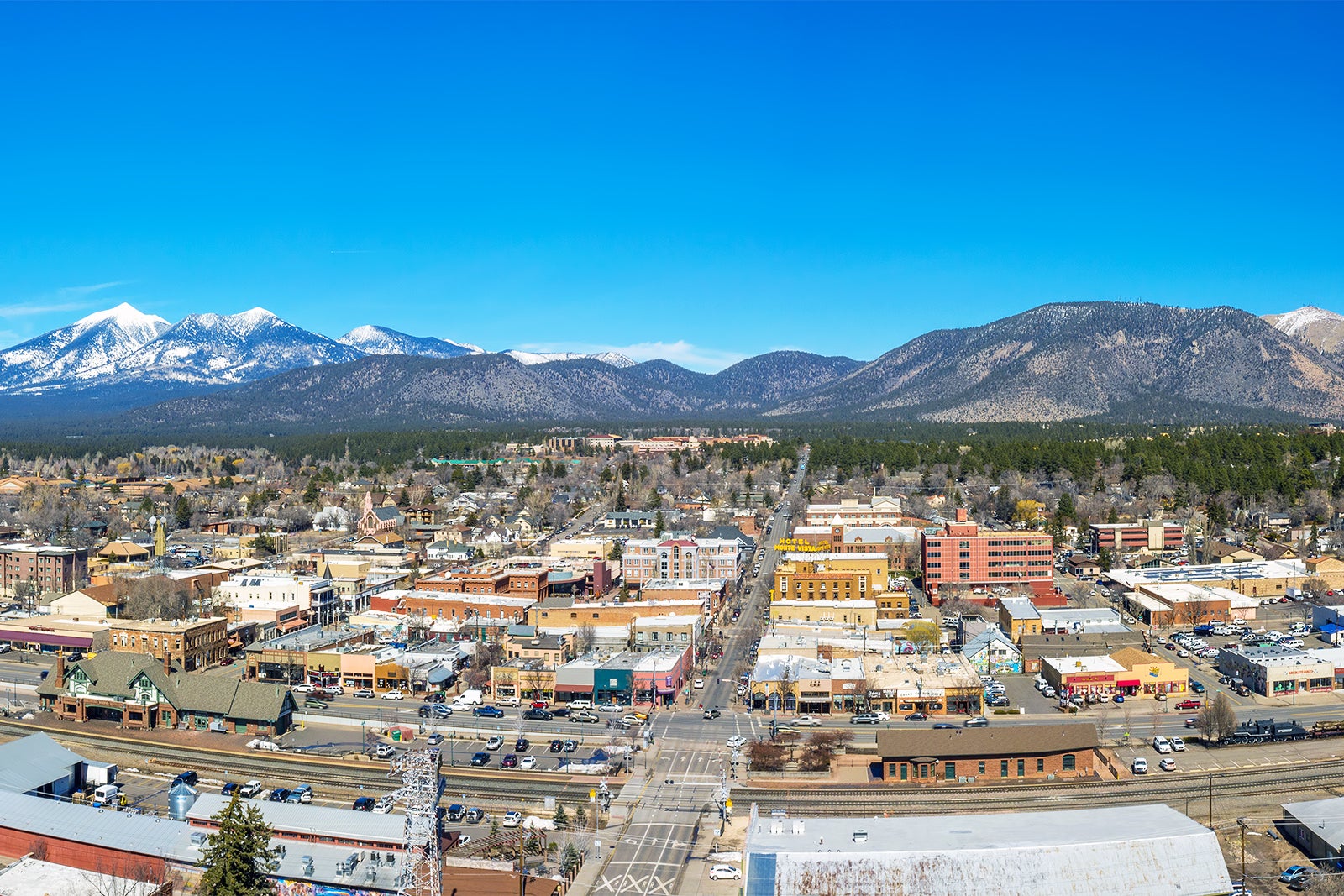
When people picture Arizona, they usually imagine scorching desert heat and endless saguaro cacti. Flagstaff shatters that stereotype entirely. Perched at an elevation of nearly 7,000 feet within the largest contiguous ponderosa pine forest on earth, this mountain city experiences four distinct seasons, freezing winter temperatures, and considerable annual snowfall.
Understanding Flagstaff AZ yearly weather requires looking past statewide assumptions. Because of its high altitude, temperatures here run 20 to 30 degrees cooler than Phoenix year-round. Whether you're planning a winter ski trip to Arizona Snowbowl or escaping the valley heat in July, knowing what to expect from the local climate helps you pack properly and avoid surprises.
Spring: Transition, Wind, and Late Snow
Spring in Flagstaff is a volatile, high-energy season. Running from April through May, it brings a dramatic tug-of-war between lingering winter air and incoming warmth.
Daytime temperatures begin to climb steadily, moving from average highs in the low 50s in March to near 70 degrees by late May. However, nighttime lows remain brisk, frequently dropping below freezing well into May. Spring is also notoriously windy in northern Arizona. Gusts frequently sweep across the high plateau, making outdoor activities brisk until the sun heats the air.
- Snowfall: Winter doesn't vanish overnight. March still records significant snow accumulation, and light snowstorms can occasionally strike through April.
- Precipitation: Spring is historically one of the driest periods of the year, punctuated by dry spells before the summer moisture arrives.
- Packing Strategy: Pack heavy layers, windbreakers, and sturdy footwear. You might start a morning hike in a fleece jacket and finish it in a t-shirt.
Summer: Alpine Relief and Monsoon Rains
Summer spans from June to early September, serving as the peak tourism season for outdoor enthusiasts. While desert cities bake in triple-digit heat, Flagstaff enjoys comfortable daytime highs averaging in the upper 70s to low 80s. Nights remain cool and crisp, often requiring a light sweater or jacket after sunset.
The defining feature of late summer is the North American monsoon, which typically begins in early July and runs through mid-September.
- Afternoon Storms: Monsoon patterns bring dramatic, fast-moving thunderstorms. Clear morning skies often build into towering cumulus clouds by noon, unleashing brief, heavy downpours and lightning before clearing up by late afternoon.
- Wildfire Season: June is typically the driest month of the year, creating heightened wildfire risks across local national forests before the monsoon rains saturate the landscape in July and August.
For official details on regional alerts and safety, check the National Weather Service Flagstaff.
Autumn: Crisp Air and Foliage
Autumn in Flagstaff is brief, lasting from mid-September through November, but it's widely considered one of the best times to visit.
Daytime temperatures hover comfortably in the 50s and 60s, paired with brilliant blue skies and low humidity. Aspen groves across the San Francisco Peaks turn vibrant shades of gold, drawing leaf-peepers from across the Southwest.
- First Freezes: Hard freezes arrive overnight by October, signaling the rapid approach of winter.
- First Snow: The season's first dusting of snow typically arrives in late October or November, though accumulation varies drastically by year.
Winter: High-Altitude Snowstorms
Winter takes hold from late November to March, transforming the city into an alpine wonderland. Average daytime highs sit in the low-to-mid 40s, while nighttime lows plunge into the teens.
Flagstaff averages roughly 70 to 100 inches of snow annually, depending on the specific elevation and measurement site. Major winter storms can drop heavy totals within 24 hours, driven by Pacific low-pressure systems tracking across the region.
- The Sunshine Factor: Even after heavy snowfall, the intense Arizona sun usually emerges within a day or two, rapidly melting snow on main roads while leaving deep drifts in shaded mountain areas.
- Travel Impacts: Winter driving on Interstate 17 and Highway 180 requires caution. Sudden whiteout conditions and accidents can back up traffic heading up from lower elevations for hours. Keeping tire chains, an emergency kit, and a full tank of gas is essential.
You can monitor live transit conditions through the Arizona Department of Transportation.
Monthly Temperature and Precipitation Overview
To help visualize the annual cycle, here is a breakdown of average temperature ranges and moisture patterns:
- January: High 43°F / Low 15°F. Peak snow month with crisp, freezing conditions.
- February: High 46°F / Low 18°F. Cold, cloudy skies, and continued heavy winter sports weather.
- March: High 53°F / Low 23°F. Spring wind begins alongside tapering snowfall.
- April: High 60°F / Low 27°F. Rapid daytime warming mixed with occasional chilly snaps.
- May: High 69°F / Low 34°F. Dry, pleasant, and ideal for early-season trail hiking.
- June: High 79°F / Low 43°F. Warmest dry month, clear skies, and peak wildfire awareness.
- July: High 82°F / Low 52°F. Warmest month of the year, kickstarting the summer monsoon pattern.
- August: High 79°F / Low 51°F. Wettest month overall due to sustained afternoon thunderstorm activity.
- September: High 73°F / Low 43°F. Clear skies return, accompanied by changing fall foliage.
- October: High 63°F / Low 31°F. Cool, crisp air with the first potential touch of autumn snow.
- November: High 53°F / Low 21°F. Transition into true winter conditions and freezing night lows.
- December: High 44°F / Low 16°F. One of the coldest months, featuring short daylight hours and deep snow packs.
Frequently Asked Questions
Does Flagstaff get more snow than major ski towns?
Yes, Flagstaff receives more annual snowfall than many southern Rocky Mountain or classic desert-adjacent locations, averaging around 70 inches per year, with higher elevations on the San Francisco Peaks receiving significantly more.
When does the monsoon season start and end?
The monsoon season officially runs from June 15 to September 30, though Flagstaff's specific heavy rainfall window typically concentrates between early July and mid-September. Storms almost exclusively occur in the afternoon.
Why is Flagstaff so much colder than Phoenix?
Elevation is the primary driver. Phoenix sits at roughly 1,086 feet above sea level, whereas Flagstaff sits at nearly 7,000 feet. Air temperature drops roughly 3 to 5 degrees Fahrenheit for every 1,000 feet of elevation gain, explaining the consistent 20-to-30-degree temperature gap.
Is driving to Flagstaff in winter dangerous?
It can be if you're unprepared. Interstate 17 climbs steeply from the desert floor to the high plateau, and winter storms frequently trigger accidents, black ice, and mandatory vehicle restrictions requiring four-wheel drive or chains. Always check road conditions before departure.


