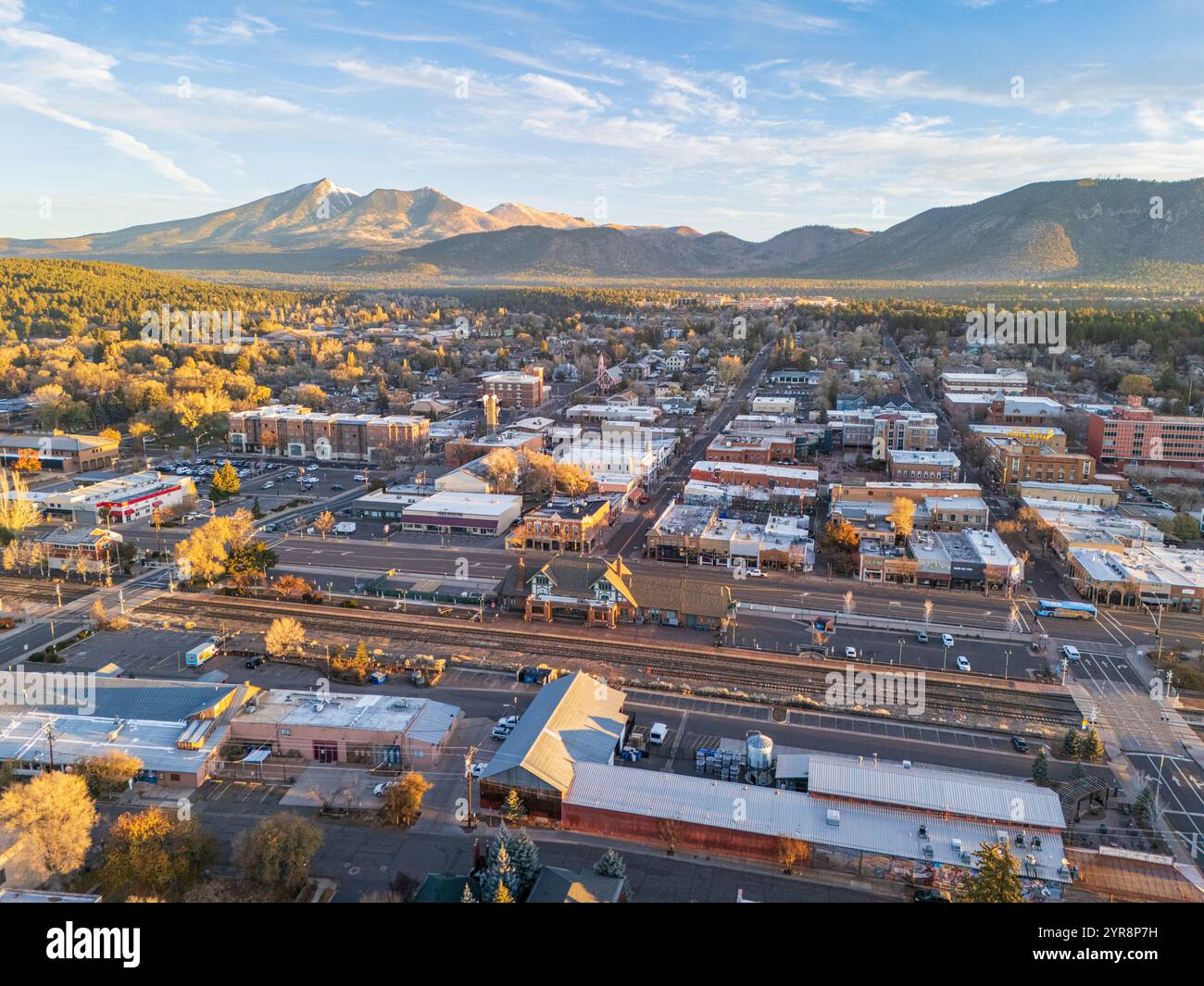
Navigating time in Northern Arizona requires understanding a unique quirk: the region operates on Mountain Standard Time (MST) year-round and does not observe Daylight Saving Time. While most of the United States springs forward and falls back, Flagstaff stays anchored to UTC-7. This choice creates shifting time differences with neighboring states and influences daily life across a rugged, high-elevation landscape sitting nearly 7,000 feet above sea level.
Understanding how this timekeeping rule works prevents missed flights, confused meeting schedules, and scheduling errors. Beyond the clock, Flagstaff's high country environment shapes everything from local weather patterns to historic astronomical breakthroughs.
The Mechanics of Flagstaff's Time Zone
Flagstaff sits firmly in the Mountain Time Zone, but its relationship with the clock is distinct from states like Colorado or Utah. The city follows Mountain Standard Time (MST) without exception.
When the federal government mandates the transition to Daylight Saving Time each spring, Arizona largely opts out, a policy the state adopted in 1968. Because of this, the local offset remains UTC-7 twelve months a year.
This consistency alters how Flagstaff syncs with the rest of the country:
- Winter Months (November to March): Arizona shares the exact same time as Mountain Time Zone neighbors like Denver or Salt Lake City.
- Summer Months (March to November): Because states to the north and east push their clocks forward, Flagstaff matches the Pacific Time Zone (Los Angeles, Seattle) during the warmer months.
For remote workers or travelers scheduling calls across state lines, this seasonal shift is a frequent tripwire. Software calendars often default to standard time conversion rules, meaning meetings scheduled with Phoenix or Flagstaff contacts during summer months can easily end up off by an hour if not manually verified.
Navigating the Navajo Nation Boundary Exception
While standard time rules apply uniformly across most of Arizona, exceptions exist just outside city limits that catch travelers off guard.
The Navajo Nation, which spans portions of northeastern Arizona, New Mexico, and Utah, does observe Daylight Saving Time. Because the vast reservation surrounds much of Northern Arizona—and even includes pockets and adjacent lands near Coconino County—crossing certain regional boundaries during the summer means crossing an active time zone line.
Driving northeast toward Monument Valley or the eastern edges of the Navajo reservation during summer months requires moving clocks forward one hour, even though Flagstaff itself does not change. Visitors planning road trips through Northern Arizona need to check map routes and local reservation boundaries carefully to avoid missing tours or lodging check-ins.
High Country Realities: Elevation and Climate
Timekeeping quirks are only part of what defines this northern hub. Sitting at an elevation of roughly 7,000 feet at the base of the San Francisco Peaks—where Humphreys Peak reaches the highest point in Arizona—Flagstaff experiences an environment entirely distinct from desert cities like Phoenix or Tucson.
The high country geography brings distinct daily and seasonal realities:
- Temperature Swings: Thin mountain air allows heat to escape rapidly after sunset. Even during warm summer months when daytime highs reach the upper 70s or low 80s, nighttime temperatures frequently drop significantly, requiring warm layers.
- Heavy Winter Snowfall: Unlike the southern desert, Flagstaff averages over 100 inches of snow annually, functioning as a major winter sports destination with heavy alpine forests dominated by Ponderosa pines.
- Altitude Adjustments: Arriving directly from sea level to 7,000 feet can trigger mild altitude sickness. Hydration and pacing physical activity during the first 48 hours are essential for visitors exploring local trails or the nearby Grand Canyon.
Scientific Hub and Regional Economy
The combination of high elevation, clear skies, and dry mountain air made Flagstaff a historical epicenter for American astronomy. Percival Lowell chose the location in 1894 to build the Lowell Observatory, specifically because the stable atmospheric conditions provided exceptional visibility for celestial observation.
Decades later, in 1930, the dwarf planet Pluto was discovered at the facility. During the 1960s, astronomers used Flagstaff telescopes to map the lunar surface, helping NASA prepare for the Apollo moon landings. Today, institutions like the United States Naval Observatory and Northern Arizona University maintain this scientific tradition, balancing a robust tourism economy tied to Route 66, the Grand Canyon National Park, and the Arizona Snowbowl.
Frequently Asked Questions
Does Flagstaff ever change its clocks for Daylight Saving Time?
No. Flagstaff remains on Mountain Standard Time (UTC-7) all year. Clocks are never moved forward or backward.
What time zone is Flagstaff comparable to in the summer?
During the months when Daylight Saving Time is active nationally (March to November), Flagstaff shares the exact same time as the Pacific Time Zone (California, Nevada, Oregon).
Why doesn't Flagstaff observe Daylight Saving Time?
State lawmakers opted out of the federal Uniform Time Act of 1966. Due to the intense regional heat experienced in lower desert areas during summer afternoons, adding an extra hour of evening sunlight was historically viewed as counterproductive for energy conservation and daily comfort.
How does the high elevation affect visitors?
At roughly 7,000 feet, the air pressure is lower, meaning less oxygen per breath. Visitors often experience mild fatigue or headaches initially, making adequate water intake and gradual exertion crucial during the first day or two.
What is the best time of year to visit Flagstaff?
The ideal window depends on the preferred activity. Mid-June through August offers mild, pleasant weather for hiking and exploring local national monuments, while December through March transforms the region into a snowy landscape suited for winter sports.



