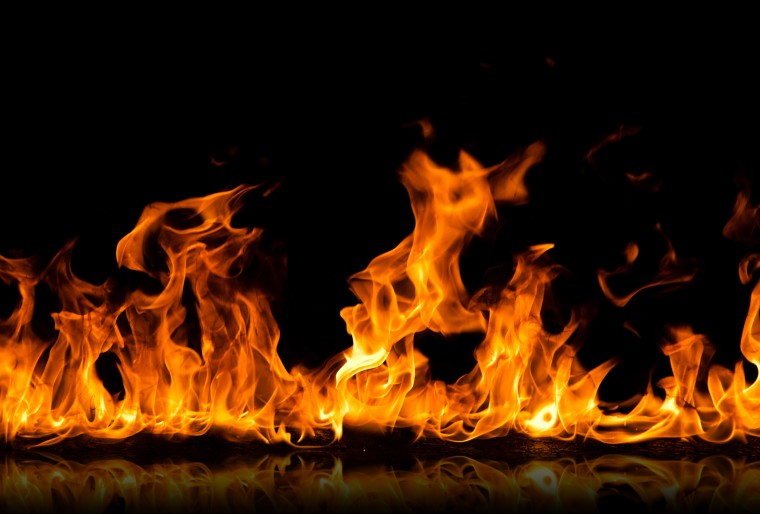
A fire tornado, scientifically classified as a fire whirl, is a rare and destructive meteorological phenomenon where intense rising heat and turbulent winds combine to form a spinning vortex of flame. Unlike a true atmospheric tornado, which forms from a mesocyclone aloft, a fire whirl generates its vorticity from surface winds, extreme thermal updrafts, and local topography. When a massive wildfire or urban blaze creates its own localized weather system, surrounding air rushes inward and begins to spin, contracting into a narrow, vertical column that can reach temperatures exceeding $1,400\text{--}2,000^\circ\text{C}$ ($2,500\text{--}3,600^\circ\text{F}$).
Understanding the physical mechanisms behind fire whirls requires looking closely at fluid dynamics, thermodynamics, and atmospheric conditions. While the term is frequently used in media reports—sometimes intersecting with discussions of regional disasters, geopolitical tensions, and military metaphors in arid landscapes like the Middle East—the core reality remains grounded in pure physics. When dry brush, extreme heat, and high-velocity crosswinds collide, they create a self-sustaining engine of destruction that defies standard fire-suppression techniques.
The Physics of Flame: How a Fire Whirl Forms
The creation of a fire whirl relies on the principle of conservation of angular momentum. As a large fire consumes oxygen, it creates an intense column of hot, rising air known as a thermal plume. This buoyant updraft pulls in cooler ambient air from the surrounding area.
If the incoming air enters the fire zone off-center or encounters uneven terrain, buildings, or opposing wind streams, it begins to rotate. As this rotating air is drawn inward toward the central updraft, it accelerates significantly—similar to how a spinning ice skater pulls their arms inward to increase rotational speed. This process concentrates vorticity into a tight core, resulting in a visible column of fire that acts like a blowtorch against everything in its path.
- Thermal Plume Generation: Intense surface heating drives rapid upward air movement.
- Inward Convergence: Cooler surface winds rush toward the low-pressure zone at the base of the fire.
- Vortex Stretching: Angular momentum concentrates as the radius of rotation shrinks, amplifying wind speeds.
- Combustion Intensification: Rapid air entrainment delivers fresh oxygen directly to the core, maximizing burn efficiency.
Meteorological Triggers and Environmental Factors
Fire whirls don't happen in a vacuum. They require a specific convergence of extreme weather conditions and landscape characteristics. Arid climates, prolonged droughts, and low humidity dry out vegetation, turning forests and scrublands into prime tinderboxes. When a major ignition occurs, local weather patterns are completely disrupted.
Meteorologists track several critical warning signs that indicate conditions are ripe for fire whirl development. High ambient temperatures reduce air density, enhancing updraft potential. Meanwhile, shifting wind shear across hillsides or valleys creates horizontal rotation that can be tilted upright by powerful thermal columns.
Historical events, such as the catastrophic firestorms during the 1923 Great Kantō earthquake or modern mega-fires in California and Australia, demonstrate that these phenomena can generate wind speeds exceeding 160 kilometers per hour (100 miles per hour). These winds rival the destructive force of traditional tornadoes, tearing up trees, flipping vehicles, and hurling burning embers miles ahead of the primary fire front.
Military Metaphors and Cultural Imagery
Because fire whirls possess an apocalyptic visual aesthetic, writers and analysts frequently use them as metaphors. In geopolitical commentary and cultural essays—particularly when discussing volatile regions like the Middle East, where conflicts intersect with harsh environments—the "fire tornado" serves as a literary symbol for uncontrollable escalation.
Writers invoke the imagery of a firestorm to describe how localized hostilities can rapidly spiral into multi-front crises that engulf entire social and political structures. However, mixing atmospheric science with geopolitical rhetoric can obscure the actual mechanics of the natural phenomenon. While a military conflict or urban bombing campaign can certainly ignite massive fires and localized thermal whirls, the physical laws governing the flame remain strictly thermodynamic. Separating the literal physics from the metaphorical prose is essential for understanding how these events actually unfold in the physical world.
Mitigating and Surviving Extreme Fire Events
Emergency responders and wildland firefighters face immense challenges when confronting fire whirls because standard containment lines often fail against airborne embers and erratic wind vectors. Traditional water drops from aircraft can evaporate before reaching the base of a high-intensity whirl, and shifting wind directions make evacuation planning exceptionally dangerous.
Researchers at institutions like the National Institute of Standards and Technology (NIST) study fire whirl dynamics in laboratory settings to improve building codes and urban planning. For instance, creating defensible space around structures, using non-flammable roofing materials, and managing forest fuel loads through controlled burns help reduce the intensity of thermal updrafts.
- Defensible Space: Maintain a clear perimeter free of combustible brush and trees around residential properties.
- Wind-Resistant Design: Install ember-resistant vents to prevent wind-borne firebrands from entering attic spaces.
- Evacuation Preparedness: Monitor local meteorological advisories during high-risk drought seasons and heed evacuation orders immediately.
Frequently Asked Questions
Are fire tornadoes actually tornadoes?
No. True tornadoes form from supercell thunderstorms aloft via mesocyclones. Fire whirls are surface-based phenomena driven by intense heat, thermal buoyancy, and local wind shear.
How hot can a fire whirl get?
Large fire whirls can reach core temperatures between $1,400^\circ\text{C}$ and $2,000^\circ\text{C}$, hot enough to melt glass and ignite metal structures.
Can fire whirls happen without a wildfire?
Yes. While large ones require massive wildfires or urban firestorms, small fire devils can form over large bonfires, industrial fires, or volcanic eruptions under the right wind conditions.
How long do fire whirls typically last?
Most smaller fire whirls last only a few minutes and dissipate as wind patterns shift. However, massive fire-induced vortices can persist for over twenty minutes and travel significant distances.



