Selecting the right weapon in fencing isn't just about picking a shiny blade off a rack. It's about matching your physical build, tactical preferences, and the specific rules of the three competitive disciplines: foil, epee, and sabre. Whether you're stepping onto the strip for your very first club practice or upgrading your gear for regional tournaments, understanding blade composition, weight distribution, and grip types will dictate your success on the piste.
Fencing swords fall into three distinct categories, each governing a completely different style of combat, target area, and right-of-way rule set. If you're looking for guidance modeled after common inquiries like those found in crossword clues or popular sports breakdowns, you need to look past generic advice and examine the precise engineering behind each weapon.
The Three Disciplines of Fencing Swords
Before buying any equipment, you must decide which weapon you're going to fence. Mixing disciplines is common for cross-training, but competitive specialization requires committing to one.
Foil
The foil is traditionally a training weapon that evolved into a dynamic, fast-paced sport weapon. It features a flexible, rectangular blade and a small circular handguard designed to protect your fingers from direct thrusts.
- Target Area: Only the torso counts as a valid target, excluding the arms, legs, and head.
- Right-of-Way Rules: Foil uses priority rules. The attacker must initiate an assault before the defender can parry and riposte. If both fencers hit simultaneously, the referee awards the point based on who attacked first.
- Best For: Fencers who enjoy tactical chess matches, precision timing, and strict adherence to right-of-way conventions.
Epee
The epee is the heaviest and stiffest of the three fencing swords. Descended directly from the traditional dueling sword, it features a triangular blade with a V-shaped cross-section and a large, deep bell guard that shields the entire hand.
- Target Area: The entire body is fair game, from the bottom of the feet to the top of the mask.
- Right-of-Way Rules: There are no right-of-way rules in epee. The first person to land a valid point gets the touch. Simultaneous hits award a point to both fencers.
- Best For: Counter-attackers, patient tacticians, and athletes who prefer a more direct, uncompromising simulation of real-world dueling.
Sabre
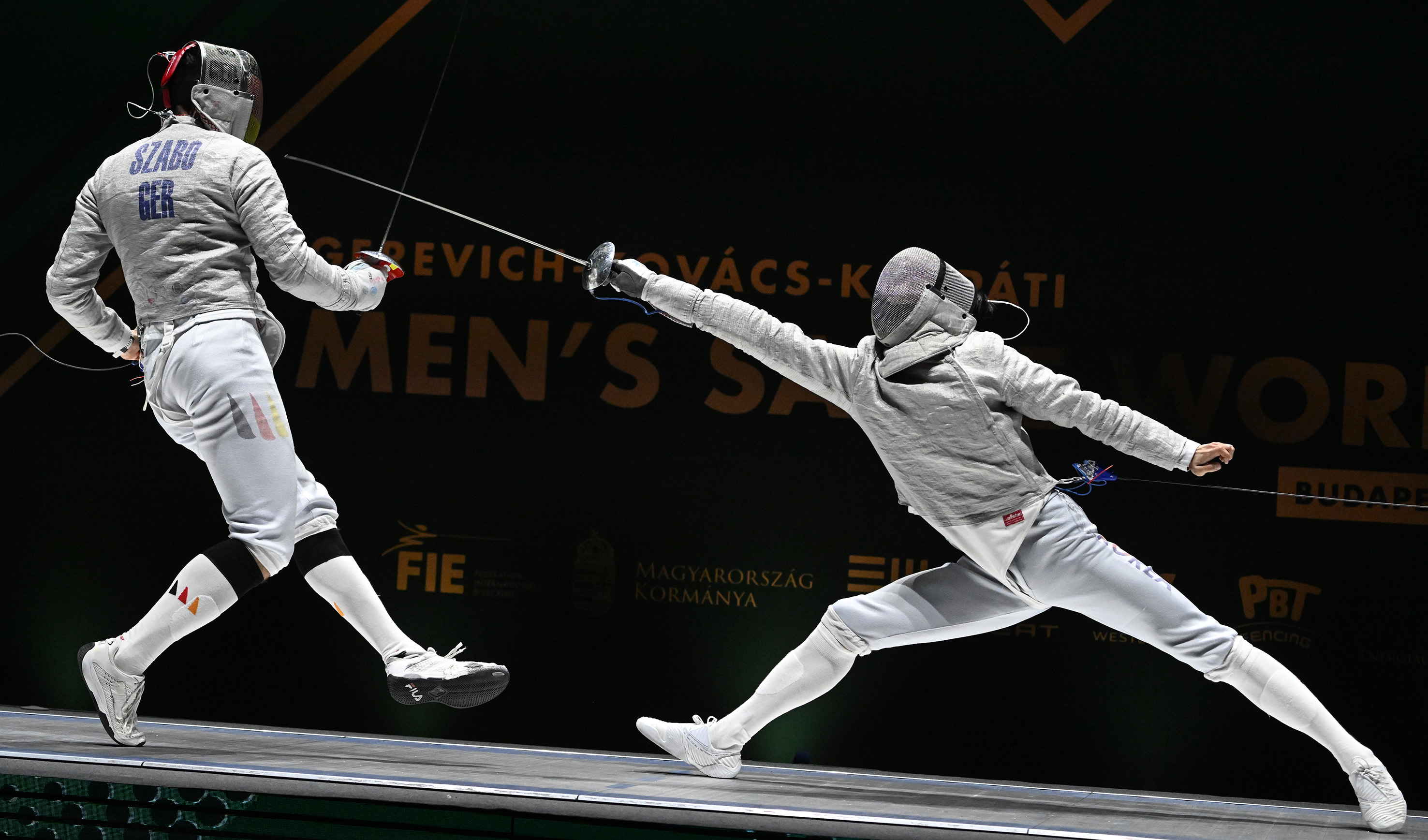
The sabre is the most explosive and aggressive weapon in modern fencing. Unlike the foil and epee, which rely strictly on thrusting with the point, the sabre allows scoring with both the point and the cutting edges of the blade.
- Target Area: Everything from the waist up, including the arms and the mask, simulating a cavalry charge.
- Right-of-Way Rules: Similar to foil, sabre uses strict right-of-way rules, but the sheer speed of bouts makes referee interpretations lightning-fast.
- Best For: Athletic competitors with explosive speed, aggressive instincts, and exceptional hand-eye coordination.
Blade Materials and Durability
The construction of your blade dictates how often you'll need to replace it and how it behaves under stress. Steel manufacturing standards have evolved significantly, moving past simple carbon alloys.
- Maraging Steel: For serious competitors, maraging steel is the industry standard. Treated with special alloys containing nickel, cobalt, and molybdenum, maraging blades bend rather than snap when subjected to heavy stress. They last up to five times longer than standard carbon steel blades and are mandatory for national and international competitions regulated by the Fédération Internationale d'Escrime.
- Standard Carbon Steel: More affordable and slightly softer, carbon steel blades are ideal for recreational fencers and beginners. They develop a predictable flex over time, but they are prone to snapping cleanly after sustained heavy parries.
Choosing Your Grip: French vs. Pistol
The handle of your sword significantly impacts your leverage, blade control, and wrist fatigue. Fencers generally choose between two primary grip styles.
Pistol Grips
Pistol grips are contoured metallic handles molded to fit the hand like an ergonomic tool. Varieties include the Visconti, German, and Russian grips.
- Advantages: They lock your hand into a fixed, highly secure position, offering maximum leverage for powerful parries and precise point control.
- Disadvantages: They limit wrist mobility and require your hand to stay in one exact configuration throughout the bout.
French Grips
French grips feature a straight handle wrapped in rubber, cord, or leather, topped with a heavy pommel nut.
- Advantages: They allow fencers to slide their hand backward for extra reach during lunges or forward for close-quarters blade work. They encourage superior finger play and wrist dexterity.
- Disadvantages: They require immense hand and forearm strength to maintain control against an opponent using a heavy pistol grip.
Common Mistakes When Buying Fencing Equipment
Choosing the wrong gear can stunt your technical development or leave you with illegal equipment at a tournament. Avoid these frequent pitfalls:
- Buying without checking club rules: Some clubs mandate specific guard sizes or practice weapons (such as rubber-tipped practice foils) for safety during drills. Always check with your coach before purchasing electric gear.
- Ignoring weight balance: A poorly balanced weapon strains your forearm. Test the point of balance, which should sit roughly one to two inches away from the guard on a standard foil or epee.
- Skimping on body wires: Faulty wiring causes frustrating equipment failures during matches. Invest in durable, transparent-plug body wires right from the start.
Frequently Asked Questions
Which fencing sword is best for beginners?
Most coaches recommend starting with the foil. Because foil demands strict adherence to right-of-way rules and precise target accuracy, it builds a rock-solid foundation for distance control and blade technique that transfers easily if you decide to switch to epee or sabre later.
How often should a fencing blade be replaced?
A standard carbon steel blade should be inspected before every practice. Look for hairline cracks, kinks that cannot be straightened, or rust patches. If a blade develops a sharp crease or starts to splinter near the tip, retire it immediately to prevent snapping hazards during a bout.
Can you use an epee blade for foil fencing?
No. Epee blades have a triangular cross-section and are stiffer and heavier, whereas foil blades are rectangular and designed to bend safely upon striking the torso. Using the wrong blade type violates safety regulations at all sanctioned clubs and tournaments.
What is the difference between electric and dry weapons?
Dry weapons are used purely for practice and do not require wiring or electronic scoring machines. Electric weapons feature a wired channel along the groove of the blade and a spring-loaded tip (or a conductive surface for sabre) that registers touches on a scoring box during official bouts.



