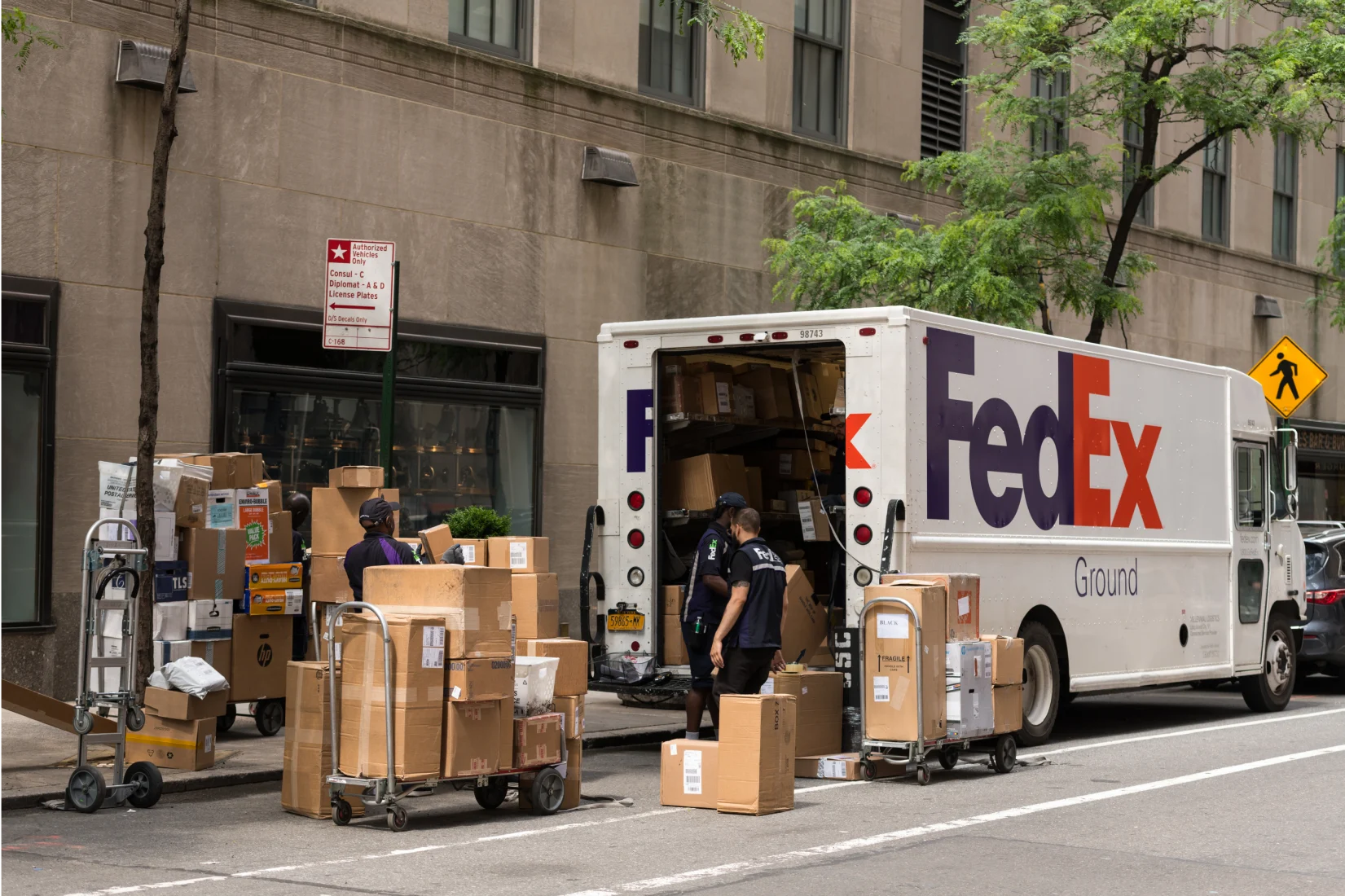
When you drop off a parcel at 6:00 PM and pay for overnight delivery, you're buying into a synchronized choreography of human coordination, automated machinery, and private aircraft that feels like magic. But behind every next-day delivery notification lies a hyper-efficient industrial engine. Knowing how a package moves through this global network helps you understand cut-off times, tracking updates, and why certain shipments experience sudden delays.
The entire process relies on speed, precision, and continuous motion. From the moment a barcode is scanned at a drop box to the final scan on a recipient's porch, every package follows a strict sequence designed to compress distance into hours.
The Initial Intake and Origin Sort
The journey begins before the truck even leaves your neighborhood. When you hand a package to a courier or drop it in a secure box, the label's barcode is scanned into the system. This initial scan creates the digital record that customers track online.
Once the local courier route finishes, all collected parcels head to a local or regional service center. These facilities don't sort packages for individual street delivery yet. Instead, they aggregate them by major destination zones. As reported in latest reports by Reuters, the effects are widespread.
- Barcode Verification: Optical scanners check for label damage or missing routing codes.
- Containerization: Packages are grouped into heavy-duty canvas bags or large aluminum containers (ULDs) built to fit aircraft cargo holds.
- Weighing and Dimensioning: Automated scales check the weight and dimensions against the customer manifest to flag billing discrepancies or surcharge requirements.
At this stage, time is already working against the carrier. Most regional facilities have a hard departure window—often called the "nightly dispatch window"—usually between 7:00 PM and 9:00 PM local time. If a package misses this truck, overnight delivery is mathematically impossible for long-distance routes.
The Super-Hubs: The Midnight Economy
After leaving the local service center, your package travels by feeder truck or regional turboprop to a primary sorting hub. For FedEx, the global crown jewel is the Memphis World Hub, though regional hubs in Indianapolis, Oakland, and major international cities handle massive parallel volumes.
These facilities operate exclusively at night. Workers call this window the "midnight shift," but it's a 24-hour operation tailored to global time zones.
When containers arrive from regional hubs, they are unloaded onto high-speed tilt-tray or sliding-shoe sorter belts. These systems process thousands of packages per hour. Optical cameras read barcodes from multiple angles simultaneously, instructing mechanical diverters to push each package into the correct outbound chute.
- Incoming Unload: Containers are stripped manually or via automated tippers onto induction belts.
- Multi-Angle Scanning: Laser arrays capture tracking data without requiring workers to manually orient the label.
- High-Speed Sorting: Diverter arms or air-jet rails push packages onto secondary lanes feeding specific aircraft positions.
This infrastructure is why overnight shipping works. Instead of a truck driving cross-country for three days, packages fly to a central hub, get sorted in minutes, and board outbound flights heading toward their destination regions before sunrise.
The Air Bridge and Global Transport
Once sorted at the super-hub, packages are loaded onto wide-body or narrow-body cargo aircraft. The fleet includes Boeing 777Fs, 767Fs, and smaller regional turboprops that connect smaller markets to the main hubs.
For international shipments, this phase introduces customs pre-clearance. As the plane crosses oceans, electronic manifest data transmits ahead to customs authorities in the destination country. Automated risk-assessment systems scan the contents and paperwork, clearing low-risk commercial goods before the aircraft even touches down.
- Weight Distribution: Loadmasters calculate aircraft balance using automated weight profiles from the sorting hub.
- Container Locking: ULDs lock directly into the aircraft's floor tracks to prevent shifting during flight.
- Flight Tracking: Pilots and dispatchers monitor weather patterns and air traffic control restrictions in real time, adjusting flight levels to maintain strict arrival schedules.
If an aircraft faces mechanical trouble or severe weather, dispatchers rely on contingency plans. They might transfer cargo to a standby backup plane or divert the shipment to an alternate regional hub, though these reroutes often trigger the dreaded "In Transit - Delayed" tracking status.
The Last-Mile Delivery Challenge
The final leg of the journey—the last mile—is statistically the most complex and expensive part of the supply chain. Once the cargo plane lands at the destination city's airport, packages are unloaded, loaded onto delivery trucks, and dispatched to local delivery stations.
Drivers sort their vehicles in the early morning hours, organizing packages by delivery sequence using route-optimization software. This software accounts for school zones, one-way streets, signature requirements, and residential delivery time windows.
- Delivery Sequence: Handheld scanners dictate the exact order packages should be pulled from the truck.
- Exception Handling: If a business is closed or a gate is locked, the driver records an exception code that instantly updates the tracking portal.
- Proof of Delivery: Modern scanners capture GPS coordinates and digital signatures to confirm successful drop-offs.
Understanding how this entire system interacts explains why dropping a package off five minutes after the posted cutoff time breaks the chain. Because every connection—from the local van to the midnight sorter and the cargo jet—runs on a rigid, automated timetable, missing one link forces the package to wait 24 hours for the next available cycle.
Frequently Asked Questions
Why do some overnight packages get delayed despite automated sorting?
Even with advanced automation, human and environmental factors intervene. Severe weather can ground cargo fleets, mechanical issues can delay aircraft departures, and incorrect or damaged barcodes can force a package into manual inspection queues, missing the strict departure window.
How does customs clearance work so fast on international overnight shipments?
Carriers transmit electronic invoice and manifest data to customs authorities while the aircraft is still in flight. This process, known as electronic pre-clearance, allows border agencies to review documentation and clear standard commercial shipments before the physical cargo touches the tarmac.
What is a dimensional weight surcharge and why does it matter?
Carriers charge based on physical weight or dimensional (DIM) weight—whichever is greater. Because cargo planes have limited space, bulky lightweight boxes take up valuable room that could hold heavier parcels. Calculating DIM weight ensures pricing reflects the actual space a package consumes in the global network.
What causes a package to get stuck in "In Transit" status?
This status typically means the package is moving between major network nodes—such as traveling on a long-haul flight or an over-the-road trailer—where intermediate scanning points are limited. It doesn't necessarily mean the package is delayed; it often just means it is between scanned checkpoints.



