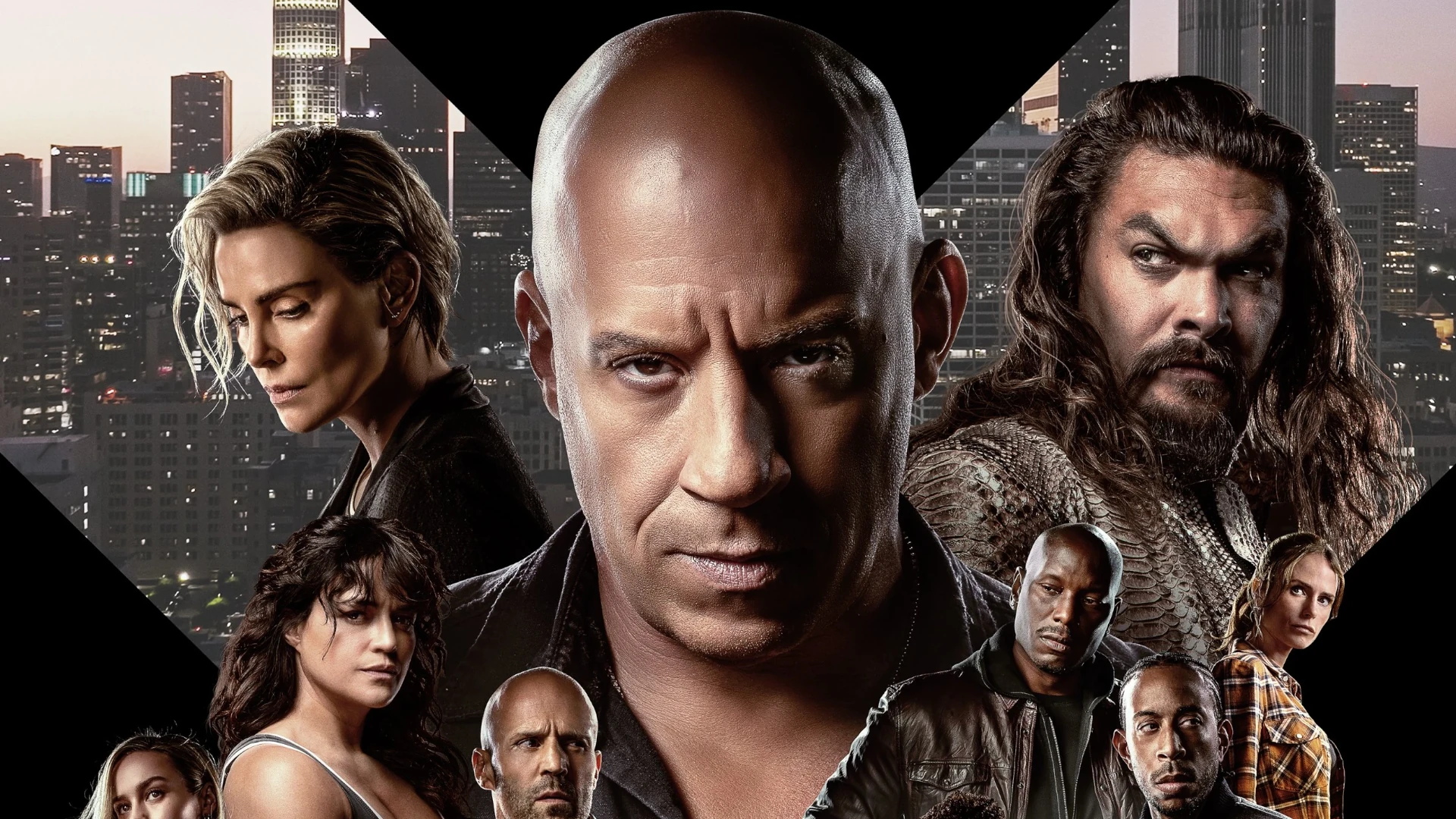
When the franchise launched in 2001, it centered on a tight-knit crew of Los Angeles street racers boosting DVD players from semi-trucks. Over two decades later, those same figures routinely save the world from international cyber-terrorists and rogue military factions. Tracking how the core players changed reveals a masterclass in shifting cinematic archetypes from grounded street-level criminals to near-invincible superhero ensemble casts.
Examining this trajectory requires looking past the physical stunts to see how relationships, motivations, and moral codes shifted. The transformation of these roles didn't happen overnight; it was a gradual escalation film by film that reshaped modern action blockbusters.
From Street Mechanics to Global Operatives
At the heart of the saga sits Dominic Toretto, played by Vin Diesel. In the original film, Dom is introduced as an ex-con, a fierce mechanic, and an underground garage boss who operates entirely outside the law. His core motivation is protection—protecting his sister Mia, his crew, and his rigid code of street honor.
As the series progressed through installments like Fast Five and Furious 7, Dom's jurisdiction expanded. Local heists turned into international gold-vault pulls, which quickly evolved into freelance tactical ops for secret government agencies led by figures like Mr. Nobody. Dom stopped being a mere car thief with a heavy moral compass and became a mythic figure whose sheer willpower and automotive physics-defying stunts placed him in the realm of modern folklore.
The Dual Evolution of Brian O'Conner
Paul Walker's Brian O'Conner provided the audience surrogate in the early entries as an undercover LAPD officer infiltrating Dom's inner circle. Brian's internal conflict initially drove the dramatic tension: duty to the badge versus loyalty to his newfound brother.
When Brian crossed the line to let Dom escape at the end of the first film, his archetype shifted from law enforcement to fugitive, and eventually, to family man. By Fast & Furious 6, Brian received a full government pardon alongside Dom, allowing him to officially step away from the criminal underworld to raise his children with Mia. Walker's tragic passing in 2013 froze Brian's character evolution in a state of peaceful retirement, giving his arc a permanent, resonant closure within the fictional universe where he lives on off-screen.
Letty Ortiz and Mia Toretto: Shifting Female Agency
Female characters in early 2000s action cinema often fell into passive love-interest tropes. The core women of this franchise—Letty Ortiz (Michelle Rodriguez) and Mia Toretto (Jordana Brewster)—defied this limitation early on, but their arcs still underwent massive structural changes.
Letty started as Dom's ride-or-die girlfriend and a skilled mechanic in her own right. Her apparent death in the fourth film and subsequent return as an amnesiac antagonist in Fast & Furious 6 gave her a complex psychological arc. Regaining her memories forced her to reconcile her past illegal life with a renewed sense of identity.
Mia, meanwhile, transitioned from the worried sister standing on the sidelines into an active driver and heist planner in Fast Five, only to step back later to protect her children before returning to the active fold in later sequels. Both characters demonstrate how the ensemble shifted from domestic grounding rods to active combatants.
Comic Relief to Tactical Specialists: Roman and Tej
Tyrese Gibson's Roman Pearce and Chris "Ludacris" Bridges' Tej Parker joined the core group later—Roman in 2 Fast 2 Furious and Tej expanding his role from a street race organizer to core crew member in Fast Five.
Initially serving distinct, contained narrative functions, they transformed into the primary tactical and technical support pillars of the team. Roman's evolution leans heavily into self-aware comedy—frequently pointing out the absurdities and near-death scenarios the crew survives. Tej evolved from a garage owner into a global hacker and tech expert capable of squaring off against high-tech syndicates.
Common Misconceptions About the Character Arcs
- Misconception: The characters were always super-spies working for government agencies.
- Reality: The first three films relied on local crime, street racing rings, and localized turf wars. Government partnerships didn't formally begin until the sixth installment.
- Misconception: Dom's core motivation changed from crime to global politics.
- Reality: Dom's stated motivation remains entirely focused on "family," regardless of whether the adversary is a local Los Angeles truck driver or an international cyber-terrorist.
Frequently Asked Questions
When did the characters transition from street racers to secret agents?
The shift began in Fast Five (2011) when the crew worked to clear their names, but the formal transition into government-backed operatives happened in Fast & Furious 6 (2013) when Luke Hobbs offered them full pardons in exchange for taking down Owen Shaw.
How was Brian O'Conner written out of the franchise?
Following Paul Walker's death during the production of Furious 7, the filmmakers used visual effects, body doubles, and unused footage to complete his scenes. In the narrative, Brian chose to retire from the dangerous life to prioritize raising his family with Mia.
Did any original core characters stay out of the later action-heavy sequels?
Most of the primary core cast members returned for the later ensemble films, though characters like Leon and Jesse from the 2001 original did not return after their initial appearances due to their characters' fates or narrative directions.



