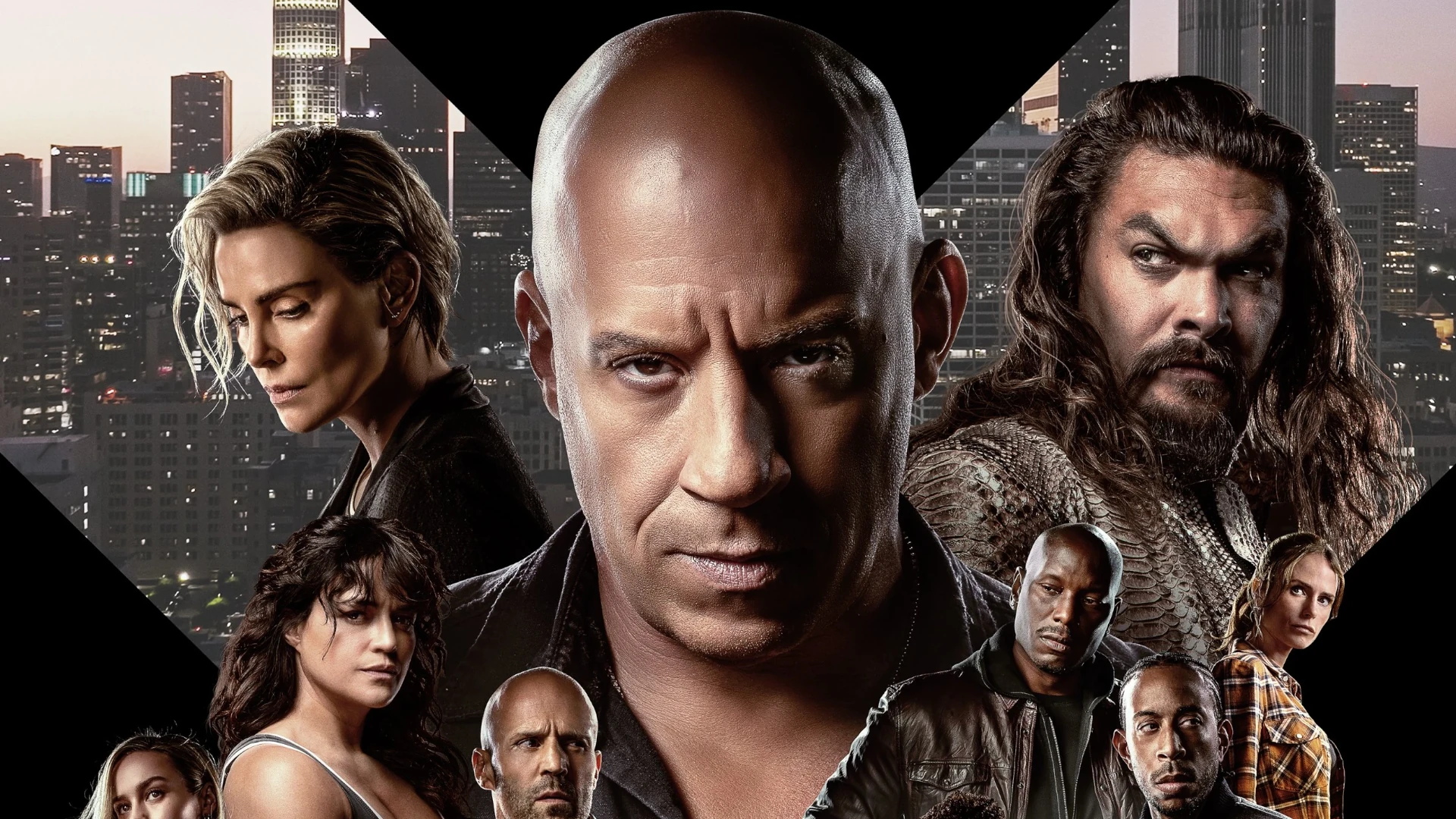
When The Fast and the Furious roared into theaters in 2001, it wasn't designed to launch a multi-billion-dollar cinematic empire. It was a modest street-racing thriller inspired by a magazine article. Yet, over two decades later, the franchise stands as one of Hollywood's most durable cash cows. That longevity doesn't stem solely from exploding cars or gravity-defying heists; it relies on an evolving ensemble cast whose on-screen chemistry and off-screen bonds redefined the modern action blockbuster.
At its core, the franchise's success is an actor-driven phenomenon. By turning a rotating crew of gearheads into a surrogate family, the films created an emotional anchor that kept audiences invested long after the novelty of nitrous-boosted imports wore off.
The Genesis of a Crew: 2001 to 2003
The original film rested entirely on the fragile balance between Vin Diesel's Dominic Toretto and Paul Walker's Brian O'Conner. Diesel brought a stoic, commanding gravity to Dom—an ex-con whose moral code was rooted entirely in loyalty to his crew. Walker provided the counterweight: an earnest, wide-eyed rookie torn between his badge and his growing admiration for the underground world.
That dynamic worked because the actors' real-time rapport translated organically to celluloid. Supporting players like Michelle Rodriguez (Letty Ortiz) and Jordana Brewster (Mia Toretto) immediately established that the women in this universe weren't mere window dressing; they were emotional and mechanical equals.
When the sequel, 2 Fast 2 Furious (2003), sidelined Diesel, it pivoted to a buddy-cop dynamic by pairing Walker with Tyrese Gibson's Roman Pearce and adding Ludacris as tech expert Tej Parker. Though initially dismissed by critics, this expansion injected much-needed comedic timing and camaraderie, setting the template for future ensemble scaling.
Shifting Gears from Street Racing to Global Heists
By the time the franchise hit its creative turning point with Fast Five (2011), the production realized that a traditional sequel wasn't enough. Director Justin Lin and the producers transformed the property into a high-octane heist series, requiring an expanded roster of specialists.
This pivot allowed the casting department to turn the films into a cinematic reunion hub. Bringing back actors from earlier, isolated entries—such as Sung Kang's Han Lue from The Fast and the Furious: Tokyo Drift—built a serialized continuity that rivaled comic book universes, long before shared universes became industry standard.
- The Specialist Model: Characters evolved from general street racers into distinct tactical archetypes, mirroring the structure of classic caper films like Ocean's Eleven.
- Global Expansion: Shooting across Rio de Janeiro, London, Abu Dhabi, and Tokyo allowed international actors and locations to enrich the visual tapestry without abandoning the central crew dynamic.
- Action Heavyweights: The later addition of Dwayne Johnson as Luke Hobbs and Jason Statham as Deckard Shaw proved that the ensemble could absorb major action stars, pit them against each other, and eventually fold them into the family fold.
Navigating Tragedy and Legacy
Few long-running franchises have had to navigate real-world tragedy while cameras were rolling. The sudden death of Paul Walker in November 2013 during the production of Furious 7 threatened to derail not just a single film, but the emotional architecture of the entire enterprise.
Rather than hastily writing the character out or recasting the role, the filmmakers and cast chose a path of profound respect. Utilizing cutting-edge visual effects, body doubles (including Walker's brothers, Caleb and Cody), and unused archival footage, the production completed Brian O'Conner's narrative arc. The resulting tribute at the end of Furious 7—where Dom and Brian share a final drive on diverging roads—resonated deeply because it honored a real-world bond shared by the actors over twelve years.
According to Box Office Mojo, Furious 7 crossed the $1.5 billion mark globally, proving that audiences weren't just showing up for spectacle; they were showing up to grieve and celebrate a beloved cinematic family together.
The Physical and Cultural Toll of Long-Term Franchising
Sustaining a twenty-year action franchise requires an extraordinary physical commitment from its performers. While stunt doubles handle the most hazardous sequences, core members like Vin Diesel, Michelle Rodriguez, and Tyrese Gibson have consistently performed extensive physical training and localized stunt work to maintain authenticity.
Rodriguez, in particular, fought hard to ensure her character Letty's return in Fast & Furious 6 was earned through gritty physical conflict rather than cheap plot convenience. This insistence on physical stakes helped the franchise avoid the cartoonish invulnerability that plagues many modern superhero films.
Furthermore, the cast's off-screen dynamics frequently bled into public consciousness. Publicized feuds and reconciliations among high-profile cast members ironically reinforced the "family" narrative, keeping the franchise in entertainment headlines even during years when no films were released. You can explore more about industry box office milestones and actor metrics through Variety.
Frequently Asked Questions
Which actors have appeared in the most Fast and Furious films?
Vin Diesel holds the record for most appearances as a main cast member, starring in nearly every installment (excluding a cameo in Tokyo Drift). Ludacris and Tyrese Gibson follow closely, having joined in parts two and five respectively and remaining franchise mainstays.
How did the franchise handle Paul Walker's exit after his passing?
The production used a combination of selective rewriting, advanced visual effects, archival audio, and physical body doubles—including Paul's brothers, Caleb and Cody Walker—to complete his remaining sequences in Furious 7.
Did the series start as a true ensemble cast?
No. The 2001 original focused primarily on the binary relationship between Dominic Toretto and Brian O'Conner, with supporting roles for Letty and Mia. It evolved into a true ensemble caper starting with Fast Five in 2011.
Why did Dwayne Johnson join the franchise?
Dwayne Johnson joined in Fast Five after Vin Diesel and director Justin Lin read a Facebook comment from a fan suggesting Johnson be added to the series. His entry as federal agent Luke Hobbs revitalized the box office pull and shifted the tone toward global scale action.



