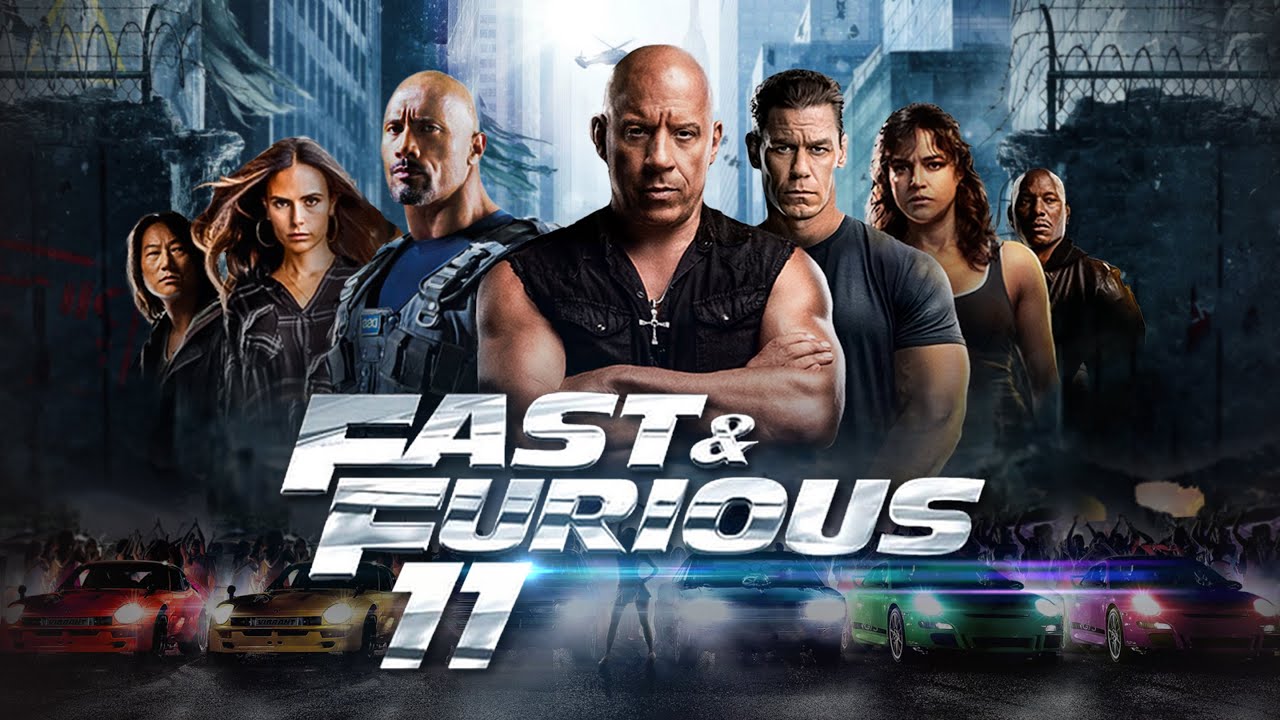
Released in 2013, Fast and Furious 6 stands as a watershed moment for a property that started as a modest street-racing story and evolved into a global heist phenomenon. Directed by Justin Lin, the film consolidated the franchise's shift toward high-concept tactical action while honoring the character-driven chemistry that kept audiences invested for over a decade. By uniting Dominic Toretto’s core crew with federal agent Luke Hobbs, the sixth installment redefined how contemporary blockbusters handle ensemble dynamics, stunt escalation, and serialized continuity.
The production arrived at a vital crossroads. After Fast Five successfully transformed the brand from underground car culture into a heist-driven spectacle, this sequel had to raise the stakes without losing its emotional anchor. It achieved this by bringing back Michelle Rodriguez's Letty Ortiz from apparent death, anchoring the high-octane vehicular combat in personal stakes. The resulting box-office haul of nearly $790 million worldwide proved that audiences wanted grander set pieces, provided the core family dynamic remained intact.
The Evolution of Ensemble Action
The blueprint of the franchise shifted dramatically from underground quarter-miles to globe-trotting tactical espionage. In this film, the action choreography relies on physical grit combined with military-grade opposition led by Luke Evans as Owen Shaw. Instead of competing against rival street racers, Dom’s crew operates as an unconventional military unit.
Director Justin Lin grounded the massive set pieces in practical stunt work wherever possible. The tank sequence on the Spanish highway and the climax involving a massive transport plane on an impossibly long runway showcase a deliberate choice to use physical weight. Even as digital effects enhanced the environments, the impact of metal crashing against metal retained a tactile quality that separated these films from purely computer-generated blockbusters. For broader context on this topic, detailed analysis is available at The New York Times.
The character pairing also evolved. Dwayne Johnson’s Hobbs transitioned from antagonist to reluctant ally, creating a dynamic friction with Vin Diesel’s stoic leadership. Meanwhile, supporting players like Roman Pearce (Tyrese Gibson) and Tej Parker (Ludacris) expanded the comedic and tactical relief, ensuring the ensemble breathed naturally amidst the chaos.
Cast Dynamics and Character Arcs
The returning principal cast members brought a shorthand history to their performances that manufactured instant emotional resonance:
- Vin Diesel as Dominic Toretto: Anchored the film's thematic obsession with family, driving the emotional core when dealing with Letty's memory loss.
- Paul Walker as Brian O'Conner: Handled a compelling internal conflict, returning to the wrong side of the law voluntarily to protect his family.
- Michelle Rodriguez as Letty Ortiz: Portrayed a compelling psychological struggle as an amnesiac operative caught between past loyalties and new programming.
- Dwayne Johnson as Luke Hobbs: Provided relentless physical presence and verbal sparring that anchored the law enforcement side of the narrative.
- Luke Evans as Owen Shaw: Delivered a cold, calculating military antagonist who served as a dark mirror image to Dominic Toretto.
This balance of physical confrontation and emotional vulnerability allowed the ensemble to carry an expanding narrative weight without feeling bloated.
Redefining the Modern Blockbuster Franchise
Most long-running properties suffer from diminishing returns by their sixth entry, but this film revitalized its universe by embracing serialised television plotting on a cinematic scale. Long before cinematic universes became an industry standard template, Universal Pictures used post-credits sequences to completely recontextualize upcoming entries.
The introduction of Jason Statham as Deckard Shaw during the mid-credits sting tied up loose narrative threads from The Fast and the Furious: Tokyo Drift and established a direct bridge to the subsequent movie. This structural choice transformed individual releases into chapters of an ongoing saga, rewarding loyal viewers who tracked the continuity across multiple films. You can read more about how major studios structure franchise continuity through resources like Box Office Mojo.
Common Misconceptions About the Production
Viewers often assume that the transition from street racing to espionage happened overnight, but the seeds were planted as early as the fourth film. The series gradually escalated its scope across multiple entries rather than executing a sudden genre pivot.
Another common error involves the physical scale of the stunts. While casual viewers frequently label the entire set pieces as computer-generated, second-unit teams and stunt coordinators utilized actual modified vehicles, precision driving rigs, and real highway closures in the UK and Canary Islands to capture authentic motion before applying digital clean-up.
Frequently Asked Questions
Why did Letty return in this film?
Letty’s apparent death in the fourth installment was retconned to introduce a high-stakes emotional conflict for Dominic Toretto, forcing him to fight a tactical mercenary crew while trying to help recover her lost memories.
How does this movie connect to Tokyo Drift?
The timeline of the franchise was restructured around this entry and its predecessor to incorporate Tokyo Drift smoothly, aligning the fate of Han Lue with the broader narrative arc introduced by the Shaw family.
What was the budget and box office performance?
Produced on an estimated budget between $160 million and $260 million, the film grossed approximately $788 million worldwide, cementing its status as a massive commercial success for Universal Pictures.
Where was the movie filmed?
Principal photography took place primarily across international locations, including multiple sites in London, Glasgow, the Canary Islands, and studio soundstages in the United Kingdom.



