Italy's cultural footprint spans millennia, built by individuals who fundamentally reshaped global art, science, governance, and philosophy. From the engineering feats of ancient Rome to the experimental breakthroughs of the Renaissance and the vibrant aesthetics of modern cinema, famous Italian figures established benchmarks that still anchor Western civilization.
Understanding this legacy requires looking past generic summaries. We need to examine who these figures were, the specific mechanics of their achievements, and how their breakthroughs continue to influence daily life across the globe.
Ancient Foundations: Engineering, Law, and Rhetoric
Long before the modern nation-state formed in 1861, the Italian peninsula served as the crucible for legal frameworks, municipal engineering, and civic discourse that govern modern societies.
Marcus Tullius Cicero (106–43 BC)
As a statesman, lawyer, and orator, Cicero didn't just practice politics in the Roman Republic—he codified the theoretical vocabulary of civic duty and natural law. His speeches against Catiline and philosophical treatises like De Officiis (On Duties) established concepts of public service, constitutional checks, and human rights that later heavily influenced the American and French Revolutions.
Vitruvius (c. 80–15 BC)
An architect and engineer under Augustus, Vitruvius wrote De architectura (Ten Books on Architecture). This treatise codified the principles of firmitas, utilitas, and venustas (strength, utility, and beauty). His geometric studies of human proportion famously inspired Leonardo da Vinci's Vitruvian Man, linking art, mathematics, and structural integrity for centuries.
The Renaissance Vanguard: Art, Science, and Humanism
Between the 14th and 17th centuries, Italian city-states like Florence, Venice, and Rome experienced an intellectual awakening driven by merchant wealth, civic competition, and the recovery of classical texts.
Leonardo da Vinci (1452–1519)
Born in Vinci, near Florence, Leonardo embodied the ultimate Renaissance polymath. His breakthroughs weren't limited to masterpieces like the Mona Lisa or The Last Supper; his anatomical drawings—completed through systematic dissection—mapped human musculature and cardiovascular function with unprecedented accuracy.
- The Notebooks: Over 13,000 pages of notes reveal designs for armored vehicles, flying machines, and hydraulic pumps centuries before industrial manufacturing existed.
- Sfumato Technique: Leonardo pioneered this painting method, blending tones and colors imperceptibly to eliminate harsh outlines and mimic the natural blur of human sight.
Galileo Galilei (1564–1642)
Working in Pisa and Padua, Galileo transformed astronomy from a philosophical exercise into an empirical science. By improving the refracting telescope, he observed the phases of Venus, the four largest moons of Jupiter, and lunar craters.
"Mathematics is the alphabet with which God has written the universe." — Galileo Galilei
His insistence on empirical evidence over scriptural dogma triggered a historic clash with the Roman Inquisition, permanently altering the relationship between science and institutional authority.
Political Theory and the Modern State
Italy's turbulent history of fractured city-states and foreign invasions forged hard-headed realists who analyzed power without romantic illusions.
Niccolò Machiavelli (1469–1527)
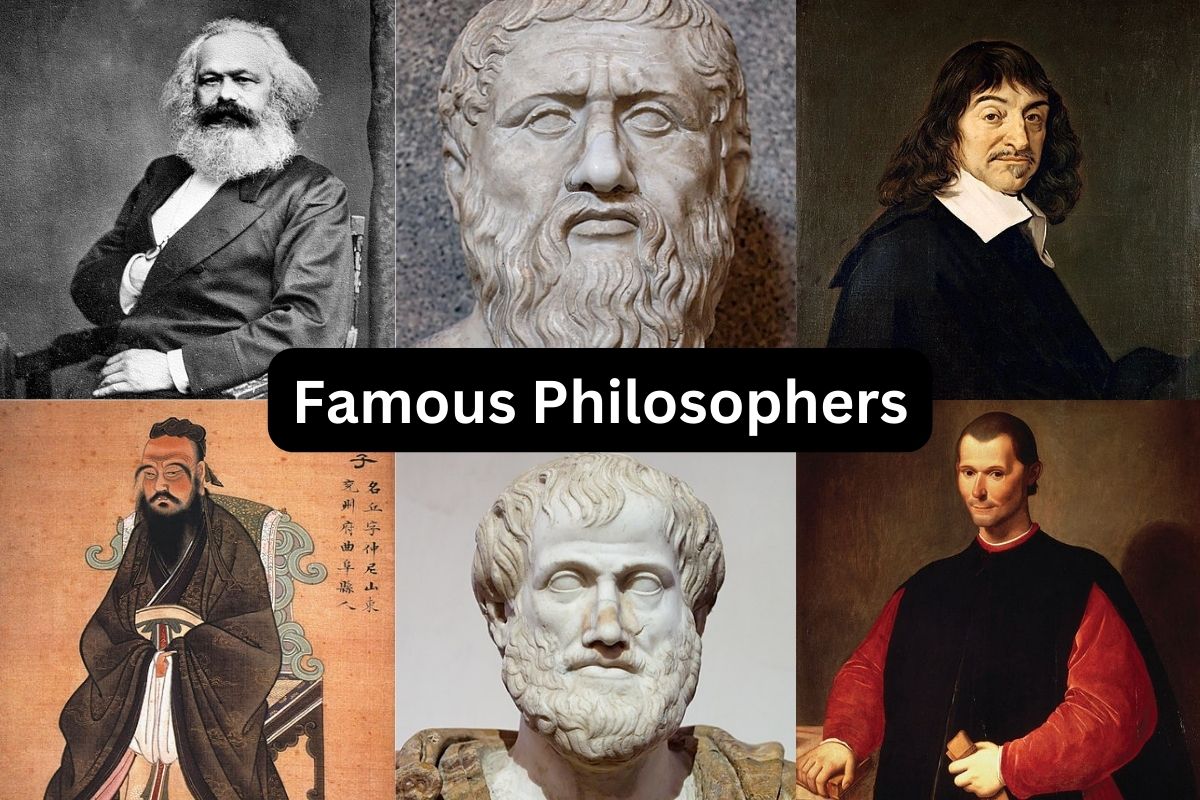
As a diplomat for the Florentine Republic, Machiavelli observed firsthand the ruthless political maneuvering of Cesare Borgia and French monarchs. In his 1513 treatise The Prince, he divorced political ethics from theological morality.
- Pragmatic Governance: Machiavelli argued that maintaining state stability often requires leaders to employ deception, cruelty, and flexibility rather than rigid virtue.
- The Birth of Realpolitik: His analytical approach laid the foundation for modern political science and international relations theory.
Giuseppe Garibaldi (1807–1882)
A master of irregular warfare, Garibaldi led the Risorgimento military campaigns that unified the Italian peninsula. With his volunteer force of Redshirts, he conquered the Kingdom of the Two Sicilies in 1860 during the Expedition of the Thousand, handing over southern Italy to King Victor Emmanuel II to create a unified kingdom. His tactical brilliance and republican ideals made him a global hero of nineteenth-century nationalism.
Modern Visionaries: Cinema, Design, and Industry
Twentieth-century Italy shifted global culture through cinematic innovation, industrial design, and high fashion, proving that its creative engine remained as potent as it was during the Renaissance.
Federico Fellini (1920–1993)
Fellini redefined cinematic grammar by merging memory, dreams, fantasy, and satire. Films like 8½ and La Dolce Vita broke away from traditional linear storytelling, establishing a surrealist cinematic language that directly inspired directors like Martin Scorsese, David Lynch, and Woody Allen.
Miuccia Prada (born 1949)
Taking over her family's luxury leather goods house in 1978, Prada transformed luxury fashion by introducing industrial nylon backpacks and championing an intellectual, minimalist aesthetic. Her work challenged traditional notions of bourgeois femininity, positioning fashion as a legitimate medium for contemporary art and sociological commentary. You can explore her foundational design philosophy through the Prada Group institutional archive.
Frequently Asked Questions
What defines the historical impact of famous Italian figures?
Their impact stems from a unique intersection of geography, patronage, and humanism. Italian thinkers and artists consistently bridged ancient classical knowledge with radical empirical and aesthetic innovations, setting global standards in law, art, and science.
Which Italian city produced the most historical luminaries?
Florence produced the highest concentration of Renaissance masters—including Dante, Machiavelli, Botticelli, and Leonardo da Vinci—largely due to the financial backing of the Medici family and intense civic competition among Italian city-states.
How did Italian inventors change daily modern life?
Beyond art and literature, Italians invented technologies that power modern society. Antonio Meucci developed early voice communication prototypes, Guglielmo Marconi pioneered long-distance radio transmission, and Alessandro Volta invented the first chemical battery, giving us the scientific unit of the "volt."
Are modern Italian cultural contributions still influential?
Yes. Italy remains a global superpower in industrial design, automotive engineering (Ferrari, Lamborghini), architecture, and gastronomy, maintaining cultural capital that punches far above its geographic size.



