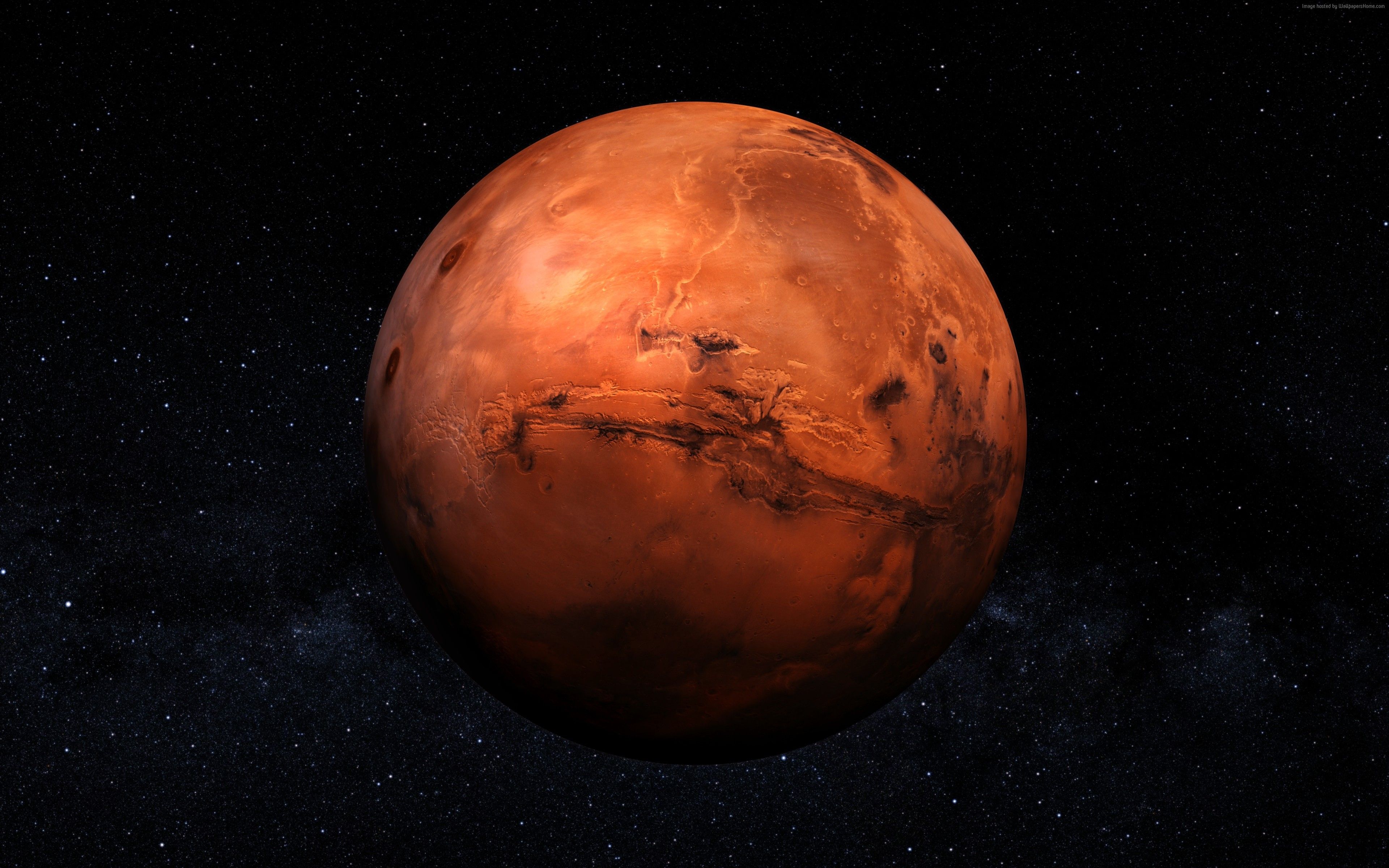
Mars has captured human imagination for centuries, transforming from a simple red point of light in the night sky into a complex world of ancient riverbeds, towering volcanoes, and frozen craters. Exploring Mars isn't just about planting a flag on a distant dust-covered surface. It's about reconstructing how a rocky neighbor in our solar system once held liquid water and conditions that could have supported ancient microbial life.
Decades of orbiters, landers, and mobile robotic explorers have rewritten our understanding of Martian geology, atmospheric loss, and climate history. Modern planetary science relies on advanced autonomous rovers, orbital spectrometers, and deep-sample analysis to peer beneath the rusted surface. When we examine what makes Mars tick, we uncover clues about how rocky planets form, evolve, and ultimately lose their habitable environments.
The Geological Evolution of Mars
Mars formed about 4.5 billion years ago from the same swirling cloud of gas and dust that built the inner planets. Unlike Earth, which maintained plate tectonics and a powerful magnetic dynamo, Mars cooled off rapidly. That rapid cooling shut down its global magnetic field, leaving the planet exposed to the solar wind. Over hundreds of millions of years, solar radiation stripped away most of the Martian atmosphere, turning a warm, wet world into a freezing desert.
Ancient impact basins and dried-out river channels tell the story of this dramatic shift. The northern hemisphere features smooth lowlands carved by ancient oceans or massive floods, while the southern hemisphere consists of heavily cratered highlands dating back to the planet's earliest epoch. Volcanic provinces like the Tharsis region—home to Olympus Mons, the tallest volcano in the solar system—show that internal heat shaped the crust long after the magnetic field collapsed.
Modern Robotic Exploration
Ground-level science has accelerated rapidly thanks to sophisticated robotic laboratories. NASA’s Perseverance rover operates inside Jezero Crater, an ancient lake bed that once held liquid water and organic molecules. Perseverance set an all-time off-world driving record by navigating more than 28 miles across harsh terrain largely on its own, using onboard hazard avoidance software to map routes across fractured bedrock and sandy ripples.
The rover doesn't just drive; it drills core samples from key rock outcrops and seals them in titanium tubes for potential return to Earth. Missions managed by space agencies like the National Aeronautics and Space Administration and the European Space Agency coordinate these efforts to target locations where mineral deposits could preserve microscopic fossils.
Water, Climate, and Biosignature Detection
Finding water is the cornerstone of modern astrobiology. We know Mars possesses plenty of water ice locked away in its polar ice caps and buried beneath mid-latitude glaciers. Liquid water, however, cannot persist on the surface today because the atmospheric pressure is too low and temperatures are too cold.
Billions of years ago, the story was entirely different. Clay minerals and carbonate deposits found by rovers indicate that neutral or mildly alkaline water once pooled across the surface for long stretches. During its climb along the rim of Jezero Crater, Perseverance discovered potential biosignatures—specific chemical and mineral textures that could be the remnants of ancient microbial activity. Confirming these signatures requires bringing samples back to terrestrial laboratories equipped with instruments too large to fit inside a spacecraft.
Common Misconceptions About Mars
- Mars is hot and covered in red sand: While iron oxide dust gives the surface a rusty hue, Mars is actually a freezing desert where average temperatures hover around minus 80 degrees Fahrenheit.
- Liquid water flows freely today: Dark streaks on crater walls, known as recurring slope lineae, were once thought to be flowing briny water, but current data points to dry granular flows of sand and dust.
- The atmosphere is mostly oxygen: The Martian atmosphere is 95 percent carbon dioxide, making it completely unbreathable for humans without life support systems.
Frequently Asked Questions
Why is Mars red?
The surface contains massive amounts of iron oxide, commonly known as rust. This fine dust gets kicked up into the thin atmosphere, giving the entire sky a butterscotch or reddish tint.
Could humans ever live on Mars?
Establishing a sustainable human settlement requires solving major hurdles, including cosmic radiation, low gravity, toxic soil chemistry, and extreme cold. Robotic precursors and in-situ resource utilization tests are currently evaluating how to extract water and oxygen from local materials.
How long does it take to travel to Mars?
A typical journey takes between six and nine months each way, depending on the orbital alignment of Earth and Mars, which only opens a favorable launch window roughly every 26 months.
Does Mars have any moons?
Mars has two tiny, irregularly shaped moons named Phobos and Deimos. Most astronomers believe they are captured asteroids pulled in by Martian gravity rather than natural accretions from the planet's formation.



