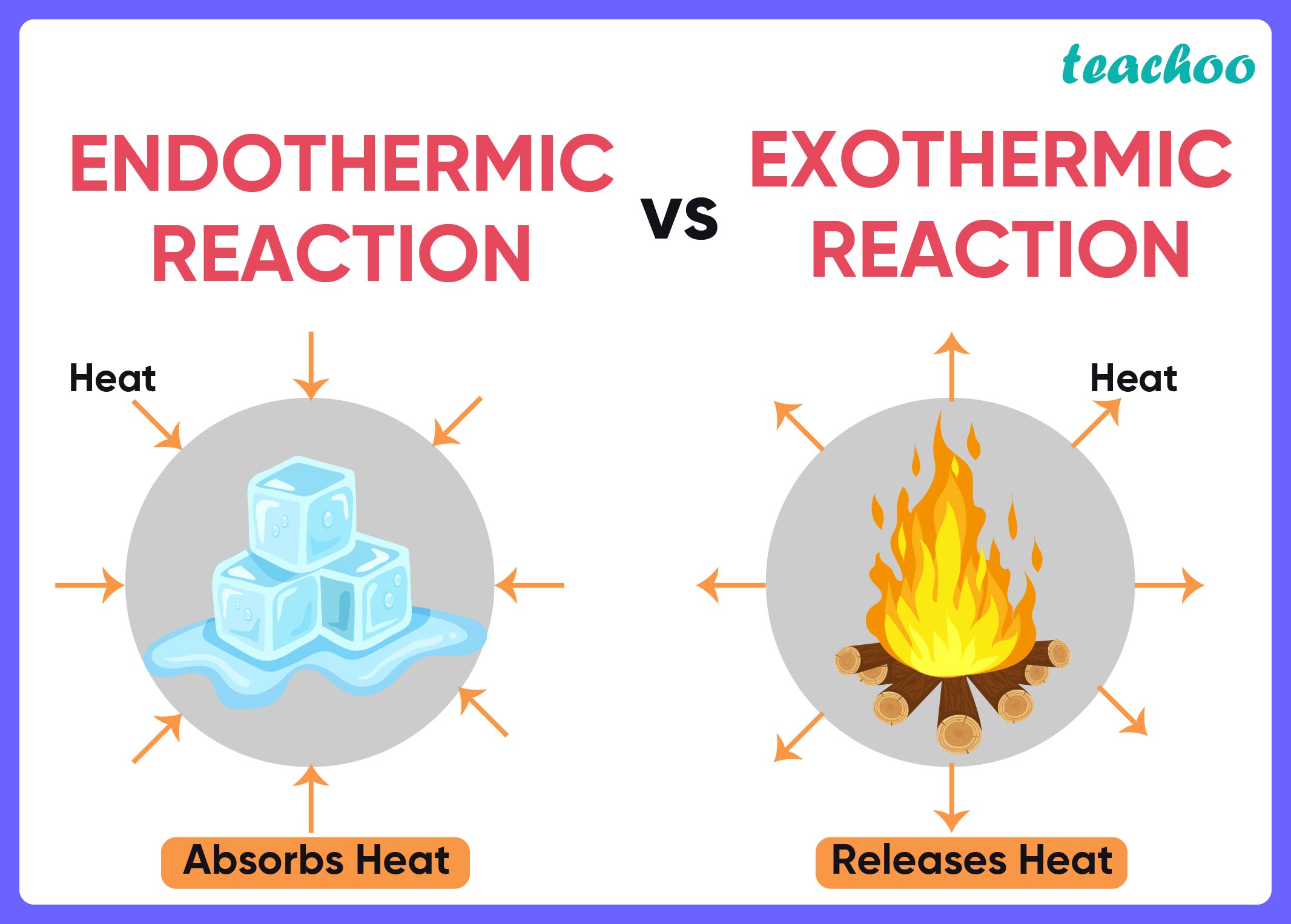
Every chemical transformation is a story of breaking old bonds and forging new ones. At the core of this atomic rearrangement lies a strict accounting of energy. Whether a beaker grows scorching hot or frosts over in minutes, you're witnessing the constant tug-of-war between energy released and energy absorbed. Understanding this energy balance lets chemists predict reaction behavior, control industrial manufacturing plants, and explain how living organisms maintain stable internal temperatures.
To master this topic, we need to look past generic textbook definitions and examine enthalpy changes, bond dissociation energies, and real-world thermodynamic systems. Let's break down how energy moves during chemical reactions and why this balance dictates everything from laboratory synthesis to global energy technologies.
Defining Enthalpy and Energy Balance
When studying chemical reactions, scientists use a property called enthalpy, represented by the symbol $H$. Enthalpy measures the total heat content of a thermodynamic system at constant pressure. Because absolute enthalpy is impossible to measure directly, chemists measure the change in enthalpy ($\Delta H$) during a process:
$$\Delta H = H_{\text{products}} - H_{\text{reactants}}$$
When reactants turn into products, energy is either conserved by releasing it to the surroundings or consumed by pulling it inward. The First Law of Thermodynamics tells us that energy cannot be created or destroyed. Therefore, any net difference between the energy required to break bonds and the energy released by forming new bonds must manifest as heat transfer.
If products possess less chemical potential energy than the reactants, the excess energy escapes into the environment. If products hold higher potential energy, the system must draw thermal energy from its surroundings to bridge the gap. This balance determines whether a reaction heats up your hand or drops the temperature of a flask.
Exothermic Reactions: Energy Released
An exothermic reaction releases thermal energy into the surroundings, resulting in a negative $\Delta H$ value. Think about striking a match or burning natural gas in a furnace. The surroundings warm up because the chemical bonds formed in the products are much more stable and have lower potential energy than the bonds broken in the reactants.
The Bond Energy Mechanics
Why do exothermic reactions release heat? It all comes down to bond stability.
- Breaking existing bonds requires an input of energy (endothermic step).
- Forming new bonds releases energy (exothermic step).
In an exothermic process, the energy released when new bonds form exceeds the energy consumed to break old bonds. For instance, burning methane ($CH_4$) with oxygen ($O_2$) produces carbon dioxide ($CO_2$) and water ($H_2O$). The double bonds in $CO_2$ and single bonds in $H_2O$ are exceptionally strong and stable. Reaching this stable state releases a surge of thermal energy.
Real-World Examples of Exothermic Processes
- Combustion: Burning fossil fuels, wood, or hydrogen gas releases intense heat used for electricity generation and transportation.
- Neutralization: Mixing a strong acid like hydrochloric acid with a strong sodium hydroxide base releases heat as salt and water form.
- Oxidation: The slow oxidation of iron creates rust over time, releasing a tiny, continuous amount of heat.
Endothermic Reactions: Energy Absorbed
An endothermic reaction absorbs thermal energy from its surroundings, resulting in a positive $\Delta H$ value. If you touch a vessel where an endothermic reaction is occurring, it will feel cold because the mixture draws heat away from your skin and the ambient air.
Overcoming Activation Energy Barriers
In these reactions, the energy needed to break the initial chemical bonds is greater than the energy released when the new products form. Because the system lacks sufficient internal energy to complete this transition independently, it must continuously pull heat from the external environment.
A classic classroom example involves mixing solid barium hydroxide octahydrate with ammonium chloride. As the chemicals react, the temperature inside the beaker plummets so fast that a drop of water on a wooden block underneath the beaker freezes solid, cementing the glass to the wood.
Practical Applications of Endothermic Processes
- Photosynthesis: Plants absorb solar energy to convert carbon dioxide and water into glucose and oxygen, storing light energy as chemical bonds.
- Thermal Decomposition: Manufacturing quicklime requires heating calcium carbonate intensely to break it down into calcium oxide and carbon dioxide gas.
- Instant Cold Packs: Snapping an ammonium nitrate cold pack breaks an inner barrier, allowing the salt to dissolve in water in an endothermic process that drops the pack's temperature rapidly for athletic injuries.
Calculating Enthalpy Changes
To move past qualitative descriptions, chemists calculate exact energy balances using standard enthalpies of formation ($\Delta H_f^\circ$). You can determine the total enthalpy change of a reaction by subtracting the sum of the enthalpies of formation of the reactants from the sum of the enthalpies of formation of the products:
$$\Delta H_{\text{rxn}}^\circ = \sum \Delta H_f^\circ (\text{products}) - \sum \Delta H_f^\circ (\text{reactants})$$
If the resulting value is negative, the reaction is exothermic. If positive, it's endothermic. Industrial chemical engineers rely on these exact calculations to design reactor vessels that can safely dissipate excess heat or supply required thermal energy without risking thermal runaway or reactor failure. You can review detailed thermodynamic property tables through resources provided by the National Institute of Standards and Technology.
Common Mistakes in Energy Balance Analysis
Misinterpreting thermodynamic data is easy when you confuse temperature changes with heat flow. Watch out for these frequent pitfalls:
- Assuming temperature drop means no reaction occurred: Some endothermic reactions happen quickly and cause dramatic cooling, which can fool observers into thinking nothing is happening.
- Confusing temperature with heat: Temperature measures average kinetic energy, while heat measures total thermal energy transferred between systems of different temperatures.
- Ignoring phase changes: Melting ice absorbs heat (endothermic), but the temperature of the ice-water mixture remains constant at zero degrees Celsius until all ice melts. All absorbed energy goes entirely into breaking intermolecular hydrogen bonds rather than raising molecular motion.
Frequently Asked Questions
Why do some exothermic reactions require heat to start?
Even though a reaction releases net energy overall, reactant bonds must still be broken first. This initial energy input is called the activation energy. Striking a match provides friction, which supplies the small activation energy needed to start the combustion process.
Can a reaction switch between exothermic and endothermic?
No, the standard enthalpy change for a specific chemical reaction under constant conditions is a fixed thermodynamic property. However, a multi-step industrial process may feature individual exothermic and endothermic steps occurring sequentially.
How do catalysts affect energy balance?
Catalysts do not change the overall enthalpy change ($\Delta H$) of a reaction. Instead, they provide an alternative reaction pathway with a lower activation energy, making the reaction proceed faster without altering the net energy balance between start and finish. Learn more about reaction rates and catalysts via the Royal Society of Chemistry.
Why do cold packs stop cooling down over time?
An instant cold pack relies on an endothermic dissolution process that absorbs heat until the system reaches thermal equilibrium with the surrounding environment. Once the solution matches room temperature, heat transfer stops, and the pack loses its cooling effect.


