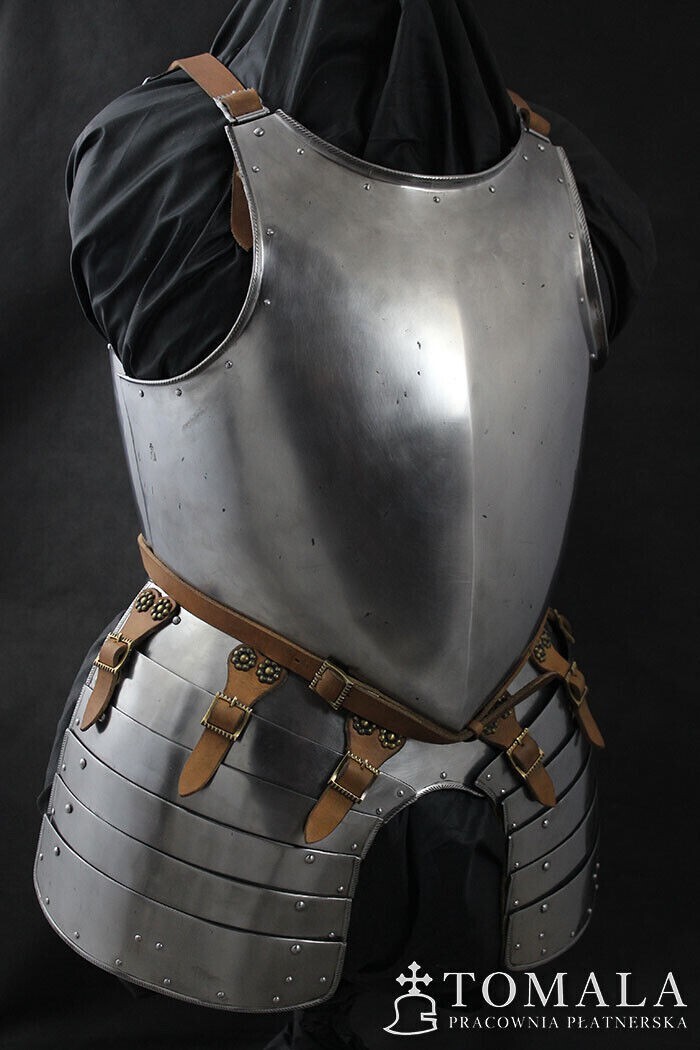
Armor changed because weapons kept getting better at piercing it. The cuirass started as a hammered slab of bronze that protected a Greek hoplite from spears and swords, and it ends as a lightweight polyethylene and ceramic plate capable of stopping high-velocity rifle rounds. This arms race spans three thousand years of material science and battlefield tactics.
If you look at the core search intent behind tracking body armor through history, it isn't just about listing old helmets and chest plates. Readers want to understand the physics of protection, why specific materials succeeded or failed, and how ancient smithing evolved into modern molecular chemistry. Let's trace how the cuirass adapted to every major military revolution without getting bogged down in fluff.
The Bronze Age Origins and the Weight Penalty
Early armor was fundamentally a mass-management problem. Bronze age smiths faced severe physical limitations. Copper and tin alloys yielded strong castings, but hammering them into large torso pieces meant dealing with massive weight.
Around 1400 BC, Mediterranean warriors wore rigid bronze breastplates and backplates tied together with leather straps. These early cuirasses weighed anywhere from fifteen to twenty kilograms. Wearing one required immense upper-body strength, and it severely limited mobility. Observers at Bloomberg have shared their thoughts on this matter.
Why did soldiers wear them despite the bulk? Because bronze stopped bronze. A thrust from a spear or a slash from a sword would glance off a curved metal plate instead of piercing internal organs.
Combatants had to weigh survivability against exhaustion. If a soldier fell in muddy terrain while wearing twenty kilograms of rigid metal, standing back up without help was nearly impossible. The tactical tradeoff was absolute protection for the torso at the cost of operational agility.
Iron, Steel, and the Roman Segmented Innovation
By the Iron Age, metallurgy shifted toward more abundant and flexible metals. The Romans revolutionized tactical armor with the lorica segmentata.
Instead of a single heavy bronze shell, Roman legionaries wore overlapping horizontal iron bands secured with internal leather straps and brass buckles. This design solved the mobility problem. The bands slid over one another, allowing soldiers to raise shields, swing short swords (gladius), and march long distances without chafing or binding.
+-------------------------------------------------------+
|  Evolutionary Milestone   |  Primary Material Used    |
+---------------------------+---------------------------+
|  Late Bronze Age Cuirass  |  Cast & Hammered Bronze   |
|  Roman Segmentata         |  Overlapping Iron Bands   |
|  Medieval Full Harness    |  Quenched & Tempered Steel|
|  Modern Ballistic Carrier |  Kevlar & Ceramic Plates  |
+-------------------------------------------------------+
When the Western Roman Empire fell, armor manufacturing fragmented. Local blacksmiths forged mail shirts (lorica hamata) because they were easier to produce and repair than custom-fitted plate. Mail protected well against slashing cuts, but it transmitted the full kinetic force of a heavy mace or war hammer straight to the wearer's bones.
By the late medieval period, European armorers mastered blast-furnace technology and heat-treating. They built full steel plate harnesses, including anatomically tailored breastplates designed to deflect crossbow bolts and early firearms. These plates were polished bright to resist rust and curved so sharply that incoming projectiles slid off harmlessly.
The Gunpowder Crisis and the Steel Arms Race
The battlefield shift that truly broke traditional armor was gunpowder. When matchlock and wheel-lock muskets entered widespread European service in the 15th and 16th centuries, standard steel plate no longer guaranteed safety.
Armorer guilds faced a brutal reality check. To stop a musket ball, a breastplate had to be thick enough to resist a high-velocity lead projectile. Smiths tested plates by firing a pistol at point-blank range, leaving a distinct dent known as a "proof mark."
Plates stamped with a proof mark proved they could stop a bullet, but they weighed so much that soldiers abandoned them. Foot soldiers discarded heavy body protection entirely in the 17th century to gain speed and maneuverability. Only cavalry units like French cuirassiers kept heavy breastplates into the Napoleonic era and World War I, though these could only stop glancing shots or pistol rounds at long range.
According to historical records from the Royal Armouries Museum, the transition away from metal armor was driven entirely by the velocity and mass of industrialized firearm projectiles.
The 20th Century: Silk, Nylon, and Ballistic Fibers
Modern body armor was born out of trench warfare and shrapnel wounds. During World War I, British and American militaries tested primitive flak jackets made of overlapping steel plates sewn into canvas, but they were too heavy for infantry patrols.
The real breakthrough came with synthetic polymers. In the mid-20th century, DuPont developed ballistic nylon. During the Korean War, nylon-doron vests saved thousands of lives by catching low-velocity fragmentation from mortar shells and grenades.
The definitive shift happened with the invention of Kevlar in the 1960s. Kevlar is an aramid fiber that is five times stronger than steel on an equal-weight basis. When a bullet strikes a woven Kevlar vest, the tightly bound fibers absorb and disperse the kinetic energy across a wide surface area, preventing the projectile from penetrating the torso.
The National Institute of Justice sets modern standards for ballistic resistance, classifying soft armor vests by levels based on the handgun or rifle rounds they can stop without excessive backface deformation.
Modern Hybrid Systems: Ceramic Plates and Nanomaterials
Today's tactical operators don't rely solely on soft fabric. Handguns require soft aramid weaves, but high-powered rifle rounds demand hard intervention.
Modern military carriers use a hybrid setup:
- Soft Armor Backer: Multi-layer aramid or ultra-high-molecular-weight polyethylene (UHMWPE) fabric that stops handgun rounds and absorbs blunt trauma.
- Hard Armor Plates: Ceramic or composite strike faces inserted into front and rear pockets.
When a high-velocity rifle round hits a ceramic plate, the ceramic material shatters the projectile's tip, spreading the energy before the underlying composite backing catches the pulverized fragments.
Researchers are currently testing liquid armor and shear-thickening fluids that remain flexible during normal movement but instantly harden upon receiving a high-speed impact. This brings the evolution of the cuirass full circle: returning to a flexible second skin that hardens only when danger strikes.
Frequently Asked Questions
Why did ancient civilizations prefer bronze over iron for early cuirasses?
Early iron-working techniques produced weak, brittle metal until reliable carburization and quenching processes were invented. Bronze could be easily cast into rigid anatomical shapes and hammered into strong plates before iron metallurgy matured.
Can modern bulletproof vests stop knife attacks?
Standard soft Kevlar vests designed for firearms can actually be penetrated by sharp, narrow blades because the fibers part easily under point loads. Protection against stabbings requires specialized stab-resistant panels made from tightly woven laminated aramid or rigid metal meshes.
What is the difference between soft armor and hard armor?
Soft armor consists of flexible woven synthetic fibers that stop handgun rounds and shrapnel. Hard armor uses rigid ceramic, steel, or polyethylene plates designed to defeat high-velocity rifle rounds like 5.56mm or 7.62mm ammunition.
Why do police and military personnel still experience blunt trauma wearing armor?
Even if a bullet doesn't penetrate the vest, its kinetic energy transfers into the body. This can cause bruised ribs, internal bleeding, or organ damage, which is why modern carriers incorporate thick padding and shock-absorbing backing materials.



