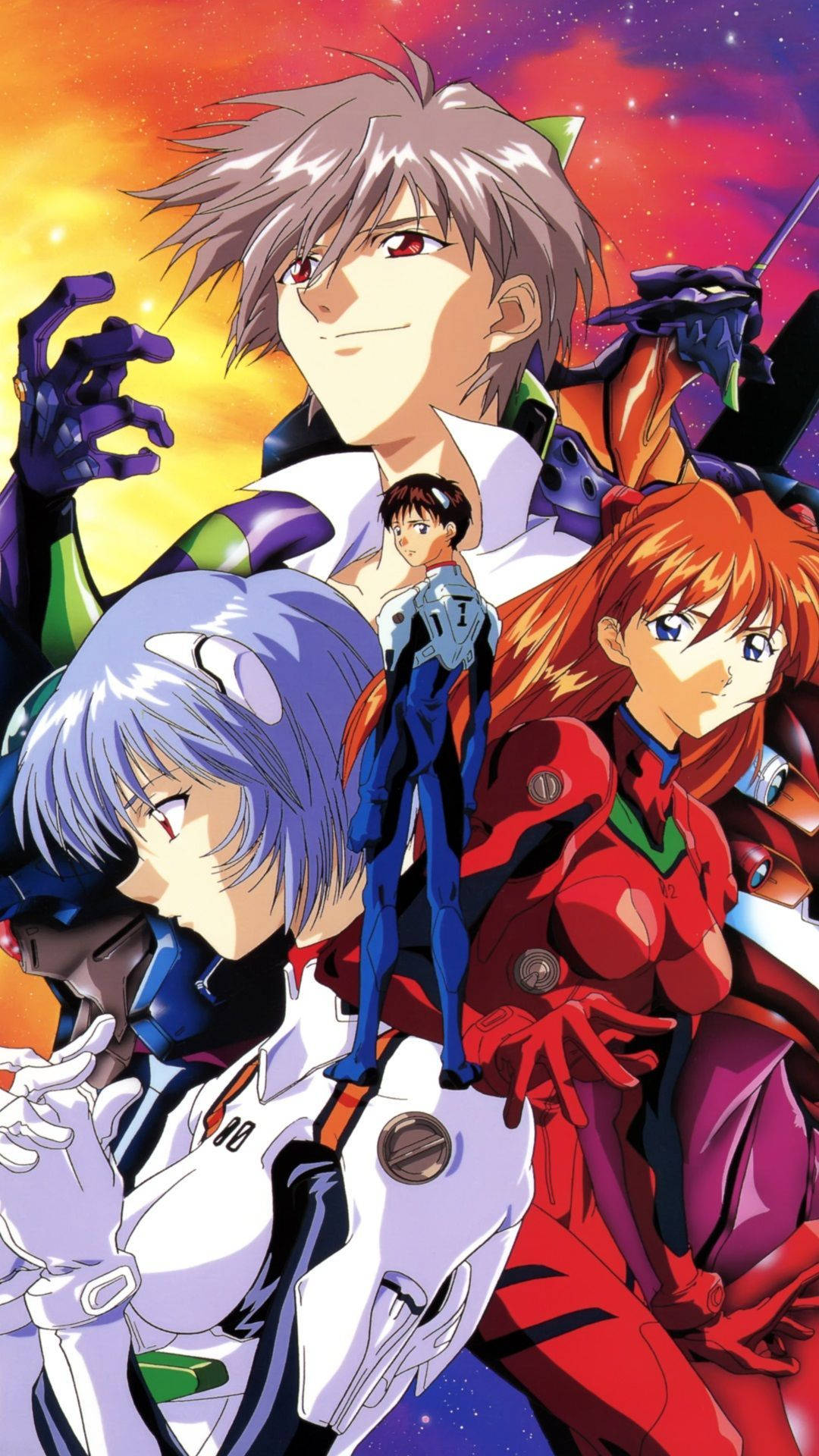
Neon Genesis Evangelion treats its monstrous adversaries not as mindless beasts, but as ancient, deliberate entities pulled straight from Abrahamic myth. The antagonists known as Angels drive the psychological and physical wreckage of Hideaki Anno's 1995 masterpiece. Every single one carries a moniker borrowed from Jewish mysticism, Christian apocrypha, and ancient folklore, acting as a direct clue to their abilities, personality, and thematic purpose.
Understanding these monikers gives you a front-row seat to the show's heavy religious and philosophical scaffolding. Let's break down the naming conventions, the official chronological roster, and the deeper lore behind every adversary NERV faces.
The Origin of the Names
In the lore of the series, the antagonistic entities aren't native to Earth. They are the offspring of Adam, the first progenitor seed of life, while humanity descends from Lilith. When they wake up or arrive in Tokyo-3, the global defense organization NERV gives them code names based on ancient angelology.
Creator Hideaki Anno and his staff didn't pick these monikers out of a hat. They drew from the Zohar, the Book of Enoch, and various esoteric texts. In the show's universe, humanity discovers Dead Sea Scrolls that predict the exact arrival schedule and nature of these foes, prompting the use of traditional angelic names for identification.
The Complete Roster of Angels
The series features a structured lineup, shifting from physical brutes to metaphysical mind-benders. Here is the canonical breakdown of the major adversaries and what their titles mean.
Sachiel: The Water Angel
Sachiel is the very first antagonist to test NERV's defenses, attacking Tokyo-3 in Episode 1. Its fish-like aesthetic and watery domain match its designation. In Jewish lore, Sachiel is an archangel associated with the planet Jupiter and water. The show uses this moniker to establish the aquatic entry point of humanity's trial.
Shamshel: The Wind Angel
Appearing in the second episode out of a desert storm, Shamshel features whip-like energy tendrils that slice through military hardware. In traditional angelology, Shamshel represents a watcher or a ruler of the fifth heaven, often linked to sunrise or winds.
Ramiel: The Rotator Angel
Ramiel is the iconic geometric octahedron that drills toward NERV headquarters while firing a lethal, concentrated particle beam. The name stems from Ramiel, an archangel mentioned in the Book of Enoch who is responsible for divine visions and thunder. The crystalline floating fortress certainly brings the thunder.
Gaghiel: The Fishing Angel
Attacking the UN fleet transporting Evangelion Unit-02 across the ocean, Gaghiel is a massive, eel-like aquatic beast. Its name translates to "joyful prince of the deep" or a ruler of the heavenly fish, fitting its maritime ambush.
Israfel: The Music Angel
Split into two identical, regenerating halves, Israfel forces Shinji and Asuka to execute a synchronized dance-attack to destroy both cores simultaneously. Israfil in Islamic tradition is the angel who sounds the trumpet to signal Judgment Day, making the musical timing motif a clever nod to its namesake.
Sandalphon: The Fetus Angel
Discovered dormant inside a volcano as an embryo, Sandalphon forces NERV into a high-risk underwater retrieval mission. In Jewish folklore, Sandalphon is a towering archangel associated with prayer and the elemental realm of fire, which fits its birth in a magma chamber.
Matarael: The Rain Angel
Looking like a giant, multi-legged spider with acid-dropping capabilities, Matarael attacks during a city-wide power outage. The name references Matariel, an angel associated with rain and precipitation.
Sahaquiel: The Vision Angel
Sahaquiel is a colossal, eye-shaped entity that orbits in the lower thermosphere and attempts to drop chunks of itself onto Tokyo-3 as kinetic bombs. Its moniker connects to Sahaquiel, an archangel who guards the fourth heaven and represents heavenly intelligence and celestial observation.
Leliel: The Shadow Angel
Leliel appears as a floating black-and-white sphere, but its true form is a massive, two-dimensional shadow that traps Eva-01 in a pocket dimension of absolute nothingness. The name Leliel translates to the "night of conception" or an angel of the night, perfectly mirroring its dark, infinite interior.
Bardiel: The Parasitic Angel
Bardiel takes the form of a fungal cloud that infects Eva Unit-03 during transit, forcing Shinji to fight a possessed machine containing his classmate Toji Suzuhara. The name links to Barachiel or a rebellious angelic figure associated with lightning and hail.
Zeruel: The Almighty Angel
Zeruel is arguably the most terrifying physical brute, tearing through NERV's armor layers with razor-sharp ribbon arms before Eva-01 goes berserk and consumes its engine. Zeruel is traditionally known as an angel of strength and armaments.
Arael: The Bird of Death
Hovering in orbit, Arael attacks Asuka's mind with psychological beams that force her to relive her deepest childhood traumas. The name stems from Uriel or Arael, an angel of light and visions who oversees the abyss.
Armisael: The Womb Angel
Appearing as a glowing, shifting ring of light, Armisael tries to merge physically and mentally with Eva-01, forcing Rei Ayanami to sacrifice herself. Armisael is known in lore as the angel of the womb.
Tabris: The Final Angel
Disguised as Kaworu Nagisa, Tabris is the final humanoid adversary who possesses the soul of Adam and chooses death to allow humanity to survive. The name Tabris is associated with free will and free choice, perfectly encapsulating Kaworu's role in the narrative.
Common Mistakes to Avoid
When discussing these iconic entities, fans and writers often make a few common errors:
- Calling them aliens: While they originate from space or ancient progenitors, they share a genetic link to life on Earth through Adam and Lilith.
- Confusing their numbering: The official count lists 18 entities in total, including Adam and Lilith, though the main series focuses primarily on the active combatants.
- Ignoring the manga differences: The manga adaptation alters the total count down to 12 active combatants, changing the pacing and elimination order.
Frequently Asked Questions
Why do the antagonists use Hebrew and Christian names?
Hideaki Anno wanted to evoke a sense of ancient, inescapable destiny. Borrowing from obscure theological texts gave the show an atmospheric, mythic weight that standard sci-fi monsters lacked.
Are all of them biological creatures?
Most of them possess organic tissue, cellular structures, and a core, but their physical forms vary wildly from geometric shapes to pure energy waves and shadows.
What is the difference between an Angel and an Eva?
Evangelions are artificial bio-mechanical constructs cloned from Adam or Lilith, outfitted with restrictive armor and restraint cables to keep them under human control, whereas the adversaries are independent descendants of the first progenitor.
How many major adversaries appear in the television series?
The television broadcast features 17 distinct entities encountered by NERV, starting with Sachiel and culminating with Tabris.



