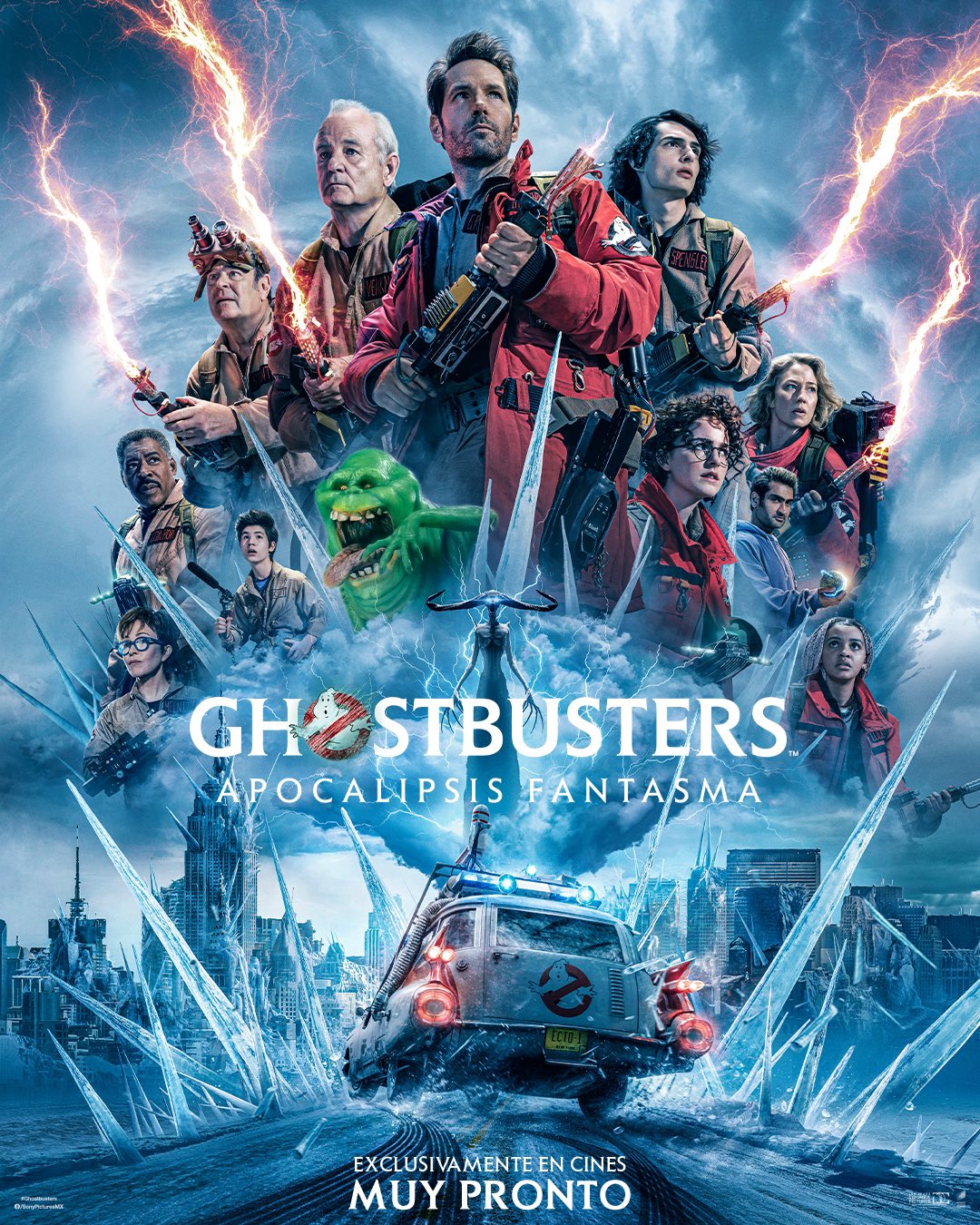
When moviegoers talk about the 1984 paranormal blockbuster Ghostbusters, conversations usually circle back to Bill Murray's cynical quips, Dan Aykroyd's earnest enthusiasm, or the towering menace of the Stay Puft Marshmallow Man. Yet, looking past the marquee names reveals a critical force who kept the entire cinematic experiment from tumbling into pure camp: Ernie Hudson. Playing Winston Zeddemore, Hudson stepped onto a set already humming with seasoned comedy improvisers and anchored the entire enterprise.
Without his grounded performance, the movie risks dissolving into cartoonish absurdity. Winston wasn't just another guy in a jumpsuit; he served as the audience proxy, the pragmatic everyman asking the rational questions nobody else bothered to raise. Examining Hudson's journey on and off screen uncovers how a late-addition supporting role quietly shaped the genetic blueprint of one of Hollywood's most enduring franchises, transforming a high-concept comedy into a believable world of blue-collar supernatural extermination.
The Casting Pivot That Changed the Dynamic
The initial vision for Winston Zeddemore looked drastically different from the character fans know today. Dan Aykroyd originally conceived the fourth Ghostbuster as a seasoned, hard-boiled veteran with a background in the occult, and the role was envisioned with Eddie Murphy in mind. When Murphy committed to Beverly Hills Cop instead, the production scrambled to recast and simultaneously downsized the character's narrative footprint just weeks before principal photography began.
This last-minute contraction meant Hudson inherited a skeleton script. Winston didn't appear until the middle of the second act, walking into the firehouse simply because he needed a paycheck. Instead of leaning into resentment over his diminished screen time, Hudson injected the role with a world-weary dignity. He didn't play an excitable scientist or a believer chasing ghosts; he played a regular working stiff who looked at proton packs, nuclear containment grids, and spectral manifestations, and decided the weekly salary justified the sheer absurdity.
[Initial Concept: Occult Veteran] ---> [Murphy Exit] ---> [Streamlined Script] ---> [Hudson's Grounded Everyman]
That blue-collar realism changed the movie's comedic texture. When Murray, Aykroyd, and Harold Ramis bounced nerdy technobabble back and forth, Hudson provided the deadpan counterweight. He grounded the fantastical elements in reality, proving that you didn't need a PhD from Columbia to know when a job was completely insane.
Why Winston Zeddemore Was the Ultimate Audience Proxy
Every great fantasy or sci-fi ensemble needs a surrogate for the viewer—someone who reacts to bizarre environments with the exact confusion and skepticism felt in the theater seats. While the original three founders viewed ectoplasm and containment units through the lens of academic obsession, Winston viewed them through the lens of payroll and common sense.
Consider his famous line when the team faces apocalyptic proportions: "If there's a steady paycheck in it, I'll believe anything you say." That single sentence cuts through the academic pretensions of the ghost-hunting business. It reframes the supernatural hustle as a gritty blue-collar trade.
- Scepticism as Anchor: Winston questions the danger of nuclear particle accelerators strapped to their backs when the scientists treat them like toys.
- Fear Factor: He reacts with visceral terror to grotesque apparitions, making the stakes feel genuinely high rather than video-game trivial.
- Working-Class Grit: He handles the dirty physical labor of clearing containment units and cleaning up sludge, representing the unsung labor behind every startup.
By refusing to treat the paranormal as mere academic curiosity, Hudson gave the audience permission to buy into the premise. If a pragmatic regular guy could accept the chaos, viewers could too.
The Behind-the-Scenes Struggle for Equity
Hudson's impact wasn't limited to his performance; his experience on the production highlighted the systemic hurdles Black actors faced in major 1980s studio comedies. Despite being billed as one of the four main Ghostbusters, Hudson faced an uphill battle during marketing rollouts. His face was notably absent from early teaser posters and promotional materials, relegated to minor placement while the core trio dominated the visual landscape.
This marginalization extended to the script revisions across the franchise's history. When plans for a sequel took shape in the late 1980s, Hudson expected Winston's backstory to expand, especially given the character's resonant perspective on the team's public perception. Instead, Ghostbusters II largely sidelined him once again, keeping him on the periphery while the original three scientists drove the narrative arc.
Despite studio slights, Hudson maintained professional grace, analyzing the industry with clear-eyed realism. In retrospective interviews, he has spoken candidly about how Hollywood studios struggled to market diverse ensembles in blockbuster spaces during that era. His perseverance turned Winston into a cult favorite, proving that a memorable character doesn't require endless screen time to leave a permanent mark on popular culture.
Legacy Across Sequels, Cartoons, and Reboots
The cultural footprint of Hudson's portrayal stretches far beyond the 1984 original. When DIC Animation launched The Real Ghostbusters animated series, the writers recognized the untapped potential of Winston's character. In the cartoon, Winston evolved into a well-rounded hero with deep mechanical expertise, a pilot's license, and a rich personal history—qualities hinted at in the films but never fully explored.
Decades later, when Jason Reitman directed Ghostbusters: Afterlife (2021) and its sequel Ghostbusters: Frozen Empire (2024), Hudson's Winston Zeddemore returned not as a hired hand, but as a wealthy entrepreneur who bought back the firehouse and funded a modernized paranormal research facility.
- The Evolution: From desperate job-seeker to multimillionaire protector of the city.
- The Closure: Providing narrative validation for a character fans felt was shortchanged in the original theatrical cuts.
- The Continuity Bridge: Acting as the emotional anchor connecting nostalgic 80s fans with modern audiences.
This narrative redemption validated decades of fan advocacy. Viewers who grew up watching Winston dodge terror dogs and slime understood that the franchise's heartbeat relied heavily on his steady hand. You can read more about the evolution of the franchise via Sony Pictures and explore historical casting breakdowns on Variety.
Frequently Asked Questions
Why was Ernie Hudson's role reduced in the original 1984 film?
When Eddie Murphy stepped away from the project, the production team hurriedly restructured the script to fit a tighter timeline. Much of Winston's background—including a military and occult history—was cut, turning him into a late-arriving employee rather than a founding partner.
Did Ernie Hudson appear in the 2016 Ghostbusters reboot?
Yes, Hudson made a special cameo appearance in Paul Feig's 2016 reboot, playing Uncle Bill, a reluctant character who runs a funeral home and shares a clever nod to his history with the supernatural franchise.
How did Ernie Hudson feel about the marketing treatment of Winston?
Hudson has been open about feeling sidelined by studio marketing during the release of the first two films. He noted that while fans embraced Winston immediately, studio executives struggled to position a Black actor equally alongside three white comedic leads in major global campaigns.
What is Winston Zeddemore's official profession in the modern sequels?
In Ghostbusters: Afterlife and Frozen Empire, Winston has transitioned from a blue-collar worker into a successful businessman, aerospace engineer, and philanthropist who secretly funds advanced paranormal research to protect humanity from future supernatural threats.



