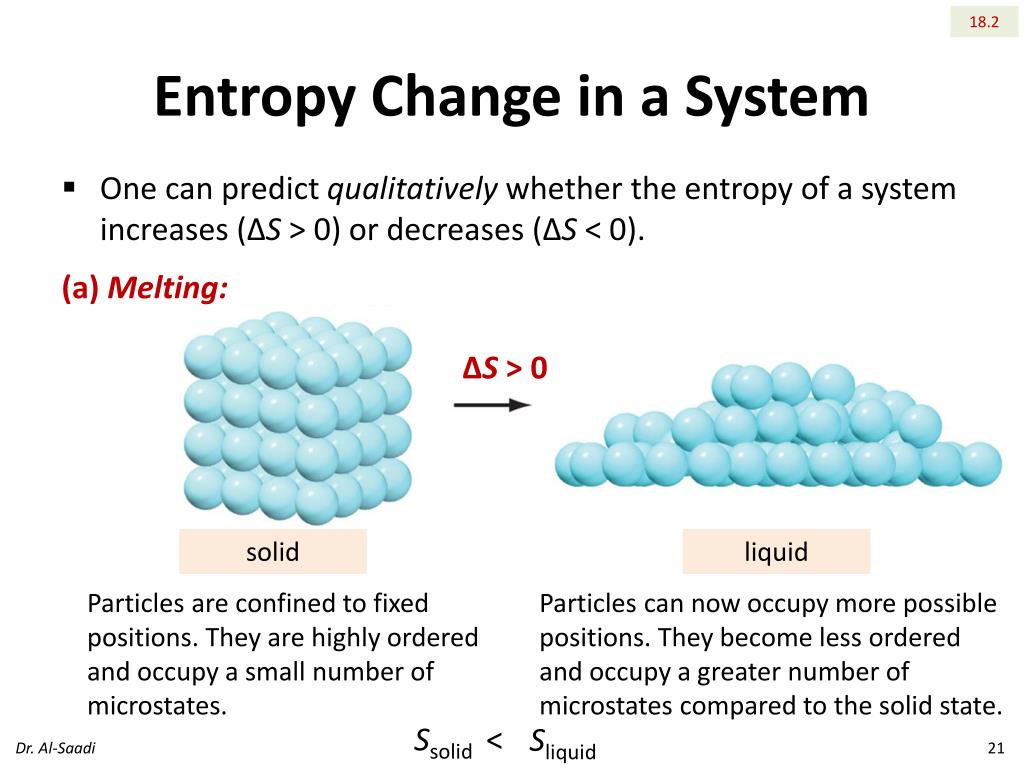
Entropy measures the unavailable energy in a closed thermodynamic system, functioning as the mathematical arrow of time. While popular culture reduces it to simple disorder, it's actually a precise count of microscopic configurations that correspond to a macroscopic state. You'll find it governing everything from steam engine efficiency to the thermal death of stars.
At its core, the second law of thermodynamics mandates that total entropy in an isolated system never decreases over time. When you burn fuel, mix gases, or boil water, usable energy degrades into dispersed thermal waste. Let's break down how this mathematical certainty shapes our physical reality, why local order persists, and what happens when systems reach their absolute limits.
The Thermodynamic Foundation
Sadi Carnot laid the groundwork in 1824 by analyzing steam engine efficiency, but Rudolf Clausius coined the term entropy in 1865. Ludwig Boltzmann later tied macroscopic entropy directly to microscopic probability using statistical mechanics. His famous equation, $S = k \ln W$, connects thermodynamic entropy ($S$) with the Boltzmann constant ($k$) and the number of microstates ($W$).
In any closed system, spontaneous processes move from low probability states to high probability states. For example, if you drop a drop of ink into a glass of water, thermal motion spreads the dye molecules evenly. Reversing that process—having the ink spontaneously gather back into a single drop—isn't strictly impossible according to classical mechanics, but it carries a probability so astronomically low that you'll never observe it in a lifetime.
- Closed Systems: Total entropy always increases or remains constant in ideal reversible scenarios.
- Open Systems: Local entropy can decrease, but only by exporting a greater amount of entropy to the surrounding environment.
- Microstates vs. Macrostates: High entropy means a massive number of equivalent internal arrangements yield the same external appearance.
Why Local Order Doesn't Break Physics
A common point of confusion involves living organisms and complex structures. Critics of thermodynamics often ask how biological life can evolve and build intricate cellular machinery if the universe demands increasing disorder. The answer lies in the distinction between closed and open systems.
You aren't a closed system. You consume external energy sources like food and sunlight, metabolize them, and radiate heat back into your environment. While your body maintains internal chemical order, the metabolic processes required to sustain you generate a net increase in global entropy.
Physicist Erwin Schrödinger famously described living systems as feeding on negative entropy—though modern physicists prefer the term free energy. The National Aeronautics and Space Administration provides extensive resources on stellar energy balances, showing how stars maintain their immense radiant output by fusing hydrogen, continually driving thermodynamic gradients across planetary systems.
Statistical Mechanics and the Arrow of Time
Most fundamental laws of physics are time-reversal symmetric. Newton's equations of motion work just as well backwards as they do forwards. Yet, humans experience a strict unidirectional flow from past to future. Why can we remember yesterday but not tomorrow?
The answer is thermodynamic asymmetry. The universe began in a state of remarkably low entropy during the Big Bang, offering a massive reservoir of available free energy. As cosmological expansion proceeds, systems relax toward higher entropy configurations.
- The Past Hypothesis: Proposed by physicist Richard Feynman, this principle states that the universe's low-entropy initial condition dictates why time has a distinct direction.
- Fluctuation Theorems: On microscopic scales, temporary dips in entropy do occur. However, as systems scale up to macroscopic dimensions, these fluctuations average out to zero.
Common Misconceptions About Cosmic Entropy
Popular science writing frequently misrepresents thermodynamic concepts, leading to widespread misunderstandings. Clearing these up helps you grasp what entropy actually calculates.
First, entropy is not synonymous with messiness in a human sense. A clean bedroom has lower entropy than a messy bedroom only because tidying requires physical work, which dissipates heat into the house.
Second, the universe is not necessarily headed toward a uniform, lifeless soup of maximum entropy everywhere simultaneously. Because gravity causes matter to clump into stars, galaxies, and black holes, gravitational systems possess negative heat capacity. As a black hole absorbs radiation and matter, its entropy increases proportional to its surface area, a principle formalized by Jacob Bekenstein and Stephen Hawking. You can read more about foundational gravitational physics through the National Institute of Standards and Technology.
Frequently Asked Questions
Can entropy ever decrease in a closed system?
No. By definition, the second law of thermodynamics prohibits any spontaneous decrease of total entropy within an isolated, closed system. Statistical fluctuations can cause minuscule, momentary drops at the atomic scale, but macroscopic decreases are impossible without external work.
What is the heat death of the universe?
Also known as the big freeze, heat death is a hypothesized ultimate scenario where the universe expands indefinitely until all energy is evenly distributed. Once temperature gradients reach absolute zero relative differences, no thermodynamic work can occur, halting all dynamic processes.
How do black holes affect cosmic entropy?
Black holes represent the most dense storage of entropy in astrophysics. According to Bekenstein-Hawking entropy formulas, a black hole's entropy scales with the area of its event horizon rather than its volume, fundamentally altering how physicists view information storage in quantum gravity.
Is information related to thermodynamic entropy?
Yes. Landauer's principle establishes a direct physical link between information processing and thermodynamics, proving that erasing a single bit of information releases a minimum quantifiable amount of heat into the environment.



