Introduction
The emo subculture didn't start on a runway or in a corporate boardroom. It grew out of a specific pocket of underground punk music in the mid-1980s before exploding into a global youth phenomenon two decades later. While outsiders often reduced the movement to side-swept bangs and black eyeliner, the subculture offered participants a structured space for vulnerability, intense emotional expression, and shared isolation.
Understanding this subculture requires looking past the surface clichés. From its roots in Washington D.C.'s hardcore scene to its digital migration onto MySpace, emo reshaped how millions of teenagers processed adolescence, fashion, and music.
The Musical Origins: From Emocore to the Mainstream
The term "emo" is short for "emotional hardcore". In the mid-1980s, bands emerging from the Washington D.C. punk scene began shifting away from the aggressive, hyper-political stances of traditional hardcore. Instead, groups like Rites of Spring and Embrace injected personal confession, existential angst, and raw vulnerability into fast-paced punk arrangements.
This early wave remained an underground secret. By the late 1990s, bands like Sunny Day Real Estate refined this sound into indie-leaning emotional rock, paving the way for the massive commercial explosion of the early 2000s. Groups like Jimmy Eat World, Dashboard Confessional, and My Chemical Romance took those intimate confessions and broadcasted them to stadium audiences.
The music resonated because it offered a direct counterweight to traditional notions of adolescent masculinity and stoicism. For young people navigating the friction of growing up, hearing an artist scream about heartbreak or self-doubt provided a powerful sense of validation.
Deconstructing the Iconic Style and Aesthetic
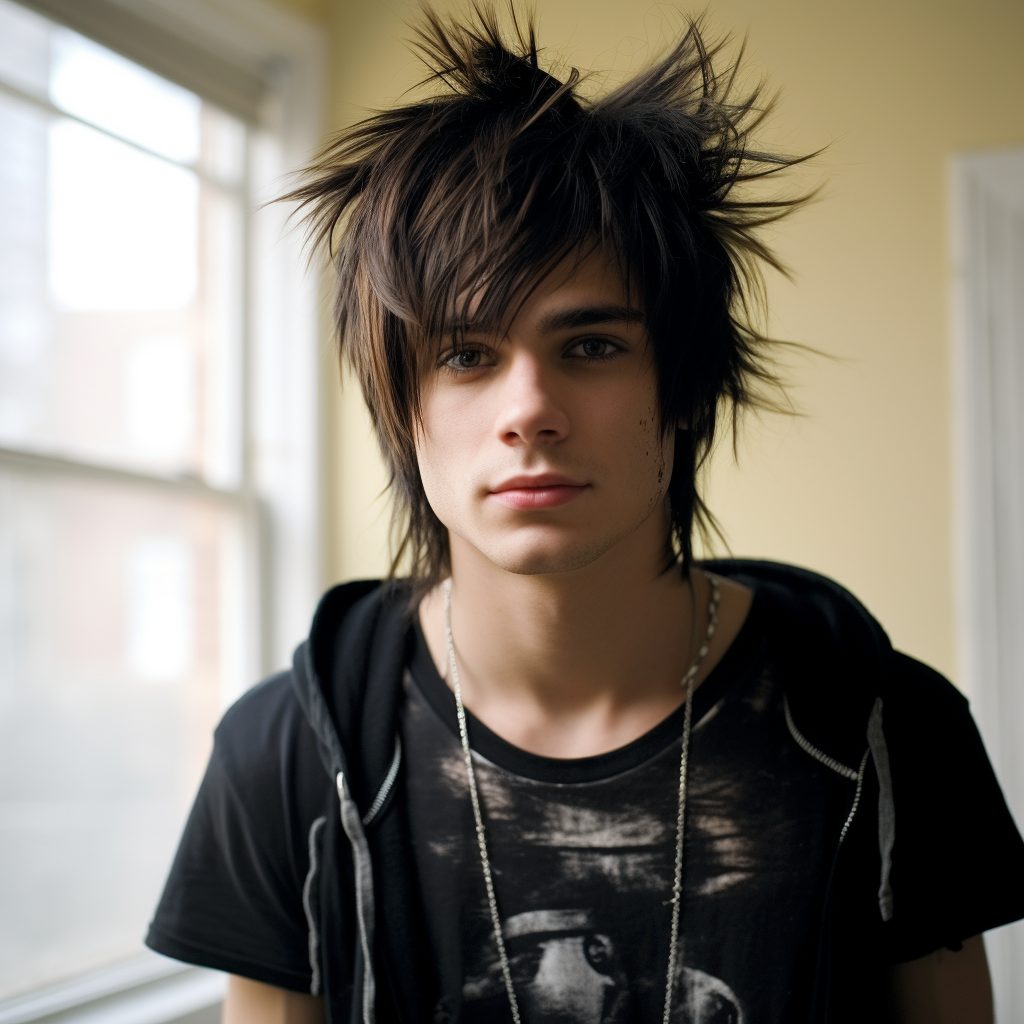
By the mid-2000s, the visual identity of the subculture had crystallized into a uniform that was instantly recognizable. Unlike fashion movements driven by high-end designers, emo style was assembled from affordable everyday items customized with a DIY ethos.
- Hair: Jet-black dye jobs paired with dramatic, heavy side-swept bangs that often obscured one eye. Straightened hair was the gold standard, requiring countless hours with flat irons.
- Clothing: Tight-fitting band t-shirts, skin-tight skinny jeans (frequently ripped and held together with safety pins), and checkered patterns borrowed from Vans skate culture.
- Accessories: Studded belts, wristbands, Converse sneakers, and heavy black eyeliner worn by both male and female adherents.
This dress code functioned as a visual shorthand. It signaled to peers across a crowded hallway that you shared a specific emotional language and musical taste. It also acted as a protective armor, letting the world know you belonged to a distinct community.
The Digital Migration and Community Building
Long before modern algorithmic feeds dominated the internet, the emo subculture pioneered digital community-building. Websites like MySpace and LiveJournal served as the digital town squares for the movement.
Teens spent hours curating their profiles, selecting custom HTML backgrounds, building their "Top 8" friends lists, and posting deeply confessional blog entries. Music streaming on profile pages introduced visitors to new bands instantly. This digital infrastructure allowed isolated youths in small towns to realize they weren't alone in their feelings, bridging geographic divides and turning a localized music scene into an international phenomenon.
Enduring Cultural Impact and Modern Legacy
Though the peak commercial era of the subculture faded by the early 2010s, its DNA remains deeply embedded in contemporary culture. Modern hip-hop, particularly the SoundCloud rap wave of the late 2010s, borrowed heavily from emo aesthetics, lyrical themes, and musical melancholia. Artists openly fused trap beats with guitar samples and lyrics about depression and heartbreak.
Furthermore, the mainstream normalization of men expressing vulnerability, wearing nail polish, or engaging with alternative fashion owes a direct debt to the boundaries pushed by emo artists two decades ago. The movement proved that commercial media could monetize deep emotional introspection without entirely stripping away its sincerity.
Frequently Asked Questions
What does "emo" actually stand for?
Emo is short for "emotional hardcore," referencing a sub-genre of 1980s punk music that prioritized personal vulnerability and confessional lyrics over traditional punk aggression.
Was emo considered a phase?
While outsiders frequently dismissed the lifestyle as a passing adolescent phase—popularized by the phrase "It's not a phase, mom!"—many participants carried the creative tastes, values, and community bonds they formed during those years into their adult lives.
How did social media influence the subculture?
Platforms like MySpace allowed fans to connect globally, share obscure indie tracks, and find peer groups that didn't exist in their immediate physical schools or neighborhoods.
Why was the fashion so distinct?
The clothing and hair functioned as a form of subcultural capital. It allowed participants to visually identify one another instantly, providing a sense of belonging and protection against mainstream judgment.



