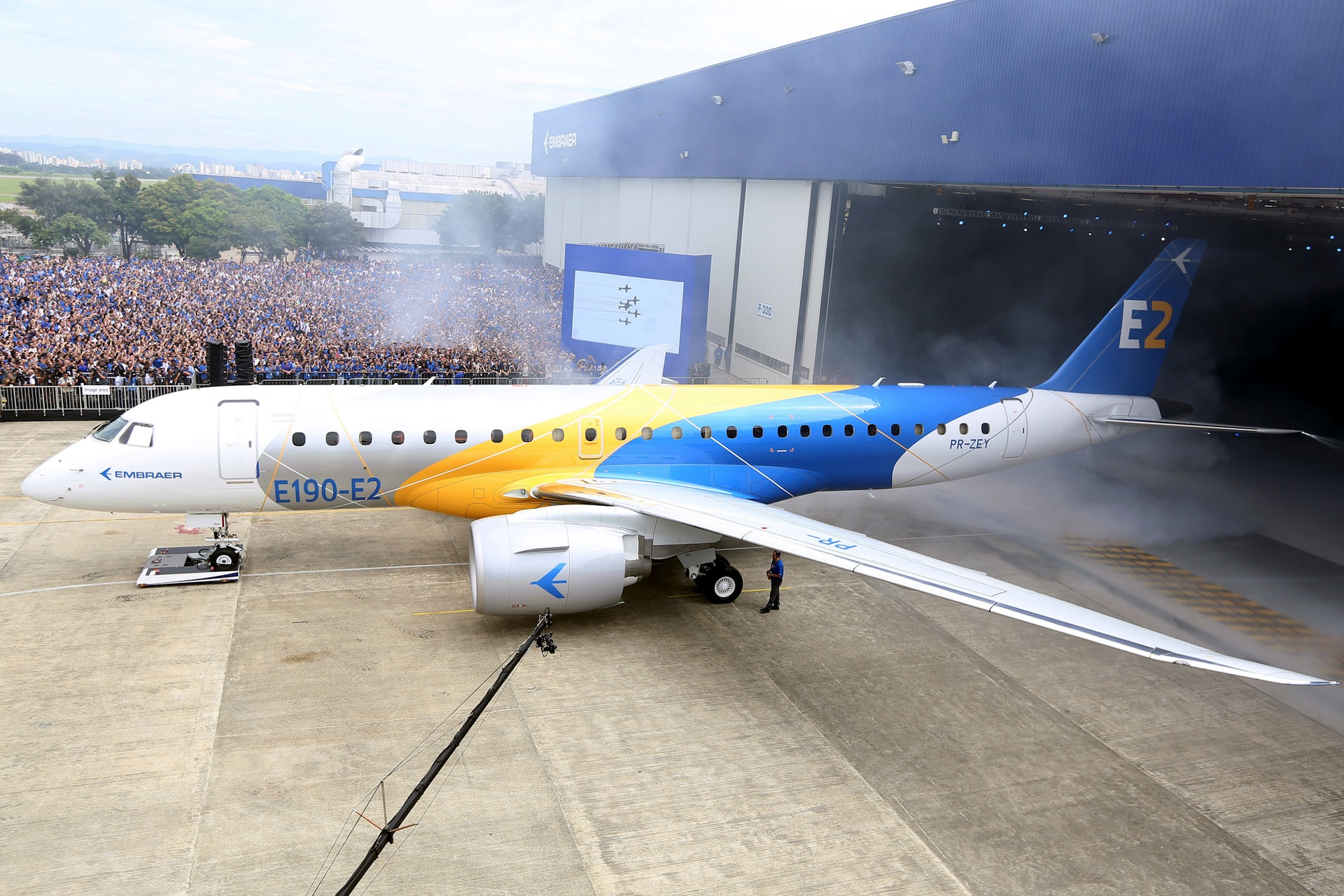
When Embraer developed its multi-mission tactical transport aircraft, the designation system created widespread confusion among aviation enthusiasts and defense analysts alike. People frequently search for the differences between the Embraer C-390 and the KC-390, assuming they represent two distinct aircraft families or upgraded generational variants. In reality, they are fundamentally the same physical airframe. The distinction lies entirely in the integrated role equipment installed onboard, the intended mission profile, and Embraer's commercial branding strategy.
The primary keyword behind these queries is Embraer C-390 vs KC-390. Users searching for this comparison want to know whether buying or operating the tanker variant compromises cargo space, how fuel configurations affect payload limits, and why Embraer uses different names for the exact same twin-jet platform.
Understanding the Naming Convention and Commercial Branding
To clear up the confusion immediately: every KC-390 is built on the identical structural baseline as the C-390 Millennium. The letter K added to the designation simply denotes the aerial refuelling capability.
Initially, the Brazilian Air Force and Embraer designated the development project as the C-390, later shifting to the KC-390 designation to highlight its primary dual-role requirement as both a tactical transport and a tanker. As Embraer expanded its marketing footprint to international export markets, the company officially adopted the commercial moniker C-390 Millennium. Under current sales strategies, Embraer markets all standard production models as the C-390 Millennium, while the specific tanker provisions remain an optional or integrated kit depending on client requirements.
If a customer purchases the aircraft with standard underwing hose-and-drogue refueling pods and auxiliary fuselage fuel tanks, it operates as a KC-390. If the customer purchases the clean transport configuration without refueling hardware, it functions strictly as a C-390 transport. However, the core airframe, avionics, engines, and cargo handling systems remain identical.
Core Operational and Structural Similarities
Because both designations describe the same underlying aircraft designed by Embraer, their performance specifications, physical dimensions, and payload capacities mirror one another when configured for transport duties.
The aircraft relies on two IAE V2500-E5 turbofan engines mounted high and forward on a swept wing. This design choice breaks away from traditional turboprop airlifters like the C-130 Hercules, enabling a maximum cruise speed of 470 knots (Mach 0.80).
- Payload Capacity: Both models support a maximum concentrated payload of 26 metric tonnes (about 57,320 pounds) or a distributed load of 23 metric tonnes.
- Cargo Volume: The unobstructed cargo hold provides 169 cubic meters of usable space, measuring 18.50 meters long, 3.45 meters wide, and at least 2.95 meters high.
- Reconfiguration Flexibility: The cabin accommodates up to 80 troops, 64 paratroopers, seven standard NATO 463L pallets, or up to 74 stretchers for medical evacuation missions.
- Austere Field Performance: Both variants feature reinforced landing gear designed for operations from semi-prepared, gravel, or damaged runways.
Key Differences in Equipment and Mission Profiles
While the physical hull is identical, the operational distinction between the base transport and the tanker variant dictates how military operators deploy the asset in active theaters.
Tanker Pods and Fuel Transfer Systems
The defining physical addition of the KC-390 configuration is the installation of two Cobham 912E aerial refueling pods mounted under the outer wings. These pods allow the aircraft to transfer fuel to other fixed-wing aircraft or helicopters at a high transfer rate.
Internal Auxiliary Tanks
To support extended tanker missions, the KC-390 utilizes removable auxiliary fuselage fuel tanks inside the cargo bay. The standard usable internal fuel capacity of 23.9 tonnes increases significantly when these modular tanks are installed, allowing the aircraft to ferry greater distances or loiter on station as a tanker. When these fuel bladders are uninstalled, the cargo floor is completely cleared, restoring the aircraft's full volume for standard palletized freight or vehicle transport.
Operational Versatility and Reconfiguration
Operators can switch the aircraft from a tanker role to a heavy cargo carrier or a firefighting configuration in a matter of hours. This modularity means an air force doesn't need to dedicate an airframe entirely to a single role. A C-390 purchased initially for transport can be retrofitted with refueling kits later, blurring the line between the two designations over the aircraft's operational lifecycle.
Common Misconceptions in Defense Reporting
Defense media and aviation blogs often misstate how these designations function. Clearing up these errors helps provide an accurate picture of modern military procurement:
- Misconception 1: The KC-390 has a smaller cargo hold. Critics sometimes assume that housing fuel management systems eats into usable volume. In reality, the auxiliary tanks are removable modular units. When removed, the cargo bay matches the C-390 specification precisely.
- Misconception 2: They use different flight decks. Both configurations utilize the exact same Rockwell Collins Pro Line Fusion avionics suite, dual head-up displays, and fly-by-wire flight control systems.
- Misconception 3: You can't refuel a C-390 transport. The basic plumbing and receiver capabilities are inherent to the platform design, meaning even standard transport models can be adapted or receive fuel depending on specific mission kits.
Frequently Asked Questions
Can a standard C-390 be converted into a KC-390 later?
Yes. Because the baseline airframe, wiring provisions, and structural attachment points are engineered into every production unit, operators can install the underwing refueling pods and auxiliary fuel management systems during scheduled maintenance depots.
Does the KC-390 sacrifice speed because of its tanker equipment?
No. The addition of external wing pods creates minor aerodynamic drag, but the high-bypass turbofan engines provide ample thrust to maintain the aircraft's standard maximum operating speed of Mach 0.80 regardless of whether the pods are mounted.
Which countries currently operate the aircraft?
Several nations have adopted the platform, including Brazil, Portugal, Hungary, the Netherlands, Austria, the Czech Republic, South Korea, and Sweden, utilizing both transport and multi-mission configurations depending on national defense strategies.
How long does it take to reconfigure the cabin from transport to tanker mode?
Ground crews can install or remove the internal auxiliary fuel tanks and mission management software packages in roughly three hours, allowing air arms to pivot rapidly between logistics and aerial refueling duties.



