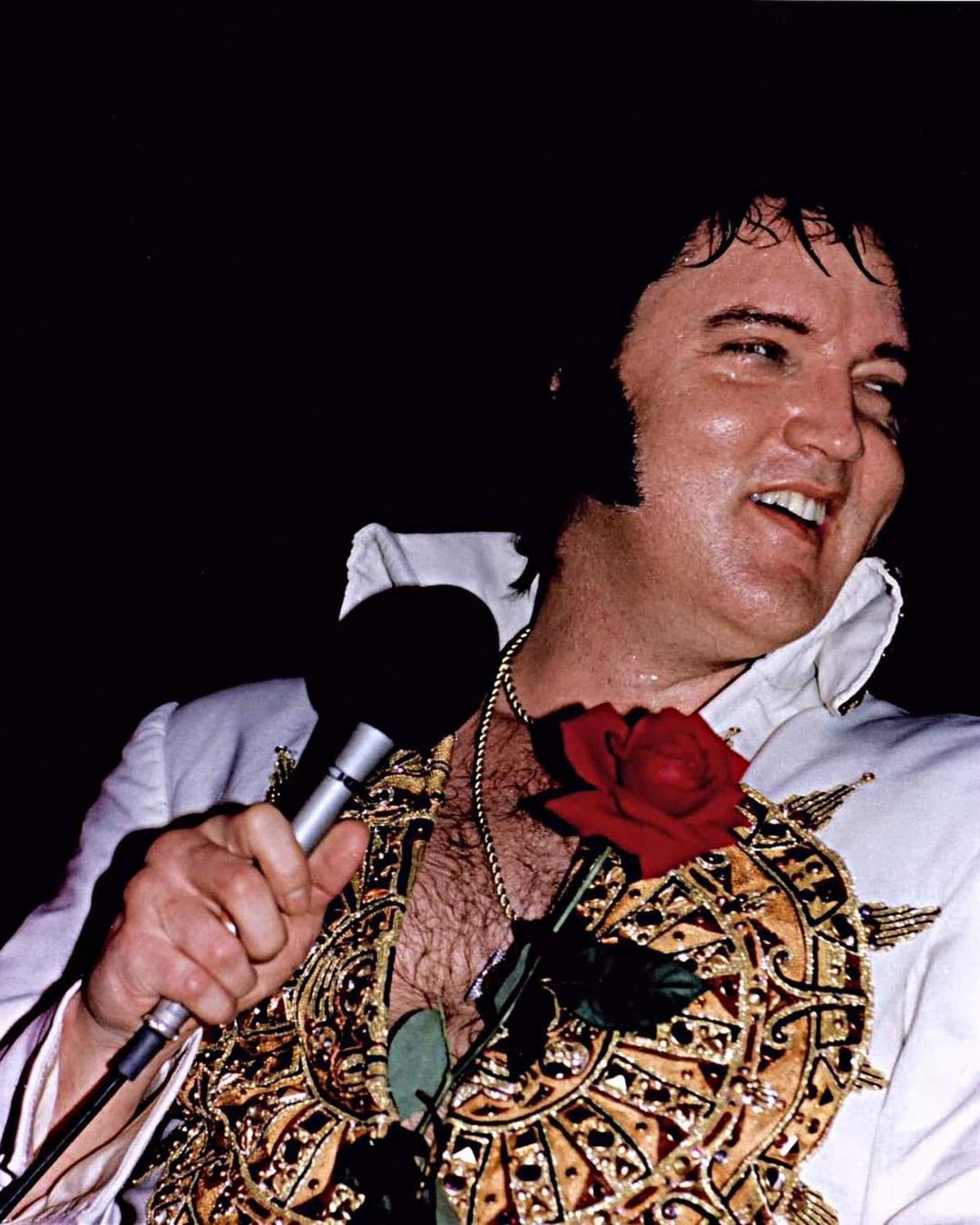
When Elvis Presley died on August 16, 1977 at Graceland, his sudden passing shook global pop culture. Weeks later, a single image published on the front page of the National Enquirer became the most famous tabloid cover in history. Showing the King of Rock 'n' Roll lying in his copper casket, the photograph triggered an avalanche of skepticism, urban legends, and elaborate conspiracy theories that persist today.
Rather than bringing closure to millions of grieving fans, the iconic casket photograph acted as fuel for the imagination. People couldn't accept that a global icon could vanish so abruptly. This skepticism transformed a piece of tabloid journalism into the cornerstone of the myth that Elvis faked his own death.
How the Infamous Casket Photograph Was Captured
Following the sudden announcement of Presley's death, journalists descended upon Memphis, Tennessee. While mainstream media outlets respected the family's privacy regarding private viewings inside the Memphis Funeral Home and Graceland, the National Enquirer established a singular mandate: secure a photograph of Elvis inside his coffin.
Editors dispatched a team to Memphis with a compact, high-tech miniature camera. According to accounts by former National Enquirer executives, the publication coordinated with a distant cousin of Presley. This individual smuggled the modified camera into the viewing area after hours, snapping a few rapid exposures.
When the film arrived at the tabloid's headquarters in Florida, editors developed the roll. The first frame showed a blurry self-portrait, the second captured a ceiling chandelier, but the third frame revealed a clear, full-face shot of Elvis in repose. Published in the September 6, 1977 issue under the headline "Elvis: The Untold Story," the edition shattered sales records. It sold approximately 6.7 million copies, making it the single most successful issue in the publication's history.
Fueling the "Elvis Is Alive" Conspiracy Theories
The public reaction to the photograph was immediate and polarized. While millions bought the issue out of morbid curiosity and grief, skeptical fans scrutinized every pixel of the printed image. Several persistent arguments emerged from amateur sleuths trying to prove the man in the coffin wasn't Elvis.
The Facial Feature Debate
Skeptics claimed that the nose in the casket photograph looked flatter and wider than Elvis's famous profile. Some argued the jawline appeared too thin, resembling Elvis from his leaner years in the late 1950s rather than a heavier 42-year-old. Tabloid defenders and photography historians countered that harsh lighting, low-light film grain, and heavy cosmetic touch-ups applied by the mortuary staff heavily distorted his features. Furthermore, reports indicated that rigor mortis had set in before he was discovered, requiring extensive restorative work by the local morticians.
The Wax Dummy and Air Conditioning Theory
One of the most elaborate myths suggested that the heavy copper casket displayed at the public viewing actually contained a wax dummy. Theorists claimed the casket felt unusually heavy because it was fitted with a portable air conditioning unit designed to prevent a wax figure from melting in the August heat of Tennessee. This hypothesis dovetailed nicely with recurring rumors that Elvis had grown tired of fame, orchestrated an elaborate escape, and replaced himself with a body double.
The Misspelled Tombstone and Burial Myths
Adding fuel to the fire, conspiracy theorists pointed to minor administrative oddities surrounding his initial interment at Forest Hill Cemetery. His middle name was officially spelled "Aron" on his birth certificate and tombstone, though he preferred the biblical spelling "Aaron." To believers, this intentional or unintentional discrepancy was a coded clue left behind by insiders signaling that something was amiss. Additional myths centered on the later relocation of his body to Graceland, with fans arguing that the original burial was a decoy.
The Psychological Roots of the Myth
Sociologists and cultural historians note that celebrity death conspiracies often reflect collective grief rather than rational inquiry. When a monumental figure like Elvis Presley dies unexpectedly at the peak of middle age, the sudden vacuum feels impossible to process.
Inventing narratives where the star goes into hiding allows fans to maintain a psychological connection. It replaces the finality of death with an ongoing adventure. The casket photograph, despite offering definitive physical proof of his death, paradoxically became the focal point for denial. By labeling the photo a fake, believers preserved the comforting illusion that the King of Rock 'n' Roll was still walking the earth somewhere.
You can explore more about his cultural legacy and history via the Rock and Roll Hall of Fame. For official historical context on his life and estate, visit Graceland.
Frequently Asked Questions
Was the National Enquirer Elvis casket photo real?
Yes. Photographic experts, former tabloid editors, and members of the Presley family confirmed that the photograph taken inside the funeral home was genuine. The photographer used a concealed mini-camera to capture the image after hours.
How much was the photographer paid for the image?
The National Enquirer paid the distant cousin who smuggled the camera into the building an estimated $18,000 for the exclusive rights to the pictures.
Why did Elvis look different in the coffin?
Elvis had been deceased for several hours before being found on his bathroom floor, leading to advanced rigor mortis. Mortuary cosmeticians had to perform extensive restorative work, and the heavy application of makeup combined with harsh lighting altered his familiar appearance.
Where is Elvis Presley buried today?
Following security concerns and an attempted tampering incident at Forest Hill Cemetery in 1977, the bodies of Elvis and his mother Gladys were permanently relocated to the Meditation Garden at Graceland in Memphis, where millions of visitors pay their respects annually.



