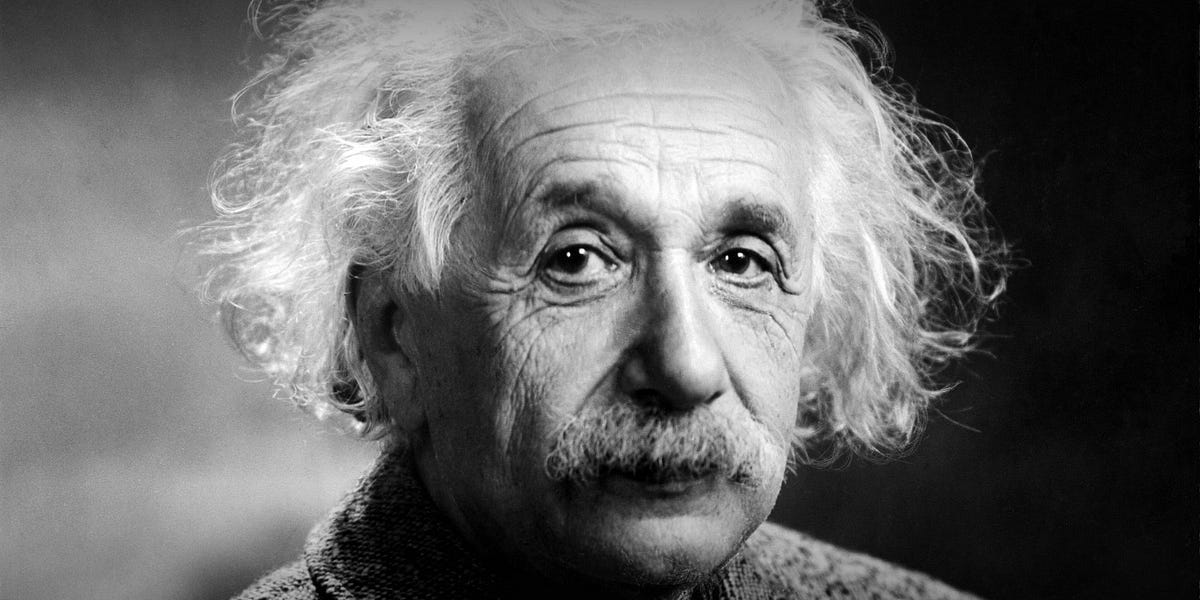
When people talk about the minds that built the modern world, two names always surface: Albert Einstein and Nikola Tesla. They never worked together, and they approached the universe from opposite directions, yet both reshaped how humanity captures, moves, and understands energy. Tesla built the physical infrastructure of our electrical grid, while Einstein unlocked the mathematical rules governing matter and energy.
Understanding their distinct legacies requires looking past pop-culture myths and examining what each man actually achieved. Tesla was an applied engineer who mastered electromagnetism to light up cities, while Einstein was a theoretical physicist who proved that mass and energy are two forms of the exact same thing.
Nikola Tesla: Master of Applied Energy
Nikola Tesla didn't just theorize about power; he made it move. Arriving in the United States with little more than an inventive mind, he solved the fundamental limitations of Thomas Edison's direct current (DC) system. DC electricity struggled to travel more than a mile without losing voltage, rendering it useless for regional power grids.
Tesla’s solution was alternating current (AC), which allowed electricity to change direction periodically. This breakthrough meant high-voltage power could travel hundreds of miles through thin wires with minimal loss, then step down safely for household use.
Core Innovations That Defined Tesla's Career
- The Polyphase AC System: This multi-phase setup allowed for efficient generation, transmission, and use of electric power, becoming the global standard.
- The Induction Motor: Built without electrical brushes, this motor reduced friction and maintenance, powering industrial machinery and household appliances alike.
- The Tesla Coil: An electrical resonant transformer circuit that produced high-voltage, low-current, high-frequency alternating current electricity, paving the way for radio technology.
Tesla envisioned a world of free, limitless energy pulled straight from the earth and atmosphere. While his later grandiose experiments—like the Wardenclyffe Tower meant for wireless energy transmission—ultimately collapsed under financial ruin, his early practical patents changed daily life forever.
Albert Einstein: Architect of Theoretical Physics
While Tesla rewired the physical landscape, Albert Einstein rewired human thought. In 1905—his famous annus mirabilis or miracle year—a young patent clerk published four groundbreaking papers that shattered Newtonian physics.
Einstein didn't build machines; he built conceptual frameworks. His special theory of relativity proved that space and time aren't rigid backdrops, but a flexible fabric known as spacetime. A decade later, his general theory of relativity redefined gravity not as a pulling force, but as the bending of spacetime caused by heavy objects.
The Equation That Changed Everything
At the heart of Einstein’s work on energy is his most famous equation, $E = mc^2$.
$$E = mc^2$$
This simple formula states that energy ($E$) equals mass ($m$) multiplied by the speed of light squared ($c^2$). Because the speed of light is an enormous number, even a tiny amount of physical matter contains a staggering amount of latent energy. This insight bridged the gap between mechanics and nuclear physics, laying the theoretical groundwork for both nuclear energy and quantum mechanics.
Direct Comparison: Engineering vs. Theory
Comparing Einstein and Tesla is often described as comparing a master builder to a master architect. They operated in different mental spaces, and their late-life views on physics even clashed.
Tesla grew skeptical of 20th-century theoretical physics, famously rejecting Einstein's theory of relativity. Tesla argued that space could not curve because it possessed no physical properties, preferring a traditional mechanical view of the universe. Einstein, meanwhile, focused entirely on the abstract, mathematical laws governing the cosmos.
| Metric | Nikola Tesla | Albert Einstein |
|---|---|---|
| Primary Domain | Electrical Engineering & Applied Physics | Theoretical Physics & Cosmology |
| Defining Achievement | Alternating Current (AC) Power Grid | Theory of Relativity & $E = mc^2$ |
| Approach | Hands-on experimentation and invention | Mathematical modeling and thought experiments |
| Modern Legacy | Powers every home and electrical device | Guides GPS navigation, astrophysics, and nuclear tech |
For more deep dives into historical scientific breakthroughs, visit the Library of Congress. To explore primary scientific papers, check out the American Physical Society.
Common Misconceptions About the Rivalry
Popular media often paints Einstein and Tesla as bitter intellectual enemies who fought for dominance. In reality, they respected each other from afar. Tesla even received a warm congratulatory letter from Einstein on his 75th birthday, praising his monumental contributions to electrical engineering.
Another common myth is that Tesla invented free wireless power for everyone, but greedy capitalists suppressed it. In truth, wireless power transmission over long distances suffers from severe inverse-square law efficiency losses—a physical limitation that even Tesla could not engineer away.
Frequently Asked Questions
Did Einstein and Tesla ever meet in person?
No historical records indicate that Einstein and Tesla ever met face-to-face, though they did exchange respectful correspondence later in life. Their professional circles differed entirely, as Tesla worked in industrial laboratories in New York while Einstein moved within academic circles in Europe and Princeton.
Whose work has a larger impact on daily life today?
Both are vital, but they impact us differently. Every time you flip a light switch, plug in a phone, or use an appliance, you are using Tesla's AC system. Every time you use GPS navigation on your smartphone, you rely on Einstein's theory of relativity to correct satellite clock drift.
Why did Tesla reject Einstein's theory of relativity?
Tesla viewed physics through a mechanical, 19th-century ether framework. He believed that physical phenomena required a tangible medium to travel through and rejected abstract mathematical constructs like curved spacetime that lacked physical substance.
Who was the better inventor?
Tesla held hundreds of patents for physical devices, motors, and circuits, making him an elite inventor. Einstein held a few patents from his time at the Bern patent office, but his genius lay in theoretical discovery rather than commercial invention.



