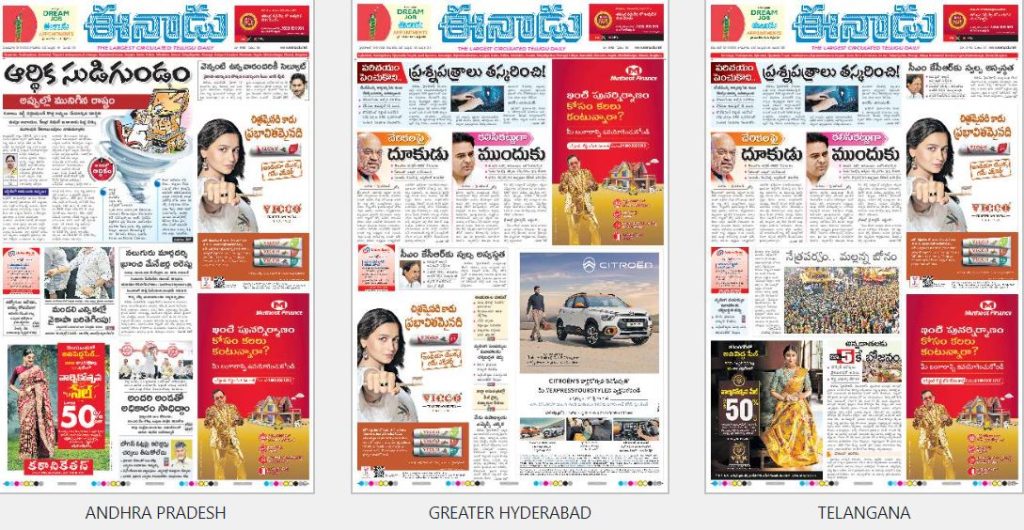
Eenadu changed regional news when it launched in Visakhapatnam in 1974. Founded by media entrepreneur Cherukuri Ramoji Rao, the publication grew from a struggling local sheet into a multimedia force. Its name translates to "this day" or "this land" in Telugu, reflecting an early commitment to grassroots reporting. By prioritizing district-level news, innovative printing technology, and bold investigative pieces, the publication redefined how regional languages reached everyday readers.
Understanding the rise of Eenadu Telugu news paper requires looking past standard corporate histories. This publication didn't just report events; it created a blueprint for regional language journalism across India by decentralizing newsrooms and establishing district editions that brought remote towns into the daily discourse.
The Founding Era and Early Struggles
In August 1974, Ramoji Rao launched the paper with modest resources and a small team in Visakhapatnam. Initial sales were low, often struggling to clear a few thousand copies a week. Established competitors dominated major urban centers like Hyderabad and Vijayawada, leaving little room for a new entrant.
Rao and his management team realized that urban-centric reporting ignored millions of rural citizens. They shifted strategy by focusing intensely on local district issues, rural economies, and hyper-local grievances. This pivot transformed circulation numbers within a few years. By decentralizing printing and distribution logistics, the paper reached remote corners of Andhra Pradesh before breakfast, a logistical feat at the time.
Technological and Logistical Innovations
A major reason the paper earned its pioneering status was its rapid adoption of advanced printing technology and supply chain logistics.
- District Editions: It was among the first regional papers to introduce dedicated district pull-outs, ensuring that a reader in a small village received news specific to their local administration and community.
- Supply Chain Mastery: The company invested heavily in private transport networks to bypass conventional postal and rail delays, ensuring early morning deliveries across distant rural districts.
- Lexical Standardization: The editorial board worked to standardize contemporary Telugu journalistic prose, making news accessible to both academic readers and neo-literates.
For broader context on how Indian print media evolved during this era, you can review records maintained by the Press Council of India.
Investigative Journalism and Political Influence
The publication introduced rigorous investigative reporting to the Telugu readership. Rather than merely printing government press releases, reporters dug into local corruption, administrative apathy, and economic scandals. This fearless reporting style built immense public trust, though it occasionally drew sharp political friction.
The paper's influence extended into regional politics. During the turbulent political shifts of the early 1980s, its pages mirrored and amplified public sentiment against established political hegemonies. This dynamic cemented its role as an active participant in public discourse rather than a passive observer. Academic analyses of South Indian media economies, such as those discussed in publications by Routledge, often cite this period as a turning point in how regional press could sway state-level political trajectories.
Diversification and the Ramoji Group Ecosystem
Under Rao’s stewardship, the brand expanded far beyond print. The publishing house diversified into multiple specialized print formats before moving into electronic media.
- Specialized Periodicals: The company launched film weekly Sitara, literary monthly Chatura, short story magazine Vipula, and agricultural monthly Annadatha to cater to varied readership demographics.
- Broadcast Media: The launch of ETV network brought the brand into television living rooms across Andhra Pradesh and Telangana.
- Consumer Enterprises: The business ecosystem expanded to include film production via Ushakiran Movies and food processing through Priya Foods.
Common Misconceptions About Regional Journalism
Many modern readers assume regional newspapers in India grew organically alongside national English dailies. In reality, vernacular papers faced severe capital constraints and technological hurdles. Another common misconception is that the paper operated without domestic competition from day one; in truth, entrenched legacy publications like Andhra Patrika and Andhra Prabha held near-monopolies when it first appeared. Overcoming these giants required aggressive localized marketing and direct engagement with rural distribution agents.
Frequently Asked Questions
When was the paper founded?
It was established in Visakhapatnam in 1974 by Cherukuri Ramoji Rao.
What does the name mean?
The word Eenadu translates to "this day" or "this land" in the Telugu language.
Why is it considered a pioneer?
It revolutionized regional media by introducing hyper-local district editions, sophisticated logistics for early morning rural delivery, and aggressive investigative reporting.
Who owns the publication?
It operates under Ushodaya Enterprises Private Limited, which is a core component of the broader Ramoji Group.


