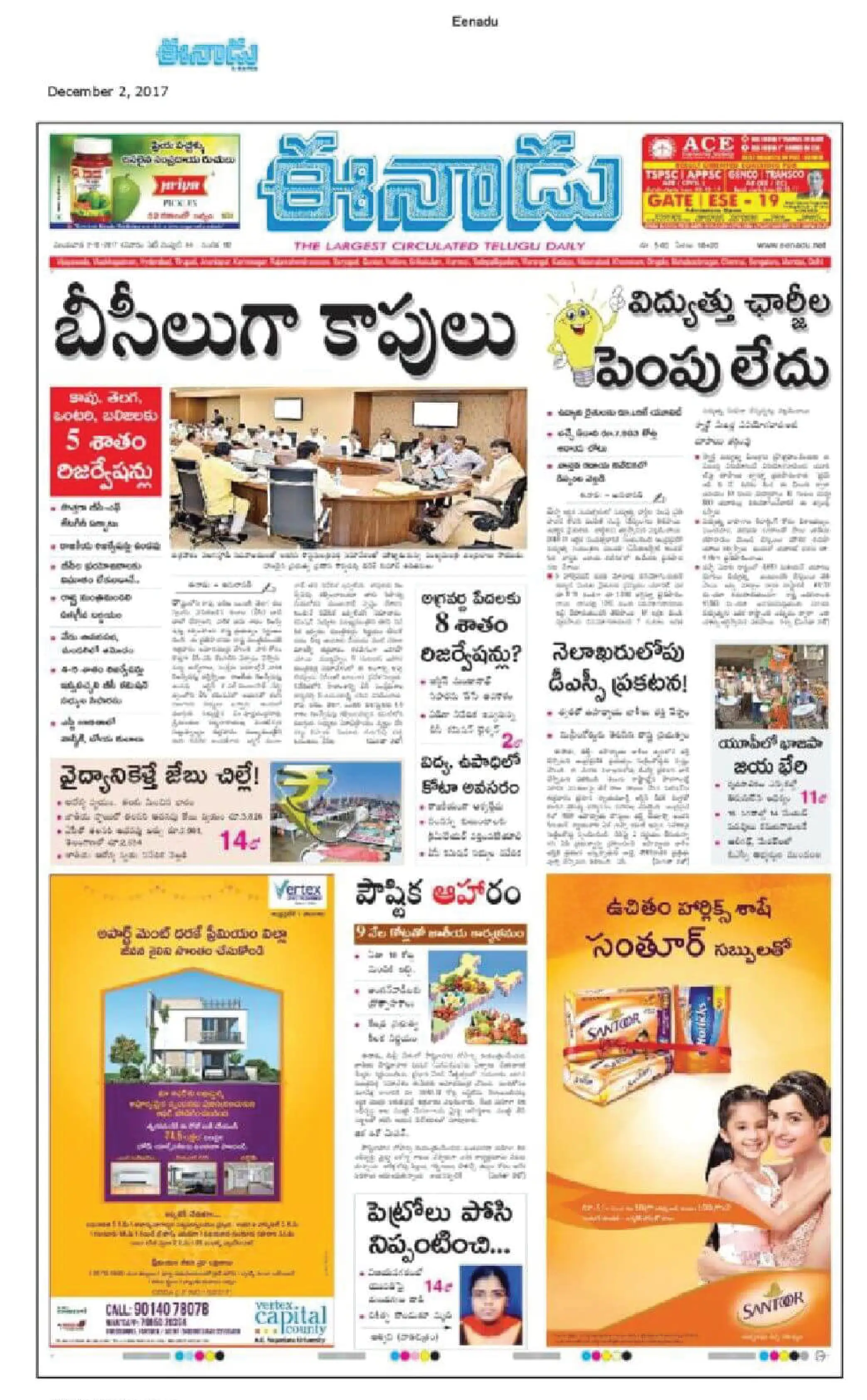
Founded in 1974 in Visakhapatnam by media mogul Ramoji Rao, Eenadu changed the landscape of regional print media in India. Its name translates simply to "Today" in Telugu, but the paper grew into much more than a daily news source. It became the pulse of Telugu journalism, shaping political discourse, driving regional economic growth, and pioneering hyper-local reporting across Andhra Pradesh and Telangana.
Understanding the paper's trajectory requires looking past surface-level acclaim. Its rise involved clever logistical engineering, fierce political alignments, and a continuous battle to stay relevant in a digital-first era.
The Humble Origins in Visakhapatnam
When Eenadu launched on August 10, 1974, it wasn't an instant success. Ramoji Rao acquired an old printing press and started small, selling barely a few thousand copies a week. Major established newspapers already dominated the market, and skepticism surrounded the new entrant.
Rao and his team realized they couldn't compete with legacy metro papers by just repeating state-level news. Instead, they focused on what mainstream papers ignored: rural and district-level stories.
- Logistical Innovation: Setting up decentralized printing units allowed the paper to reach readers early in the morning, even in remote villages.
- District Editions: By carving out specialized pages for individual districts, the paper ensured local issues—like irrigation disputes, village infrastructure, and local governance—made front-page news.
- Affordable Access: Pricing strategies and efficient distribution networks helped the paper penetrate markets where daily newspapers were previously considered luxury items.
This hyper-local focus created a deeply loyal readership. People didn't just read the paper for national headlines; they read it to find out what was happening in their own backyards.
Pioneering Regional Print Technology and Standards
Eenadu didn't just report news; it modernized how regional language newspapers were produced in India. As technology shifted from traditional lead type to offset printing and computerized photocomposing, the paper adopted these upgrades rapidly.
These technical investments enabled the rapid launch of new editions across regions like Rayalaseema and Telangana. By the early 1980s, the paper had established itself as a technological frontrunner. This infrastructure also supported the launch of specialized sister publications, including film weeklies and agricultural magazines, creating an entire media ecosystem centered around the Telugu-speaking population.
For further context on Indian media standards, you can explore resources provided by the Press Council of India.
Political Impact and the Telugu Desam Party Connection
You can't discuss Eenadu without examining its complex relationship with regional politics. In the early 1980s, the paper played a critical role in the formation and rise of the Telugu Desam Party (TDP) under actor-turned-politician N.T. Rama Rao.
Critics and media analysts often point out that the paper functioned almost as an opposition voice against the dominant Congress party at the time, helping reshape the political map of undivided Andhra Pradesh. This alignment created a template for regional media in India: print outlets acting as active political participants rather than passive observers.
This dynamic fostered deep political polarization within Telugu journalism. Decades later, rival media outlets—such as Sakshi—emerged specifically to counter what they perceived as partisan reporting, leading to a fiercely divided media landscape where news consumption often mirrors political loyalties.
Navigating the Digital Shift and Modern Challenges
Like all legacy print publications, Eenadu faces immense pressure from digital media, social platforms, and 24-hour television news channels (such as ETV, another venture under the Ramoji Group).
Print circulations across India have faced headwinds, particularly following the disruptions of the COVID-19 pandemic. To adapt, the publication has heavily invested in its digital footprint, offering e-papers, real-time news updates, and mobile apps to capture younger, digitally native audiences.
However, transitioning a 50-year-old print readership to a digital subscription model remains a delicate balancing act. The paper relies on its historical reputation for credibility and extensive ground-reporting networks to retain older loyalists while trying to win over digital skeptics.
To see how major global journalistic standards evolve, check updates from UNESCO's Communication and Information Sector.
Common Misconceptions About Eenadu
- Myth: It has always been the largest circulated daily from day one.
- Reality: It struggled heavily in its first few years in Visakhapatnam and only scaled up after shifting focus to district editions and localized content.
- Myth: It operates as a neutral, detached news aggregator.
- Reality: Its history is deeply intertwined with regional political movements, making its editorial stance a frequent subject of political debate.
Frequently Asked Questions
When and where was Eenadu founded?
The paper was founded on August 10, 1974, in Visakhapatnam, Andhra Pradesh, by Ramoji Rao.
What led to the paper's rapid growth in the 1970s and 1980s?
Its core growth strategy relied on introducing localized district editions, investing in modern offset printing technology, and delivering news to rural areas earlier than competitors.
How does Eenadu handle digital publishing today?
While maintaining its traditional print editions across Andhra Pradesh and Telangana, the publication operates active digital news portals, mobile applications, and e-paper formats to reach global Telugu diasporas.
What is the ownership structure of the publication?
It operates under Ushodaya Enterprises Private Limited, which forms part of the broader Ramoji Group, encompassing media, food, and entertainment ventures.


