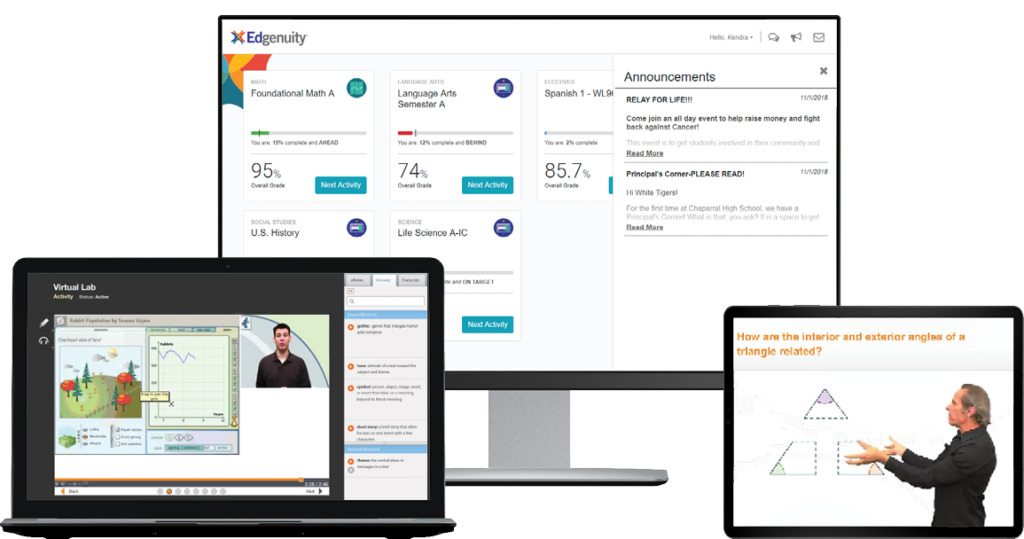
Finding Edgenuity health answers online has become a rite of passage for many high school students navigating credit recovery or remote learning. When districts rush to fill curriculum gaps with asynchronous software, students often look for shortcuts through repetitive modules and unskippable instructional videos. But the reliance on quick answer keys points to deeper systemic issues regarding student engagement, software design, and the actual value of online high school health credits.
Examining how these platforms function reveals a stark contrast between institutional goals and the day-to-day student experience. Behind every searched test question lies a complex debate about accountability, the limits of remote education, and what teenagers actually take away from mandatory digital health classes.
The Appeal and Pitfalls of Digital Health Curriculums
Online learning management systems promised flexibility, personalized pacing, and equal access to education regardless of geography. In practice, platforms like Imagine Edgenuity often reduce complex subjects—such as mental health, nutrition, and human anatomy—into linear sequences of video lectures and multiple-choice quizzes.
Students enrolled in these courses frequently encounter heavy repetition. Because the software tracks completion time and locks progression until videos finish playing, frustration builds quickly. This friction drives learners to seek out external forums, user-generated answer sheets, and browser extensions just to get through daily quotas.
- Pacing Pressures: Courses demand strict daily progress metrics, turning learning into a race against the clock.
- Passive Consumption: Long video segments limit interactive dialogue or peer debate, which are crucial for public health education.
- Evaluation Gaps: Standardized quizzes reward memorization or guessing over genuine behavioral application.
Why Students Search for Edgenuity Health Answers
The underground economy of course answers exists because the structural design of asynchronous modules encourages shortcuts. When students face credit recovery pressure—often trying to make up an entire semester in a couple of weeks—learning gives way to survival tactics.
Furthermore, health education covers sensitive topics like substance abuse, emotional wellness, and reproductive anatomy. When delivered through a monotone video rather than a nuanced classroom discussion, students disconnect. Looking up answers becomes an efficient way to dispense with a class they perceive as an administrative hurdle rather than a meaningful educational experience.
School administrators face a different kind of pressure. Graduation rates tie heavily into district funding and state metrics. Pass-through online credit recovery programs offer a convenient mechanism to push struggling students across the finish line, even if mastery of the material remains superficial.
The Broader Controversy of Automated Instruction
Critics argue that scaling back human-led instruction in favor of software platforms degrades the value of a high school diploma. When students realize they can breeze through core graduation requirements using crowdsourced answer keys, the credibility of the entire transcript diminishes.
Education specialists point out that health class is uniquely unsuited for pure automation. Public health literacy relies on critical thinking, ethical decision-making, and open dialogue about real-world scenarios. Software modules struggle to evaluate nuance, nuance being the exact element required to understand substance use prevention or mental health coping strategies.
According to guidelines from organizations like the U.S. Department of Education, maintaining high instructional standards requires robust interaction between qualified teachers and students, regardless of the delivery medium. Relying strictly on automated grading loops strips the human element out of subjects that deal directly with human well-being.
Rebuilding Academic Integrity in Online Spaces
Schools trying to curb rampant cheating on platforms like Edgenuity often implement stricter proctoring software or lock-down browsers. Yet technology restrictions rarely solve the root cause. If students find the material irrelevant or overly tedious, they will find technical workarounds.
Meaningful reform requires structural changes to how online courses are deployed:
- Blend Instruction: Combine software modules with weekly live check-ins or discussion-based assessments where students must verbally defend their answers.
- Curate Content: Allow local teachers to prune redundant lessons and inject localized, relevant public health data.
- Shift Assessment Styles: Move away from easily searchable multiple-choice questions toward short-form reflections and scenario-based projects.
Rethinking digital course design transforms online learning from a passive compliance exercise into an engaging medium that respects student time and intelligence.
Frequently Asked Questions
Why is it so easy to find Edgenuity answers online?
Because the platform reuses the same question banks across districts nationwide for years. Once students or independent sites log test and quiz questions, they publish them publicly, making those answers searchable within seconds.
Does using online answer keys count as academic dishonesty?
Yes. Using unauthorized external resources, answer keys, or automated scripts to complete graded assessments violates school codes of conduct and academic integrity policies.
Can schools detect if you use shortcuts on Edgenuity?
Platforms track activity metrics, including time spent per slide and pattern anomalies in quiz completion speeds. Sudden leaps in course completion percentages often trigger automated flags for teachers and administrators.
Are online health credits accepted by colleges?
Most accredited high schools accept online credits toward graduation requirements, meaning they appear on transcripts. However, highly selective universities look closely at the rigor of high school course selections and prefer comprehensive, teacher-led lab and health sciences.



