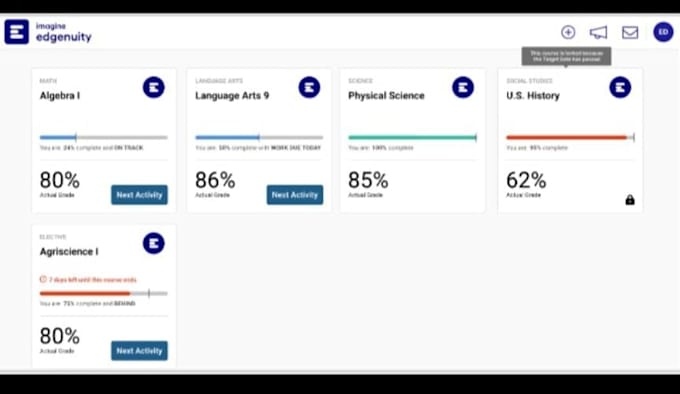
Navigating online high school science courses can feel overwhelming for both students and teachers, especially when trying to balance self-paced digital instruction with hands-on laboratory requirements. Edgenuity Biology provides a comprehensive digital curriculum designed to meet state and national standards while offering flexible pacing for high school students. Whether you're an educator integrating blended learning into your classroom or a student managing an online science schedule, understanding how the platform structures its coursework helps ensure academic success.
The platform relies on a structured sequence of units covering biochemistry, cellular biology, genetics, evolution, ecology, and human anatomy. Each unit incorporates direct instruction videos, interactive simulations, and formative checks for understanding. By blending digital accessibility with rigorous academic standards, the program addresses the growing demand for flexible science education in secondary schools.
Core Curriculum Structure and Unit Breakdown
Edgenuity Biology organizes its syllabus into sequential units that align with standard high school biology requirements. The curriculum begins with the chemical building blocks of life, examining macromolecules, enzymes, and cellular energy transfer processes like photosynthesis and cellular respiration. From there, the coursework moves into cell structure, membrane transport, and the cell cycle, ensuring foundational concepts are secure before advancing to more complex topics.
Genetics forms a major component of the second half of the course, covering Mendelian inheritance, DNA replication, protein synthesis, and modern biotechnology applications such as gene editing. The curriculum concludes with evolutionary theory, population genetics, and ecological interactions within biomes.
- Diagnostic Pre-Tests: Optional or required assessments that gauge prior knowledge and can exempt students from mastered content.
- Direct Instruction Videos: Short video segments featuring expert instructors explaining key biological concepts accompanied by visual graphics.
- Task Assignments: Interactive practice problems and writing assignments that reinforce lesson content before formal testing.
- Unit Quizzes and Exams: Summative evaluations designed to measure cumulative mastery of the unit's learning objectives.
Managing Virtual Laboratories and Inquiry
A common concern regarding online science courses is the authenticity of laboratory experiences. Edgenuity Biology addresses this by integrating virtual labs that allow students to manipulate experimental variables, collect quantitative data, and draw scientific conclusions without a physical laboratory setup.
In a virtual osmosis lab, for example, students adjust solute concentrations across a semipermeable membrane and measure cellular volume changes over time. While virtual labs cannot fully replace tactile laboratory skills like pipetting or handling biological specimens, they successfully teach experimental design, data analysis, and the scientific method. Teachers often supplement these virtual exercises with safe, hands-on activities utilizing household items to bridge the gap between digital and physical inquiry.
Personalized Learning and Adaptive Pacing
Every student learns at a different speed, and the platform accommodates varied proficiency levels through built-in adaptive pacing features. The system tracks completion times and quiz scores to identify concepts where a student might be struggling. When low scores indicate a knowledge gap, the platform can trigger remediation activities, offering alternative explanations or additional practice questions before allowing another test attempt.
For advanced learners, educators can adjust settings to allow accelerated progression through familiar material. This flexibility makes the curriculum useful for credit recovery programs, homeschool environments, and traditional classrooms implementing a flipped learning model. According to instructional guidelines published by educational technology organizations, self-paced digital tools can improve completion rates for non-traditional learners when combined with active teacher oversight. You can review broader educational technology trends through reports provided by the U.S. Department of Education Office of Educational Technology.
Effective Implementation Strategies for Teachers
Digital curriculum platforms yield the best results when used as tools to enhance teacher-led instruction rather than as entirely autonomous replacements for human educators. Successful school districts typically implement blended learning models that combine independent online work with collaborative classroom discussions and teacher-facilitated lab sessions.
- The Flipped Classroom: Students watch instructional videos and complete baseline practice at home, freeing up class time for hands-on labs and peer discussions.
- Station Rotation: Students rotate between independent Edgenuity modules, small-group teacher instruction, and collaborative project tables within a single class period.
- Targeted Remediation: Teachers utilize the platform's detailed gradebook analytics to identify specific struggling students and provide one-on-one coaching during independent work blocks.
By maintaining active engagement, teachers prevent the isolation and disengagement that can sometimes occur in fully remote or online credit recovery settings. For official administrative guidelines on digital learning equity and infrastructure standards, refer to resources from the State Educational Technology Directors Association.
Common Pitfalls and How to Avoid Them
While digital courses offer convenience, students frequently encounter specific hurdles that can impact their grades and long-term retention. Recognizing these challenges early allows both students and educators to implement corrective strategies.
- Rushing Through Video Transcripts: Students often skim or skip video instruction to reach assignment questions quickly, leading to low quiz scores. Requiring active note-taking during video segments helps fix this issue.
- Procrastination in Unstructured Environments: Without daily classroom bell schedules, self-paced courses invite delay. Establishing weekly pacing benchmarks and strict completion targets prevents end-of-term bottlenecks.
- Relying on Memorization Over Concepts: Multiple-choice online quizzes can encourage guessing rather than deep understanding. Supplementing digital modules with open-ended writing prompts forces students to articulate biological reasoning in their own words.
Frequently Asked Questions
How are tests and quizzes proctored in Edgenuity Biology?
Assessment security settings vary by school district policy. Teachers can configure platforms to require password entry for unit exams, lock browser windows during testing, or mandate that summative assessments take place strictly inside a supervised classroom environment.
Can Edgenuity Biology be used for NCAA-cleared initial eligibility?
Yes, many Edgenuity core courses hold approval from the NCAA Eligibility Center, provided the course is administered through an accredited school program with appropriate teacher oversight and grading participation.
How do students ask for help when stuck on a difficult biology concept?
Because the platform operates in a blended or supervised environment, students should first consult their assigned teacher or online facilitator. Many districts also provide peer tutoring centers or live virtual support hours for students working remotely.
Are accommodations available for English language learners or students with IEPs?
The platform includes built-in accessibility tools such as closed captioning, audio read-aloud features, and translation supports to assist diverse learners in meeting grade-level science standards.



