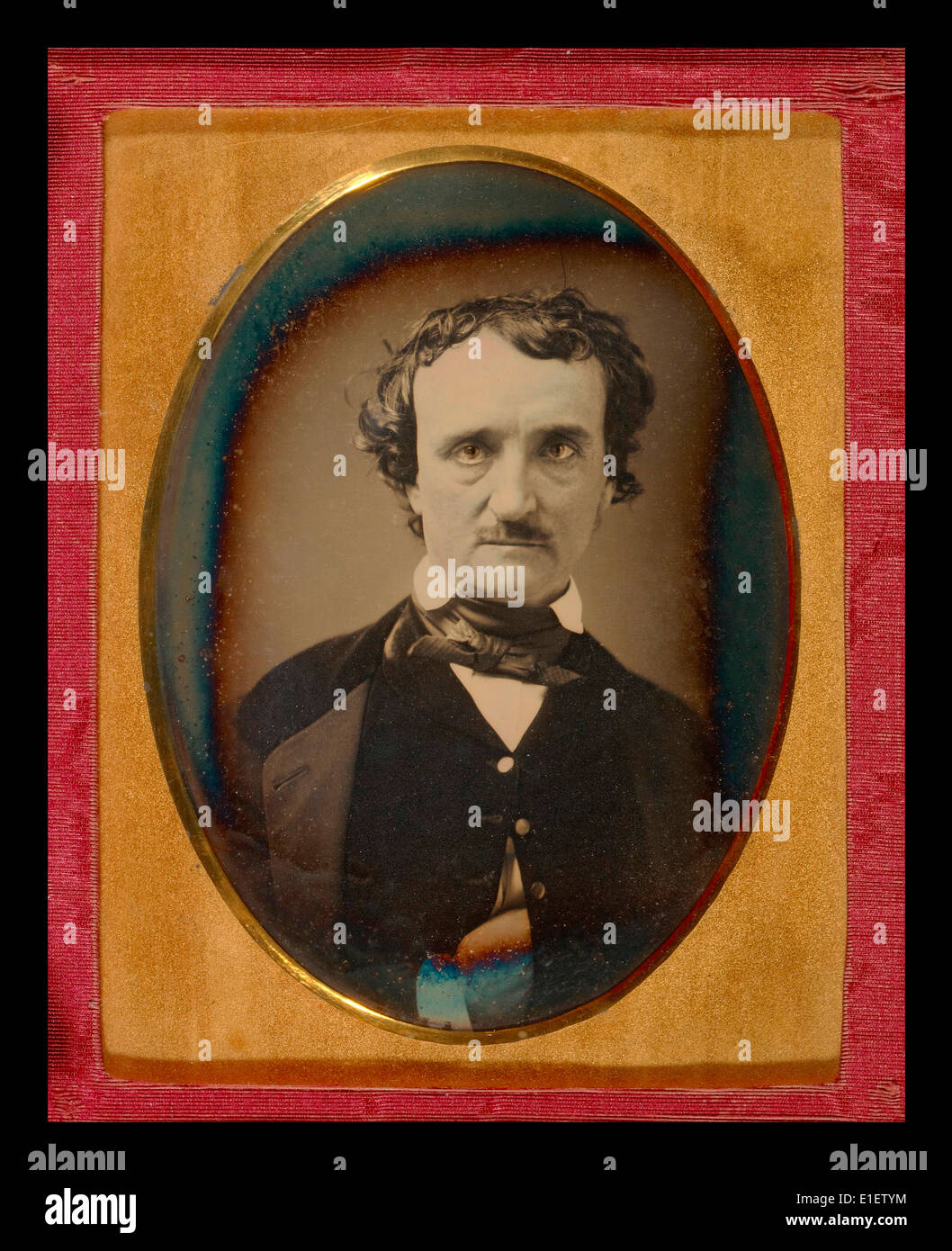
Edgar Allan Poe didn't write merely to frighten; he mapped the interior architecture of human isolation to prove we are never truly alone in our fears. While his tales of premature burial, guilt-ridden murderers, and spectral ravens read like exercises in solitary madness, they actually function as bridges across centuries and cultures. By stripping human dread down to its rawest physiological and psychological components, Poe forged an early global language of vulnerability that continues to unite readers across the globe.
Search intent for this topic centers on understanding how 19th-century gothic horror transcends entertainment to create deep psychological resonance. Readers look for literary analysis explaining why Poe's stories evoke universal empathy, how his formal techniques simulate shared panic, and why his exploration of the fractured self still matters in modern digital culture. The competitor article touches on these ideas with broad generalities, but it leaves critical gaps: it ignores how 19th-century print culture accelerated this transatlantic reach, fails to examine the specific neurological mechanics of literary fear, and skips how modern adaptations reframe his themes of alienation.
The Anatomy of Gothic Isolation
Poe’s own life was defined by a relentless series of abandonments and griefs. Orphaned in infancy, losing his young wife Virginia Clemm to tuberculosis, and struggling against perpetual poverty, he experienced firsthand the crushing weight of existential isolation. Yet he didn't wallow in private misery; he converted those specific sorrows into archetypal blueprints.
When the narrator in "The Tell-Tale Heart" insists on his sanity while hearing a nonexistent heartbeat beneath the floorboards, readers aren't just observing a murderer crack under pressure. We are feeling the universal terror of exposure—the internal guilt that every human carries in some form. Poe understood that individual neuroses, when rendered with absolute precision, tap directly into the collective unconscious.
- The Burden of Guilt: Characters are rarely defeated by external police forces alone; they crumble under the weight of their own conscience.
- The Trapped Body: Whether buried prematurely or walled up in a wine cellar, his protagonists embody the ultimate fear of being silenced while fully aware.
- The Fractured Self: His split protagonists prefigure modern psychological understandings of trauma and dissociation.
How Formal Mechanics Drive Empathy
Empathy in literature isn't just about feeling sorry for a character; it's about cognitive simulation. Poe achieved this through rigorous formal control. In his critical essay The Philosophy of Composition, he outlined his method of calculating every effect, rhythm, and word choice to achieve a single, unyielding emotional impact.
Consider the rhythmic incantation of "The Raven." The driving trochaic octameter creates a hypnotic cadence that mimics an obsessive thought loop. You don't just read about grief; your own breathing rhythm adjusts to the poem's mechanical pulse.
"To produce a thoroughly unique effect, every detail must conspire to narrow the psychological distance between the page and the reader's nervous system."
This engineering of fear bypasses intellectual defenses. By focusing intensely on sensory details—the ticking of a watch, the drop of moisture, the muffled sound of scratching against a wooden coffin lid—Poe forces the reader's body to react. This somatic response creates an involuntary empathy that transcends language barriers, explaining why his work translates so effectively into dozens of languages.
Transatlantic Reach and the Print Revolution
Poe’s ability to forge global connections wasn't accidental. It coincided with a massive shift in 19th-century media. Cheap periodicals, expanding postal networks, and international publishing piracy meant that stories published in Graham's Magazine or the New York Evening Mirror quickly crossed the Atlantic.
European readers in Paris, London, and St. Petersburg devoured translations by figures like Charles Baudelaire, who championed Poe as a kindred spirit. Baudelaire didn't just translate the stories; he recognized that Poe’s depiction of urban alienation mirrored the growing pains of modern industrial society.
- The Detective Blueprint: With C. Auguste Dupin in "The Murders in the Rue Morgue," Poe invented modern detective fiction, providing a rational framework for making sense of chaos that appealed to an increasingly urbanized global readership.
- The Psychological Landscape: French and Russian writers saw in Poe a precursor to existentialism—a writer brave enough to stare into the abyss of human consciousness.
- Visual Adaptations: Early cinematic movements, particularly German Expressionism, adopted Poe's stark chiaroscuro lighting and psychological distortion to depict societal dread on screen.
For a deeper look at the historical context of 19th-century print culture and its role in circulating transatlantic literature, explore the resources at the Library of Congress.
Modern Alienation and the Digital Echo
Today, Poe’s exploration of the fractured self finds an unexpected home in the digital age. Social media algorithms, constant connectivity, and digital echo chambers have amplified the very anxieties Poe diagnosed: paranoia, double identities, and the terror of being watched.
When modern readers share memes about burnout, imposter syndrome, or digital surveillance, they are participating in a modern iteration of the shared dread Poe cultivated. Online fan communities, digital archives, and global academic forums allow millions of people to engage with "The Fall of the House of Usher" simultaneously. The classic gothic mansion has dissolved into the glowing screen, but the underlying isolation remains identical.
- Constant Surveillance: The omnipresent eye in "The Tell-Tale Heart" mirrors modern anxieties regarding privacy and constant digital monitoring.
- Identity Fragmentation: The doppelgänger themes in "William Wilson" prefigure the curated, split personas of modern online life.
- Instant Transmission: Global digital platforms allow Poe's motifs of dread to ripple across continents in seconds, creating a synchronized cultural shiver.
For further reading on how digital media shapes modern psychological isolation, review studies published by the American Psychological Association.
Frequently Asked Questions
Why does Edgar Allan Poe resonate across different cultures and languages?
Poe focuses on primal human emotions—fear of death, guilt, isolation, and sensory overload—rather than culture-specific political issues. Because these vulnerabilities are universal, his stories require little cultural translation to evoke a strong emotional response.
How did Charles Baudelaire influence Poe's global reputation?
French poet Charles Baudelaire translated Poe's works into French during the mid-19th century and championed him as a literary genius. This introduced Poe to European intellectual circles, cementing his status as an international literary master rather than just an American genre writer.
What is the primary difference between Poe's horror and traditional gothic horror?
Traditional gothic horror relied heavily on supernatural monsters, castles, and elaborate historical settings. Poe shifted the focus inward, pioneering psychological horror where the true monster is the narrator's own unraveling mind.
How do Poe's detective stories relate to his horror tales?
Both genres explore the tension between chaos and rational order. While his horror stories show the collapse of order into madness, his detective stories with C. Auguste Dupin show the triumph of intellect over seemingly inexplicable horrors, using the same analytical precision.



