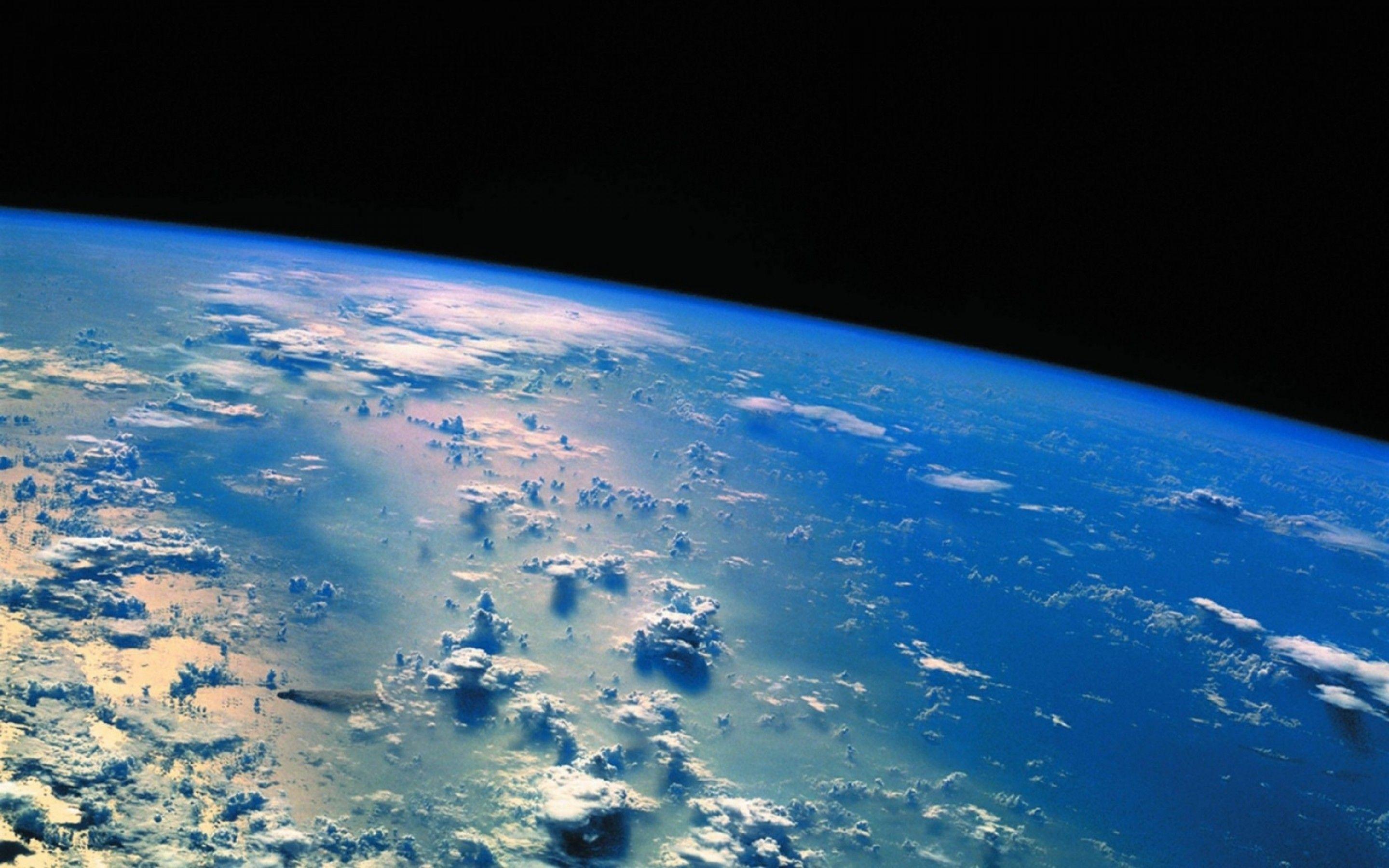
Understanding earth rotation mechanics requires looking at the conservation of angular momentum left over from the formation of our solar system 4.5 billion years ago. When a vast cloud of gas and dust collapsed under its own gravity, it began to spin, and that momentum has kept our world turning ever since without needing an external engine.
The planet completes one full rotation relative to the stars every 23 hours, 56 minutes, and 4 seconds, a period known as a sidereal day. Because Earth is also moving along its orbit around the Sun, it takes an extra four minutes of spinning for the Sun to return to the exact same position in our sky, creating our standard 24-hour solar day.
The Physics of Angular Momentum and Speed
Angular momentum dictates that a spinning object will continue rotating at a constant rate unless acted upon by an external torque. Because Earth operates in the near-vacuum of space, friction is virtually nonexistent, allowing our planet to maintain its spin for eons.
Surface speed varies dramatically depending on latitude due to the geometry of a sphere. At the equator, the planetary radius is about 6,378 kilometers, resulting in a rotational velocity of roughly 1,674 kilometers per hour. As you move toward the poles, the radius shrinks to zero, meaning someone standing directly on the geographic North or South Pole simply turns in a tight circle once every 24 hours without linear surface speed.
- Equator: ~1,674 km/h surface speed
- Mid-Latitudes (e.g., 45 degrees): ~1,180 km/h surface speed
- Poles: 0 km/h linear speed
Why Earth's Rotation is Gradually Slowing
Earth's spin isn't perfectly constant over geological timescales. Tidal friction caused by the gravitational pull of the Moon and the Sun creates a continuous drag on our oceans and crust, transferring rotational energy away from our world.
This braking mechanism causes the length of our day to increase by approximately 1.7 to 2.3 milliseconds every century. When dinosaurs roamed the Earth during the Late Cretaceous period, a single day lasted only about 23.5 hours, and a year contained roughly 380 days instead of our current 365.
To track these changes precisely, organizations like the International Earth Rotation and Reference Systems Service monitor planetary dynamics and introduce leap seconds when necessary to keep our atomic clocks synchronized with astronomical time.
Core Coriolis Effects on Weather and Oceans
The turning of our planet creates the Coriolis effect, an inertial force that deflects moving objects to the right in the Northern Hemisphere and to the left in the Southern Hemisphere. This deflection is vital for shaping global climate patterns and ocean currents.
- Air flowing toward a low-pressure zone doesn't move in a straight line; instead, it spins, creating distinct cyclone and hurricane rotation patterns.
- Major ocean currents like the Gulf Stream are steered along specific paths by the combination of wind drag and rotational forces.
- Artillery and long-range ballistics must account for rotational drift, as the target moves slightly during the projectile's flight time.
Frequently Asked Questions
What would happen if Earth stopped rotating suddenly?
If Earth stopped spinning instantly, the atmosphere and surface objects would continue moving at the previous rotational speed, generating supersonic winds, catastrophic global mega-tsunamis, and immediate tectonic fracturing. If it slowed down gradually over millions of years, life could theoretically adapt, though extreme day-night cycles would alter weather patterns permanently.
Does the Earth rotate clockwise or counterclockwise?
When viewed from directly above the North Pole, Earth rotates counterclockwise, which is from west to east. This direction is why the Sun, Moon, and stars appear to rise in the east and set in the west.
Why do we not feel the Earth spinning?
We don't feel the motion because you share the exact same constant velocity as the atmosphere, the ground, and everything around you. Constant motion without acceleration or deceleration cannot be felt by the human vestibular system, much like flying smoothly at a constant altitude in a commercial airliner.
Does human activity impact the speed of rotation?
Yes, massive shifts of mass can alter the planet's moment of inertia. For instance, the melting of polar ice caps redistributes water from high latitudes toward the equator, which can subtly slow down the rotation rate, much like a figure skater extending their arms outward during a spin.


