Modern airspace management relies on an intricate web of sensors, data processors, and communication feeds. Above European skies, advanced sensor infrastructure orchestrates flight paths while maintaining strict national defense parameters. Without these persistent networks, commercial aviation and tactical operations would grind to a halt in congested airspace.
Engineers design these systems to process hundreds of real-time signals simultaneously. When an aircraft leaves a gate in Amsterdam, ground-based and space-assisted sensors immediately track its trajectory. This continuous stream of telemetry feeds directly into air navigation service centers, ensuring safe separation standards across borders.
The Evolution of Dutch Sensor Architecture
Radar engineering in the Netherlands spans nearly a century of continuous development. Early experiments laid the groundwork for modern Active Electronically Scanned Array (AESA) systems. These modern configurations offer unmatched flexibility compared to older rotating dish arrays. They track high-speed targets while maintaining a persistent overview of lower altitude traffic.
Institutions like TNO focus heavily on compact Frequency-Modulated Continuous-Wave sensor arrays. These smaller units optimize size, weight, and power demands. They fit seamlessly onto specialized aircraft, maritime vessels, and mobile defense units. Such versatility allows operators to spot small airborne targets, including unmanned aerial vehicles, long before they pose a collision risk.
Integrating Commercial Air Traffic Control
Commercial flight safety depends on uninterrupted data exchanges. Air traffic controllers rely on secondary surveillance systems that interrogate transponders aboard commercial airliners. These transponders broadcast altitude, identity, and ground speed vectors back to ground stations.
- Interrogation: Ground transmitters send out synchronized radio pulses requesting aircraft data.
- Response: Onboard transponders reply instantly with encrypted identification and barometric details.
- Processing: Central computers filter background noise and synthesize tracks on controller screens.
- Distribution: Cleaned positional feeds share data with neighboring European flight information regions.
This coordinated handoff prevents bottlenecks over crowded European flight corridors. Network redundancy ensures that if one ground station experiences maintenance downtime, neighboring units absorb the tracking load without dropping targets.
Defense Applications and Border Protection
Beyond commercial routing, high-performance radar networks serve vital defense roles. Organizations such as Thales Group engineer tactical ground and air surveillance architectures used by defense forces. These systems provide early warning capabilities against fast-moving threats, securing territorial sovereignty.
Modern tactical units rely on mobile configuration setups. Troops deploy transportable radar units to remote operational areas within minutes. These units link directly into larger command and control networks, offering a unified operational picture across land, sea, and air domains.
Common Misconceptions About Air Surveillance
Many observers assume that air traffic radar physically "sees" an aircraft the way a camera captures an image. In reality, primary radar simply measures the reflection of radio frequency energy bouncing off a metallic hull. Secondary radar relies entirely on cooperative electronics where the aircraft actively replies to a signal.
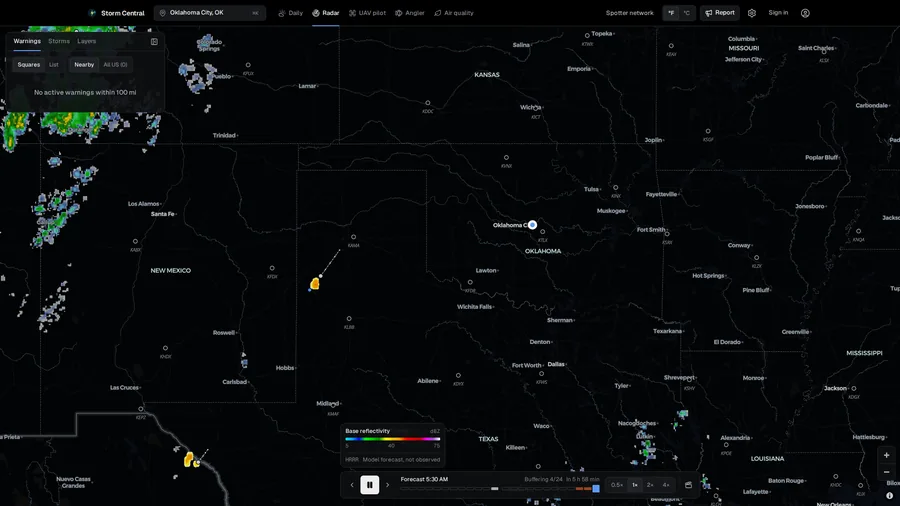
Another frequent mix-up involves confusing weather tracking networks with aviation tracking arrays. While meteorologists use specialized Doppler frequencies to monitor precipitation and wind shear, aviation controllers prioritize clean positional tracks and velocity vectors. Both systems share structural similarities but serve entirely different operational objectives.
Frequently Asked Questions
How do radar networks handle high-density traffic areas?
Advanced signal processing algorithms separate closely spaced targets by analyzing microscopic Doppler shifts and precise timing intervals. This prevents ghost echoes from confusing controllers during peak travel hours.
What role do unmanned aerial vehicles play in modern testing?
Researchers use small drones to test the sensitivity limits of compact continuous-wave sensors. Detecting low-radar-cross-section objects helps engineers refine classification algorithms for future security deployments.
Why are AESA systems replacing older rotating antennas?
Active Electronically Scanned Array technology uses hundreds of small solid-state transmitter modules instead of a single mechanical motor. This eliminates moving parts, reduces maintenance downtime, and allows the system to scan multiple sectors simultaneously.
How do security networks protect data transmissions?
Surveillance feeds utilize encrypted digital protocols between ground stations and aircraft transponders. This encryption prevents unauthorized interception or spoofing of critical flight telemetry data.


