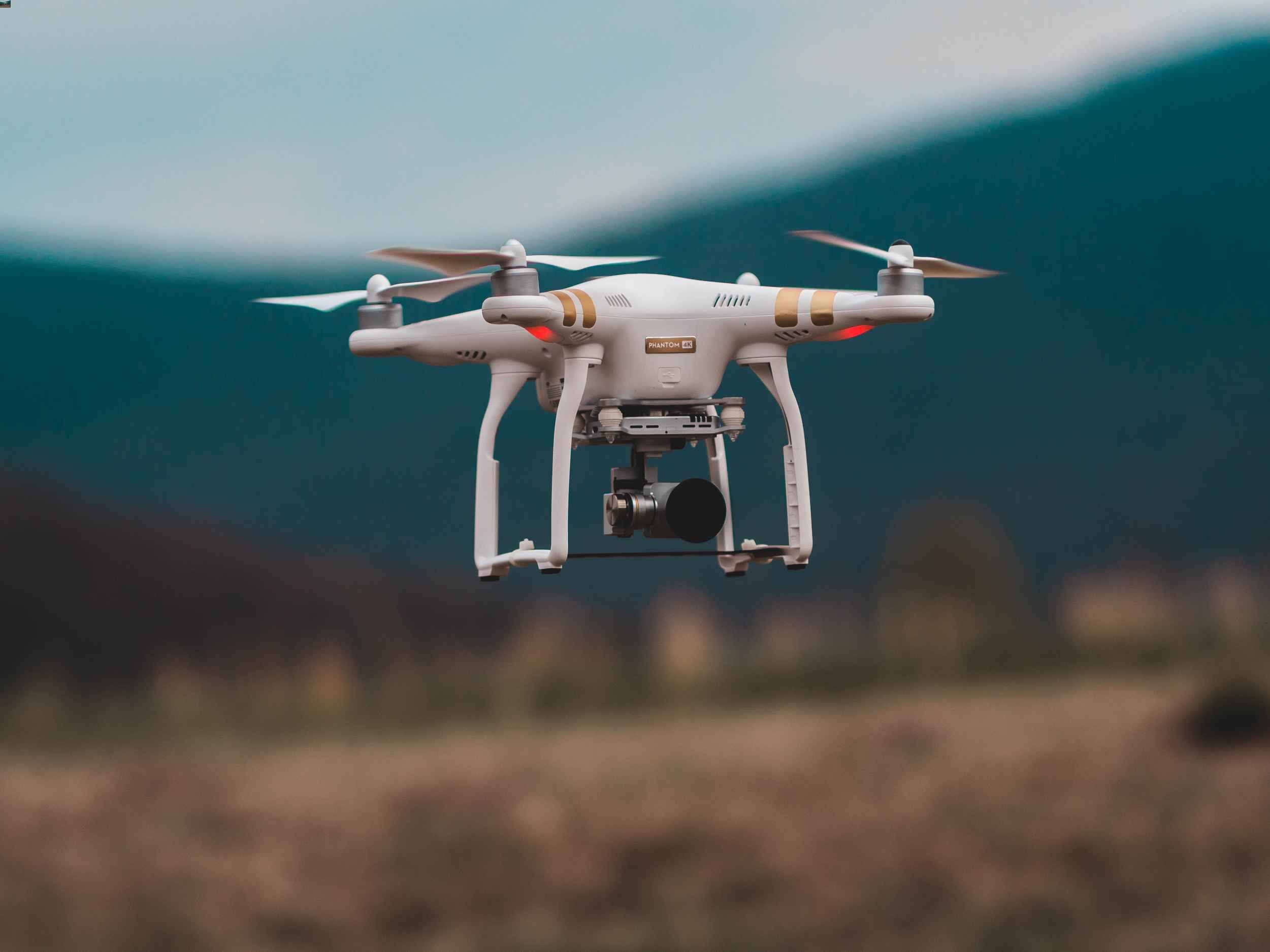
Commercial drone delivery used to rely on open grass patches, makeshift backyard targets, and constant pilot intervention. Today, scaling autonomous logistics networks requires rigid ground infrastructure. Designated drone landing pads serve as the critical physical nodes connecting airspace highways to ground fulfillment operations. Without these standardized touchdown zones, high-frequency commercial drone delivery cannot achieve the reliability or safety required for mass adoption.
The shift toward permanent landing infrastructure solves core operational bottlenecks in last-mile delivery. Automated logistics networks depend on precise terminal points for battery swapping, payload exchange, and weather protection. Treating landing sites as afterthought zones creates systemic failure points across commercial fleets. Let us examine how specialized touchdown architecture transforms delivery networks from experimental trials into dependable industrial operations.
The Engineering Behind Automated Drone Landing Zones
Modern drone landing pads require far more than a flat slab of concrete or a painted plastic mat. Autonomous systems rely on sub-centimeter positioning accuracy, which demands purpose-built structural characteristics. Engineers design these pads to withstand continuous rotor wash erosion, dynamic impact loads, and severe weather fluctuations without degrading.
Surface selection matters immensely for high-cycle operations. Poured concrete, heavy-duty aluminum plating, and reinforced composite panels prevent dust and debris from kicking up during vertical takeoff and landing (VTOL). Excessive debris clouds optical sensors, fouls internal brushless motors, and scratches carbon-fiber propellers. Furthermore, high-contrast visual markers, infrared beacons, and radio-frequency identification (RFID) tags embedded in the pad allow autonomous onboard computers to verify alignment before cutting throttle.
Power integration turns a simple parking spot into an active logistics hub. Many commercial landing pads incorporate inductive charging coils or automated mechanical contact pins. When a delivery aircraft settles onto the surface, it immediately initiates high-speed energy transfer. This removes manual battery-swapping labor from the workflow and cuts turnaround times between flights to mere minutes.
Overcoming Urban and Suburban Siting Challenges
Deploying landing infrastructure across densely populated environments introduces complex spatial and regulatory hurdles. Planners cannot simply drop pads anywhere; they must navigate strict municipal zoning laws, noise ordinances, and structural load constraints on rooftops.
Noise mitigation remains a primary friction point for urban deployments. Repeated low-altitude drone traffic directly above residential zones sparks pushback from local communities. Consequently, logistics operators mount landing pads on commercial rooftops, industrial parks, and transit hubs where ambient sound masks rotor whine. Placing pads on existing high-rise structures also elevates the touchdown zone above pedestrian traffic, naturally enforcing safety buffers.
GPS multipath interference poses another technical challenge in concrete canyons. Tall buildings reflect satellite signals, throwing off autonomous positioning calculations by several meters. To counter this, advanced landing zones integrate local differential GPS (DGPS) base stations or ultra-wideband (UWB) beacons. These systems provide redundant positioning data, ensuring multi-rotor aircraft touch down safely within the exact center of the designated target zone every single time.
Regulatory Frameworks and Airspace Integration
Physical infrastructure must align seamlessly with national aviation authorities. In the United States, the Federal Aviation Administration (FAA) regulates low-altitude operations under frameworks like Part 135 and evolving rules governing unmanned aircraft systems (UAS) integration. Operators establishing permanent delivery hubs must coordinate site-specific approvals, conduct environmental assessments, and prove ground risk mitigation strategies.
Similar rigorous standards apply globally, including Transport Canada's Remotely Piloted Aircraft Systems (RPAS) regulations. Establishing commercial infrastructure near populated areas requires formal safety assurance declarations and compliance with strict horizontal distance rules from uninvolved persons.
Unmanned Traffic Management (UTM) networks tie these physical pads into digital airspace highways. When a delivery drone requests a flight plan, the UTM system queries the status of target landing pads in real time. If a pad is occupied, undergoing maintenance, or experiencing severe wind shear, the software automatically reroutes the aircraft to an alternate touchdown zone. This digital orchestration prevents terminal congestion and mid-air bottlenecks.
Economic Impacts on Last-Mile Supply Chains
Integrating dedicated landing pads fundamentally shifts the economics of last-mile logistics. Traditional delivery vans face escalating labor costs, urban traffic congestion, and parking fines. Aerial logistics bypass ground gridlock entirely, reducing per-package delivery costs by up to eighty percent on eligible routes.
- Lower labor overhead: Autonomous hub-and-spoke networks reduce the number of human drivers required for routine parcel sorting and transport.
- Accelerated transit times: Direct point-to-point flights cut delivery windows from hours down to minutes for urgent medical supplies and retail goods.
- Reduced fleet wear and tear: Standardized, clear landing zones minimize mechanical stress on landing gear and airframes compared to rough, unpredictable terrain.
Businesses that invest early in secure, modular landing infrastructure gain a distinct competitive advantage. Retailers and healthcare providers can guarantee rapid fulfillment windows that traditional delivery fleets simply cannot match.
Common Implementation Mistakes to Avoid
Many companies rushing to deploy aerial logistics networks stumble over foundational planning errors. Avoiding these common missteps saves capital and prevents regulatory pushback.
- Ignoring local weather extremes: Installing unheated pads in northern climates leads to ice accumulation that jams mechanical charging pins and destabilizes landing gear.
- Neglecting security perimeters: Unprotected ground-level pads invite vandalism, theft of landed payloads, and unauthorized civilian interference.
- Failing to conduct acoustic profiling: Skipping preliminary noise impact studies often results in sudden municipal injunctions and halted operations after community complaints arise.
- Relying solely on consumer GPS: Failing to install local beacon redundancy leads to hard landings during severe atmospheric interference or urban signal reflection.
Frequently Asked Questions
How do drones locate landing pads accurately in low-visibility conditions?
Autonomous delivery drones combine multiple navigation layers, including real-time kinematic (RTK) GPS, downward-facing optical cameras tracking high-contrast pad markers, and millimeter-wave radar or infrared beacons to ensure precise alignment even in fog or heavy rain.
Are landing pads required to have active charging capabilities?
Not all pads require active charging. Simple drop-off hubs rely on manual or automated battery swapping by on-site staff, whereas high-frequency commercial routes utilize automated conductive or inductive pads to keep turnaround times minimal.
Who is responsible for maintaining drone landing infrastructure?
Responsibility typically falls on the logistics network operator, third-party infrastructure providers, or commercial property owners leasing space on their rooftops to drone delivery networks.
How do landing pads handle high winds and severe weather?
Engineered landing pads feature weighted perimeters, secure mechanical locking clamps for high-wind conditions, and drainage channels to prevent water pooling, ensuring the aircraft remains stable during touchdown.



