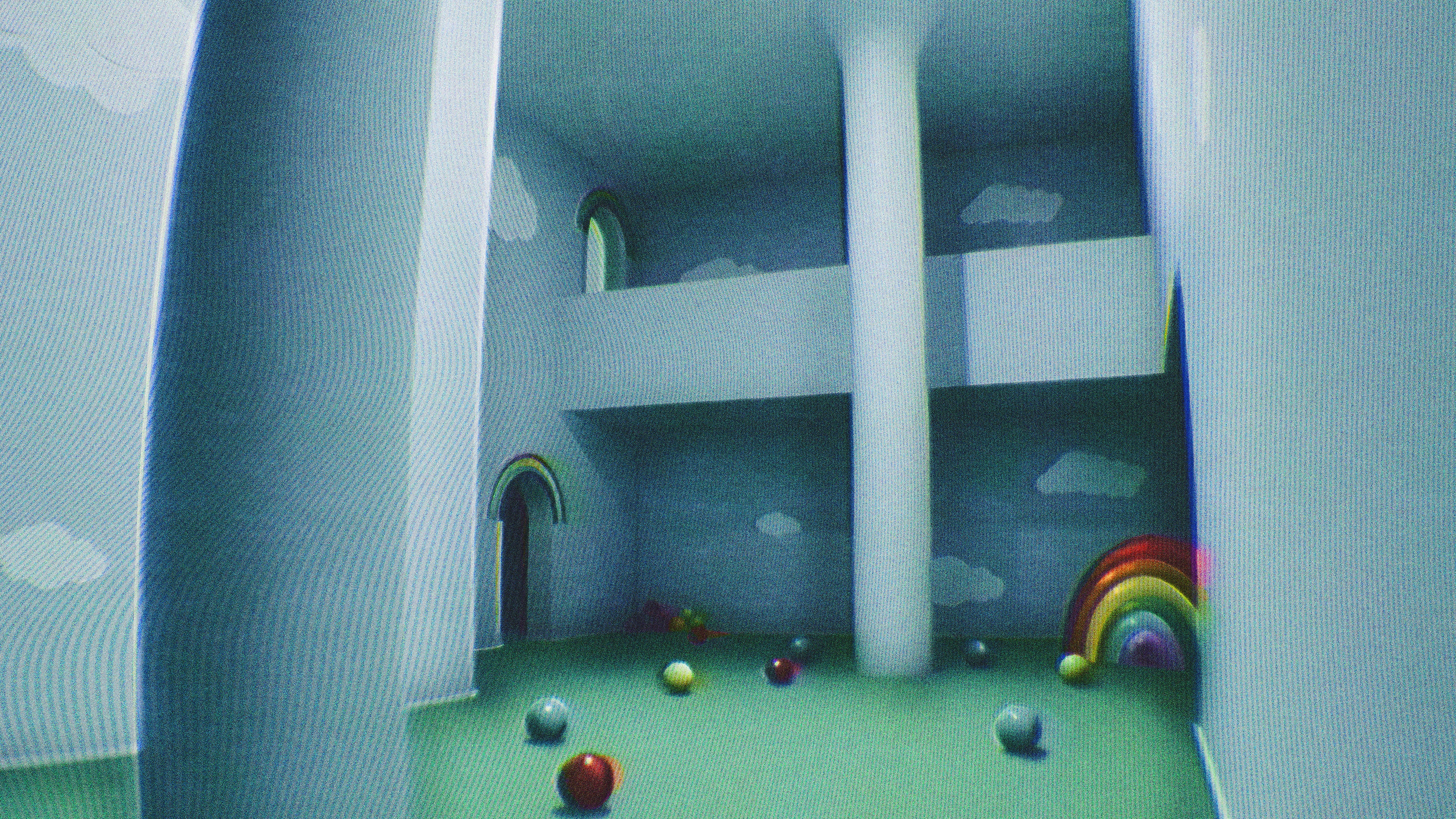
Dreamcore is a surreal internet-born visual movement that blends the comfort of childhood memories with unsettling psychological ambiguity. It manifests across mood boards, short-form video feeds, and digital art platforms as a collection of familiar yet impossible spaces—empty playgrounds under cotton-candy skies, endless school corridors, and vintage low-fidelity television screens.
At its core, dreamcore taps into kenopsia, the eerie atmosphere of a place that is usually bustling with people but now sits completely abandoned. Rather than telling a direct narrative, dreamcore creates a distinct emotional state. It forces viewers to confront memories that feel deeply personal yet impossible to verify, sitting precisely at the intersection of collective nostalgia and subconscious unease.
The Psychological Mechanics of Dreamcore
To understand why dreamcore resonates so strongly in contemporary visual culture, we have to look at how the human brain processes memory and perception. Dreams rarely reproduce past events with factual accuracy; instead, they splice fragments of emotional impressions, visual textures, and disconnected locations into a single, cohesive illusion.
Dreamcore replicates this strange internal logic through several distinct design choices:
- Spatial Ambiguity: Environments lack clear geographic anchors or human inhabitants, making it difficult to determine whether a space is indoors, outdoors, past, or present.
- Low-Fidelity Textures: Grainy analog video, VHS tracking lines, and CRT monitor glow evoke a sense of temporal displacement.
- Emotional Dissonance: Bright, cheerful colors are paired with complete silence or isolation, creating a subtle psychological tension between safety and vulnerability.
Psychological studies on surreal imagery often divide viewer responses into two categories: comforting nostalgia and eerie apprehension. Dreamcore deliberately maintains both reactions at once. You feel as though you've visited a place before, but the absence of context makes you question whether the memory is real or entirely fabricated.
Nostalgia as a Digital Anchor
Nostalgia in digital aesthetics often relies on recognizable cultural artifacts—toys from the 1990s, early 2000s computer interfaces, or vintage home interiors. However, dreamcore uses nostalgia differently than traditional retro design.
Traditional retro aesthetics aim for emotional closure and warm remembrance. They celebrate specific eras. Dreamcore, by contrast, destabilizes memory. It uses generalized signifiers of childhood—swingsets, colorful carpet patterns, empty malls—without tying them to a specific historical date.
According to cultural analyses on digital art trends like those discussed on Wikipedia's Dreamcore Overview, this approach allows viewers from entirely different generations and geographic backgrounds to project their own subconscious feelings onto the same digital canvas. It becomes a shared language for modern anemoia—nostalgia for a time or place you've never actually experienced.
How Digital Artists Construct Dreamlike Spaces
Contemporary creators build dreamcore environments using a mix of 3D modeling software, retro filters, and photographic manipulation. Artists avoid hyper-realism, choosing instead to leave slight imperfections that mimic the hazy degradation of a forgotten dream.
Common technical techniques include:
- Soft Lighting and Fog: Blurring background elements to create an infinite horizon or claustrophobic enclosure.
- Desaturated Palettes: Using muted pastels or hyper-saturated primary colors to evoke a dream-state filter.
- Floating or Displaced Objects: Placing ordinary items—like a bed, a television, or a cloud—in impossible outdoor or subterranean locations.
This deliberate rejection of strict realism separates dreamcore from standard science fiction or fantasy art. It doesn't try to build a functional alternative world; it mimics the fragmented way our minds reconstruct the past when we sleep.
Dreamcore Versus Weirdcore
It is common to confuse dreamcore with its sister aesthetic, weirdcore. While both utilize surreal, low-fidelity digital imagery, their underlying emotional goals differ.
- Dreamcore emphasizes emotional atmosphere, melancholy, nostalgia, and quiet introspection. The unease is subtle and stems from isolation.
- Weirdcore leans heavily into psychological disorientation. It frequently incorporates distorted text, direct viewer address, aggressive optical illusions, and unsettling digital artifacts designed to shock or disorient.
Recognizing this distinction clarifies why dreamcore feels meditative, whereas weirdcore often feels confrontational or jarring.
Frequently Asked Questions
What is the primary difference between nostalgia and dreamcore?
Nostalgia relies on specific, recognizable cultural markers to evoke warmth and clear remembrance. Dreamcore uses fragmented, ambiguous spaces to create the feeling of a memory that cannot be fully accessed or verified.
Why do empty spaces feel so prominent in dreamcore visuals?
Empty spaces induce kenopsia, removing the distraction of human activity. This forces the viewer to focus entirely on the emotional atmosphere of the architecture and objects within the frame.
Is dreamcore generated entirely by AI?
While many modern digital artists use AI tools to generate surreal landscapes, dreamcore originated well before generative AI tools became mainstream, heavily driven by traditional digital photography, 3D renders, and collage art.
How can creators avoid making dreamcore look too generic?
Creators can elevate their work by focusing on specific emotional textures, avoiding overused internet tropes (like endless pools without variation), and grounding their surreal environments in genuine psychological introspection.



