On September 12, 1992, Dr. Mae Jemison stepped aboard the Space Shuttle Endeavour for the STS-47 mission, crossing a historic threshold as the first African American woman to travel into space. While many remember her solely for that groundbreaking eight-day orbital flight, her life spans far beyond a single mission. Before and after leaving NASA, she worked as a chemical engineer, a general practitioner, a Peace Corps medical officer, a university professor, and a technology entrepreneur.
Early Life and Academic Foundations
Born in Decatur, Alabama in 1956 and raised in Chicago, Illinois, Jemison showed an early fascination with science and astronomy. Her parents encouraged her curiosity, providing an environment where questioning how things worked was standard practice. Despite teachers who occasionally questioned her scientific ambitions because of her race and gender, she pressed forward.
At just 16 years old, she entered Stanford University. She balanced demanding technical coursework with her love for the arts, studying dance and theater alongside her core requirements. In 1977, she graduated with a Bachelor of Science in chemical engineering and a Bachelor of Arts in African and African-American studies.
Following her undergraduate studies, she enrolled at Cornell University Medical College. During her medical training, she traveled abroad to broaden her clinical perspective, working in a Cambodian refugee camp in Thailand and providing healthcare services in rural Kenya. She earned her Doctor of Medicine degree in 1981. BBC has also covered this critical issue in great detail.
From Medicine to the Peace Corps
After completing her medical internship at Los Angeles County-University of Southern California Medical Center, Jemison practiced as a general physician. Soon after, she answered a call to global public service.
From 1983 to 1985, she served as a Peace Corps medical officer stationed in Liberia and Sierra Leone. In this role, she managed healthcare delivery for Peace Corps volunteers and expatriates, administered public health programs, and collaborated with the National Institutes of Health and the Centers for Disease Control and Prevention on research projects, including the development of hepatitis B vaccines.
Her time in West Africa sharpened her operational problem-solving skills under resource-constrained conditions. It also reinforced her belief that scientific research and medical access must be globally inclusive.
Entering the NASA Astronaut Corps
Jemison’s ambition to join the space program solidified after watching Sally Ride become the first American woman in space in 1983. She initially applied to NASA in 1985, but the selection process was temporarily frozen following the tragic Challenger accident in 1986.
When NASA reopened applications, Jemison reapplied. In June 1987, she was selected as one of 15 candidates out of a pool of more than 2,000 applicants for NASA Astronaut Group 12.
Her rigorous training covered shuttle systems, spacewalk conditioning, T-38 flight operations, and emergency evacuation protocols. By 1988, she had completed her training as a mission specialist.
The Historic STS-47 Mission
In September 1989, Jemison received her first flight assignment as a mission specialist on STS-47, a cooperative Spacelab-J mission between NASA and the National Space Development Agency of Japan (NASDA).
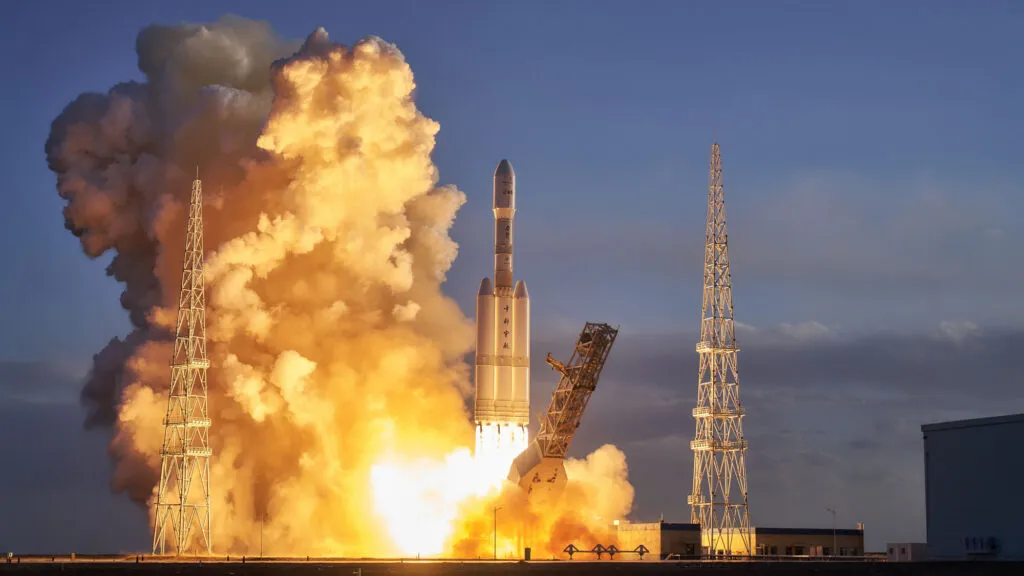
On September 12, 1992, Endeavour lifted off from Kennedy Space Center. During the eight-day mission, Jemison orbited Earth 126 times, logging 190 hours, 30 minutes, and 23 seconds in space.
As a science mission specialist, her responsibilities were extensive:
- Conducted cooperative life science and materials science experiments in the Spacelab module.
- Served as a co-investigator on bone cell research experiments studying how microgravity affects cellular biology.
- Performed physiological studies on vestibular function and human adaptation to spaceflight.
Her presence in orbit provided a powerful cultural milestone, inspiring millions of young people—particularly women and minority students—to see themselves in advanced scientific fields. Notably, Jemison brought cultural artifacts with her into space, including a West African balafon, a poster from Alvin Ailey American Dance Theater, and photographs of pioneering Black aviators, symbolizing her deep connection to history and art.
Post-NASA Career and Advocacy
Jemison resigned from NASA in March 1993 to pursue independent ventures at the intersection of technology and society.
She established the Jemison Group, a technology consulting firm focused on applying advanced aerospace innovations to daily life in developing countries. Her projects targeted telecommunications infrastructure and sustainable community health solutions.
Beyond corporate and technological leadership, she dedicated her platform to science education and scientific literacy:
- The Earth We Share (TEWS): An international science camp program she founded to help students aged 12 to 16 build critical thinking skills through hands-on problem-solving.
- 100 Year Starship: Serving as the principal of this independent initiative, she works to foster the research and technological breakthroughs required for human interstellar travel within the next century.
- Literacy and Media: She authored children's books, including her memoir Find Where the Wind Goes, and made a guest appearance on Star Trek: The Next Generation, becoming the first real-world astronaut to appear on the franchise.
You can read more about her ongoing educational initiatives and professional background directly through official institutional profiles like the NASA Biography Portal.
Frequently Asked Questions
What exact degree did Dr. Mae Jemison earn?
She earned a Bachelor of Science in chemical engineering and a Bachelor of Arts in African and African-American studies from Stanford University, followed by a Doctor of Medicine from Cornell University.
How long was Mae Jemison in space?
Her sole spaceflight, STS-47 aboard the Space Shuttle Endeavour, lasted for 7 days, 22 hours, and 30 minutes from September 12 to September 20, 1992.
Why did she leave NASA?
Jemison left NASA in 1993 to return to independent research, technology development, and science education advocacy, founding the Jemison Group to bridge the gap between advanced science applications and everyday communities.
What inspired Dr. Jemison to become an astronaut?
While she was interested in astronomy and science fiction from childhood—notably finding inspiration in characters like Lt. Uhura from Star Trek—seeing Sally Ride fly into space in 1983 convinced her to apply to the astronaut corps directly.