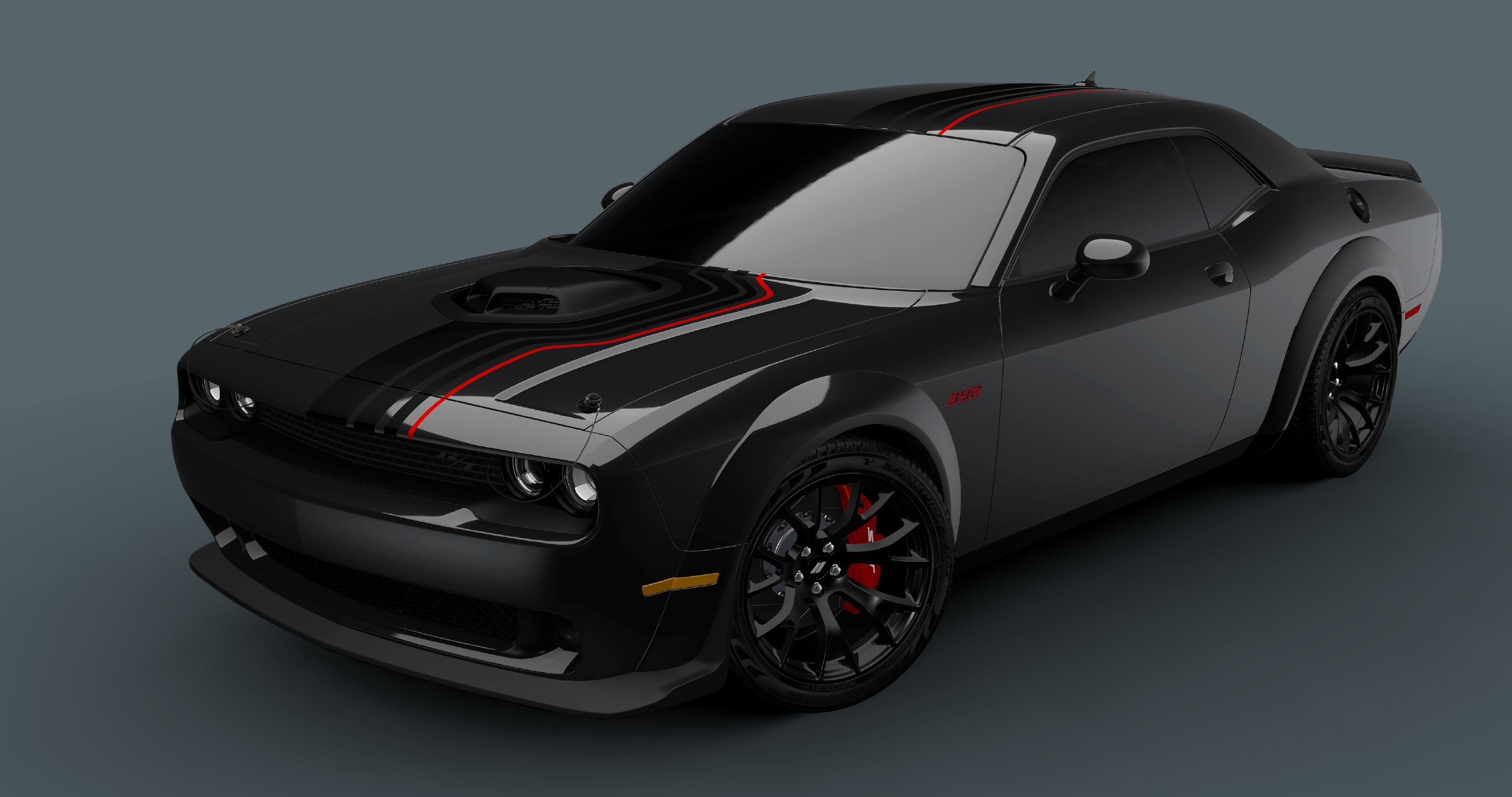
The Dodge Ram SRT 10 is an unapologetic product of early-2000s automotive bravado. Built by DaimlerChrysler's Performance Vehicle Operations (PVO) team, it took the legendary 8.3-liter V10 engine straight out of the Dodge Viper and dropped it into a heavy-duty half-ton pickup chassis. Produced from 2004 to 2006, this low-slung rear-wheel-drive machine captured a world speed record and remains a high-water mark for factory muscle trucks.
Production Years and Model Evolution
Chrysler first teased the concept at the 2002 North American International Auto Show in Detroit. Enthusiasts responded with overwhelming enthusiasm, pushing the truck into a fast-tracked production schedule. The first regular cab rolled off the assembly line on November 10, 2003, designated as a 2004 model.
Over its brief three-year lifecycle, total production reached 10,046 units. Each model year brought specific structural or trim-level changes:
- 2004 Model Year: Available strictly as a regular cab with a short bed and a six-speed manual transmission. It featured a Hurst shifter, a distinct power-bulge hood with a functional air scoop, and 22-inch polished aluminum wheels. Dodge produced 3,057 units for this inaugural run.
- 2005 Model Year: Dodge expanded the lineup by introducing the Quad Cab variant. Aimed at buyers wanting four-door practicality, the heavier Quad Cab swapped the manual transmission for a modified 48RE four-speed automatic. Total production peaked at 5,113 units this year.
- 2006 Model Year: The final production year introduced minor interior trim updates, smaller chrome-and-red fender badges, and standard body-colored styling accents. Production wound down after 1,973 units, closing the book on the Viper-powered truck era.
The Heart of the Beast: Viper V10 Performance
At the core of the truck's reputation is its powerplant. Displacing 8.3 liters (505 cubic inches), the cast-aluminum iron-lined V10 engine pumped out 500 horsepower at 5,600 rpm and 525 lb-ft of torque at 4,200 rpm. Ninety percent of that torque was available from just 1,500 rpm, giving the heavy vehicle instant throttle response.
The regular cab paired this engine with a Tremec T-56 six-speed manual transmission, allowing the truck to sprint from 0 to 60 mph in roughly 4.9 seconds and clear the quarter-mile in 13.6 seconds. The heavier Quad Cab, hampered by its automatic gearbox and increased curb weight, managed a 0–60 mph time of about 5.6 seconds. In July 2004, a regular cab model driven by racing legend Brendan Gaughan secured a Guinness World Record, averaging 154.584 mph at the Chelsea Proving Grounds to claim the title of world's fastest production pickup truck.
Chassis Upgrades and Handling Dynamics
Putting 500 horsepower through a standard pickup chassis required heavy structural engineering. PVO engineers adapted independent front suspension and rack-and-pinion steering from Ram's Heavy Duty lineup. They stiffened the hydroformed frame and dropped the ride height by one inch in the front and 2.5 inches in the rear.
Bilstein gas-charged shocks, performance-tuned coil springs, and an upgraded rear axle with a secondary auxiliary shock absorber were added to curb wheel hop under heavy acceleration. Stopping power came from massive 15-inch front disc brakes paired with 14-inch rears, sourced from TRW. Despite these upgrades, drivers had to manage a curb weight exceeding 5,100 pounds for the regular cab and 5,600 pounds for the Quad Cab. High-speed stability was exceptional, but tight corners revealed significant body roll.
Common Issues and Ownership Realities
Owning a performance vehicle of this vintage requires understanding its mechanical quirks. Buyers and collectors frequently encounter a few specific challenges:
- Thermal Management: Under-hood temperatures run extremely high due to the massive V10 block packed into a truck engine bay. Failing water pumps and aging radiator cores can lead to heat soak during prolonged idling or track sessions.
- Fuel Consumption: Aerodynamics are brick-like, and fuel economy sits squarely in the single digits. Real-world city driving often yields 8 to 9 mpg, with highway figures rarely exceeding 12 to 14 mpg.
- Transmission Durability: The Tremec manual in regular cabs handles power well, but abused clutches are expensive to replace. The four-speed automatic in Quad Cabs requires regular fluid maintenance to survive aggressive launches under full throttle.
- Tonneau Cover Hardware: Many 2005 and 2006 models came equipped with a fiberglass tonneau cover featuring an integrated rear spoiler. The factory mounting hardware and gas struts often wear out, leading to sagging lids or wind buffeting at highway speeds.
Frequently Asked Questions
Can a Dodge Ram SRT 10 tow a trailer?
It depends entirely on the cab configuration. The regular cab manual model is not factory-rated for towing due to the nature of its performance clutch and transmission setup. However, the Quad Cab automatic is rated to tow approximately 7,500 to 8,150 pounds when properly equipped.
What is the fuel tank capacity?
Both cab styles feature a large 26-gallon fuel tank. Given the fuel economy, long-distance highway cruising requires frequent fuel stops.
How rare is the Dodge Ram SRT 10 today?
With only 10,046 units manufactured across its entire three-year production run, clean, unmodified examples have become highly sought-after collector items. Regular cab models with the six-speed manual command the highest interest among automotive enthusiasts.
Did any other truck rival its engine displacement?
While Ford and Chevrolet built high-performance trucks like the Ford F-150 Lightning and Chevrolet Silverado SS during the same era, both relied on supercharged or large-displacement V8 engines. Dodge remains unique for shoehorning a pure supercar V10 into a half-ton production pickup.



