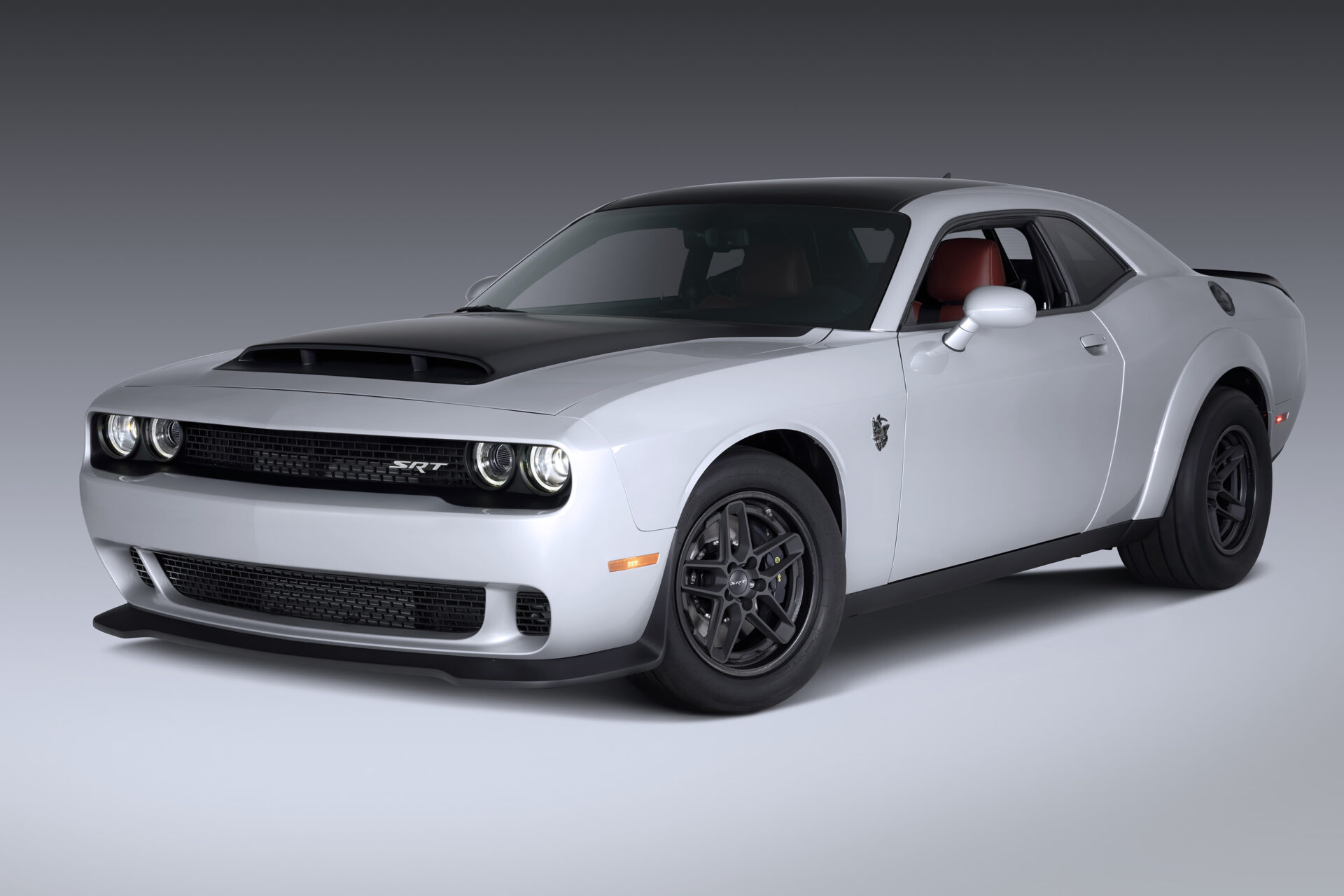
The Dodge Demon 170 hits 0-60 mph in a blistering 1.66 seconds on a prepped surface and clears the quarter-mile in 8.91 seconds at over 150 mph when running on E85 fuel. This limited-production muscle car represents the absolute peak of factory supercharged V8 development, squeezing 1,025 horsepower out of a 6.2-liter HEMI powerplant without adding a larger blower.
Achieving these numbers requires understanding the complex interplay between fuel ethanol content, transmission calibration, tire physics, and track preparation. Let's break down how the Demon 170 achieves its record-setting acceleration and what drivers experience away from the drag strip.
Powertrain Engineering and the E85 Advantage
At the core of the Demon 170's performance is its high-output engine architecture. While it shares roots with earlier Hellcat engines, Dodge redesigned nearly every major component to handle massive cylinder pressures.
- Fuel Sensing System: The car features a powertrain control module that automatically detects the percentage of ethanol in the fuel tank. When it senses at least 85% ethanol (E85), it adjusts spark timing and fuel delivery to unlock the full 1,025 horsepower and 945 lb-ft of torque. On standard E10 pump gas, output drops to 900 horsepower.
- Valvetrain and Boost: Boost pressure peaks at 21.7 psi, managed by a 3.0-liter Dodge Supercharger with a larger snout and a 3.02-inch pulley. The fuel injectors flow up to 164 gallons per hour, which is enough fuel to drain the tank in just a few minutes of continuous wide-open throttle.
- Drivetrain Reinforcements: The TorFlite 8HP95 eight-speed automatic transmission features an upgraded output shaft and a beefed-up propeller shaft to absorb the violent shock load during a hard launch.
Traction Physics and Drag Radial Setup
Horsepower means nothing without traction. The Demon 170 utilizes specific tire pairings and suspension geometry to transfer power efficiently.
The car comes equipped with Mickey Thompson ET Street R drag radials in the rear (315/50R17) and lightweight carbon-fiber or forged aluminum wheels up front. These rear drag radials feature a soft rubber compound designed to wrinkle and expand under load, creating a massive contact patch at launch.
Furthermore, the transbrake feature locks the transmission's output shaft while allowing the engine to rev up against the torque converter. When the driver releases the paddle shifter, the transbrake disengages instantly, sending an immediate surge of torque to the rear wheels.
Real-World Street Acceleration and Limitations
While factory track times are set under ideal conditions on chemically prepped drag strips, real-world driving tells a slightly different story. On standard asphalt or concrete highways, traction is the primary limiting factor.
- Weight Transfer: The Demon 170 utilizes front suspension geometry with softer springs and specialized dampers designed to lift the front end quickly. This shifts weight to the rear tires, planting the drag radials firmly onto the road surface.
- Street Tires vs. Drag Radials: Driving on true drag radials on public roads requires caution, especially in wet conditions where hydroplaning risk increases significantly. Many owners swap to standard all-season or performance tires for daily street use, which drastically reduces straight-line acceleration off the line.
- G-Force Impact: Launching the car on a prepared surface generates over 2 Gs of acceleration, pushing occupants back into their seats with enough force to cause temporary breathlessness.
Common Mistakes When Launching a Demon 170
Many drivers fail to replicate factory performance figures due to avoidable errors during the launch sequence.
- Incorrect Fuel Mixture: Attempting a maximum-effort run on low-ethanol fuel limits the engine output to 900 horsepower, costing crucial tenths of a second in the quarter-mile.
- Improper Tire Pressure: Running standard street tire pressures in the rear drag radials prevents the sidewalls from wrinkling properly. Lowering rear pressure to around 15 psi is necessary for track use.
- Skipping Line Lock: Failing to clean and heat the rear tires through a proper burnout leaves microscopic debris on the rubber, reducing grip at the starting line.
Frequently Asked Questions
What is the official 0-60 mph time of the Dodge Demon 170?
Dodge officially clocked the Demon 170 from 0-60 mph in 1.66 seconds on a prepped surface using a rollout. In everyday street conditions, times typically range between 2.2 and 2.6 seconds depending on road temperature and tire choice.
Can you drive the Demon 170 on regular pump gas?
Yes, the car runs safely on standard 91 or 93 octane gasoline (E10), but the engine computer automatically restricts output to 900 horsepower. You need high-ethanol E85 fuel to unlock the full 1,025 horsepower.
Is the Demon 170 street legal?
Yes, the Demon 170 is fully street-legal in all 50 states and comes with a standard factory warranty, despite its extreme drag strip capabilities and NHRA certification for a sub-10-second quarter mile.
How does it differ from the original 2018 Dodge Demon?
The Demon 170 produces 215 more horsepower than the original Demon, features a heavily reinforced engine block, upgraded supercharger system, specialized transbrake capabilities, and does not require a separate race-gas tune switch.



