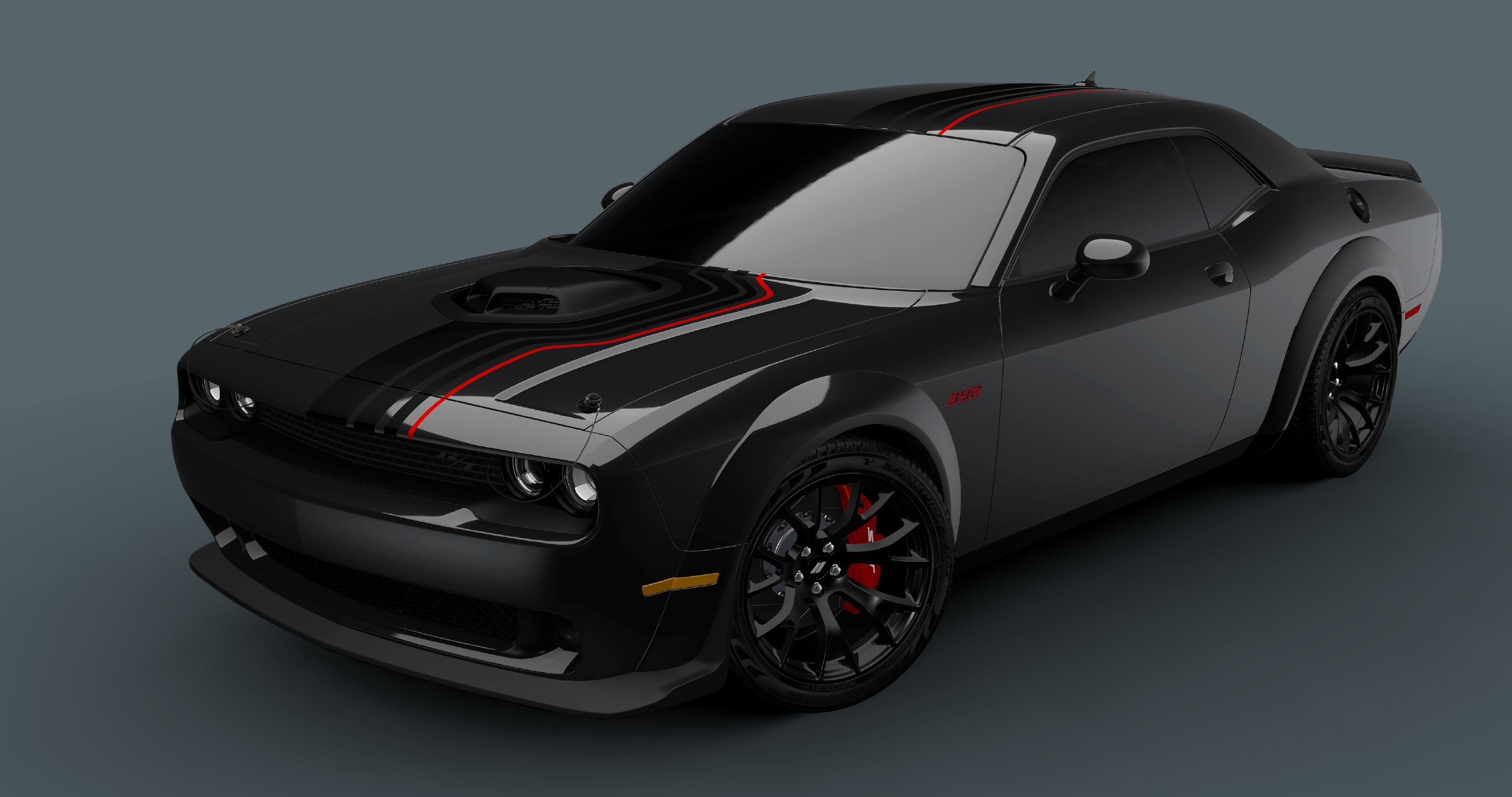
When Dodge announced the final chapter of its gas-powered muscle car lineage, it didn't just whisper goodbye. It detonated the segment with the 2023 Dodge Challenger SRT Demon 170. Generating up to 1,025 horsepower and achieving a jaw-dropping 1.66-second 0-60 mph time, this factory-built drag racer redefined production car limits. It isn't merely an updated badge on an older platform; it's a heavily re-engineered mechanical beast built to conquer the strip right off the showroom floor.
Most automotive breakdowns skim the surface of what makes this machine tick, focusing only on headline figures. This guide digs deep into the engineering, fuel chemistry, drivetrain updates, and ownership realities behind the fastest accelerating production car ever built.
Engineering the 1,025-Horsepower Hemi
At the heart of the Demon 170 sits a heavily modified 6.2-liter supercharged HEMI V8 engine. While it shares a displacement root with past supercharged Dodge powerplants, virtually every primary power component was beefed up to handle catastrophic internal pressures.
The engine block features upgraded main bearing caps and stronger studs. Engineers swapped out standard connecting rods and pistons for high-strength aerospace-grade metal alloys capable of withstanding combustion pressures exceeding 2,500 psi. Sitting atop the engine is a massive 3.0-liter supercharger paired with a 105mm throttle body, shoving air into the cylinders with relentless force.
The fuel system received an equally radical overhaul. The Demon 170 features high-flow fuel injectors and a pump system capable of delivering more fuel per minute than a typical household showerhead. This volume is necessary because unlocking the car's ultimate potential requires high-content ethanol fuel.
The E85 Ethanol Secret and Power Tiers
The "170" in the vehicle's name serves a specific chemical purpose. It refers to 170-proof E85 ethanol fuel. The car features a powertrain control module with a smart fuel-composition sensor that continuously measures the ethanol percentage in the tank.
- Standard Premium Fuel (E10): When running on ordinary 91-octane pump gas, the engine detunes slightly, producing a still-terrifying 900 horsepower and 810 lb-ft of torque.
- High-Ethanol Blend (E85): Once the sensor detects high-ethanol content (typically close to 85%), the computer automatically adjusts ignition timing and boost pressure, unleashing the full 1,025 horsepower and 945 lb-ft of torque.
Unlike the older 2018 Demon, which required a physical "Red Key" and a separate container of 100-octane race fuel to reach peak output, the Demon 170 handles this transition seamlessly based entirely on what you pump into the tank. You can read more about how ethanol alters combustion dynamics through resources provided by the U.S. Department of Energy.
Drag Strip Dominance and Physics-Defying Metrics
The numbers put down by this street-legal drag racer read like fiction. On a properly prepped drag strip, utilizing a one-foot rollout, the Demon 170 achieves the following official performance milestones:
- 0-60 MPH: 1.66 seconds
- Quarter-Mile Elapsed Time: 8.91 seconds at 151.17 mph
- Peak Acceleration Force: 2.004 Gs
That acceleration force means you accelerate harder than gravity itself pulls you downward. In fact, the car generates so much acceleration and speed that the National Hot Rod Association (NHRA) officially banned it from competition for running under nine seconds without a safety roll cage and a parachute. Consequently, Dodge offered a factory-authorized parachute mounting kit through Mopar for owners planning serious track use.
Suspension, TransBrake 2.0, and Staggered Tires
Raw power means nothing if you can't hook up to the pavement. The Demon 170 utilizes a specialized drag-tuned suspension setup featuring adaptive-damping Bilstein shocks. The front end is designed to rise easily under acceleration, shifting weight entirely onto the rear tires to maximize traction.
TransBrake 2.0
The patented TransBrake 2.0 system lets drivers lock the output shaft of the automatic transmission while staging. This allows the engine to build boost before launch. Furthermore, the system includes selectable torque-shaping profiles, letting drivers fine-tune the engine's torque delivery curve to match varying track grip levels.
Staggered Rubber
To put that power down, Dodge equipped the car with custom-developed Mickey Thompson ET Street R drag radials. The setup features massive 315/50R17 tires in the back paired with narrower 245/55R18 tires up front to reduce rolling resistance and shed weight. Buyers could also opt for lightweight, two-piece carbon-fiber wheels manufactured by Lacks Enterprises, which save nearly 25 pounds of unsprung mass.
Common Ownership Misconceptions
People often look at specialty muscle cars through an everyday lens, leading to predictable misunderstandings.
- Fuel Economy Myth: Driving this car at wide-open throttle will drain its fuel tank in roughly six minutes. However, normal highway cruising yields much more standard fuel consumption, though high-ethanol blends reduce overall fuel efficiency compared to standard gasoline.
- Daily Driving Reality: While it comes with infotainment, air conditioning, and optional creature comforts like heated seats, driving a car with extreme drag radials on wet public roads requires extreme caution.
- The Parachute Requirement: You don't need to deploy the parachute on your morning commute; it's strictly an aesthetic and functional drag strip requirement for competitive track speeds.
Frequently Asked Questions
How many Demon 170 models were built?
Dodge originally intended to produce 3,300 units, subject to engine component availability and production constraints, with the vast majority allocated to the North American market.
Do you need a special license to drive it?
No special racing license is required to purchase or drive the car on public streets, though taking it to an NHRA-sanctioned track for timed quarter-mile runs requires meeting specific safety equipment mandates.
What is the original MSRP versus market value?
The base MSRP started at $96,666 (excluding destination, taxes, and dealer fees), bringing the sticker price closer to $130,000 with options. Due to its status as the final gas-powered send-off, secondary market values routinely command significant premiums.
Can it run on regular 87-octane gas?
No. Running regular 87 octane can cause severe engine damage under boost. The car requires a minimum of 91-octane premium fuel (delivering 900 horsepower) or an E85 ethanol blend to operate safely at peak levels.



