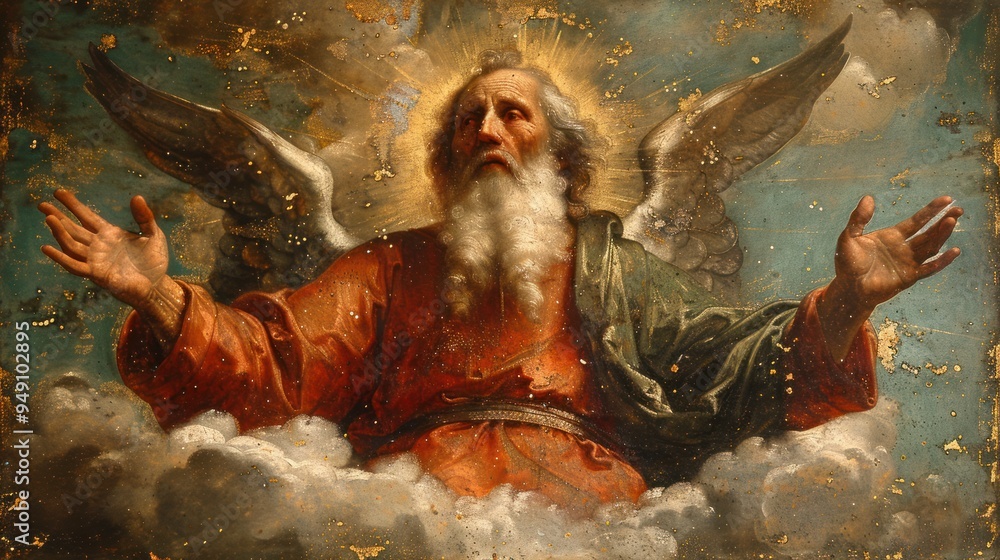
The divine right of kings is a political and religious doctrine asserting that a monarch derives legitimacy directly from God rather than from the consent of the people, the nobility, or any earthly estate. Because authority comes from a higher power, the sovereign answers to no mortal institution. Kings and queens who claimed this mandate viewed rebellion not just as treason against the state, but as a sin against God.
This principle shaped centuries of European governance, justifying absolute monarchy while sowing the seeds for modern constitutional systems. Monarchs didn't just rule by sword; they governed by sacred right, transforming political obedience into a spiritual duty.
Origins and theological foundations
The doctrine didn't appear overnight. It evolved from medieval Christian theology regarding worldly authority. Early thinkers leaned on biblical passages like Romans 13:1, which states that there is no authority except from God, and those that exist are instituted by God.
In 494 CE, Pope Gelasius I introduced the doctrine of the "two swords" to separate spiritual and secular power. He argued that the Pope held supreme spiritual authority, while emperors and kings held secular power. For centuries, this balance created a tense negotiation between church and state. Kings needed papal coronations to legitimize their rule, while popes relied on royal armies for physical protection. For another look on this event, refer to the latest coverage from Reuters.
By the late medieval and early modern periods, ambitious monarchs sought to cut out the middleman—the Pope. Protestant reformations accelerated this shift. When Henry VIII broke away from Rome, he consolidated both spiritual and temporal supremacy in the English crown. Rulers across Europe realized that if their authority came straight from God, they no longer needed papal approval to wear the crown.
The golden age of absolutism
The 17th and 18th centuries marked the peak of the divine right of kings, most famously in Stuart England and Bourbon France. Monarchs used theological treatises, royal ceremonies, and court propaganda to cement their god-given status.
King James I of England (James VI of Scotland) became one of the doctrine's most vocal theorists. In works like True Law of Free Monarchies (1598) and a speech to Parliament in 1610, he declared that "Kings are justly called Gods, for that they exercise a manner or resemblance of Divine power upon earth." James argued that subjects had no right to judge a king, because only God possessed the authority to evaluate a sovereign's actions.
Across the English Channel, King Louis XIV of France took absolutism to its logical extreme. Known as the Sun King, Louis centralized state power around his person. Though the famous phrase "l'État, c'est moi" ("I am the state") is often considered a simplification, it accurately reflects his governing philosophy. He stripped the French nobility of independent political power, turning them into courtiers dependent on royal favor at Versailles, all under the banner of divine legitimacy.
Arguments for and against royal absolutism
Proponents of the divine right of kings argued that absolute authority was the only way to prevent political chaos and civil war. Thinkers like French bishop Jacques-Bénigne Bossuet defended royal absolutism by arguing that monarchs acted as God's lieutenants on earth. From this perspective, a single ruler with absolute power offered stability, unified national defense, and protection against factionalism and endless aristocratic squabbling.
Critics, however, pointed out the catastrophic flaws of placing absolute power in mortal hands. When a monarch's legitimacy depends entirely on divine appointment, there are no legal mechanisms to remove a tyrant.
Opponents argued that tyranny violated natural law. If a king abused his subjects, the path to reform was nonexistent without violent upheaval. This friction turned philosophical debates into physical battlegrounds.
The collapse of the divine right
The theory collapsed under the weight of its own contradictions and the rise of Enlightenment philosophy. People began to ask hard questions about power, governance, and human rights.
In England, the clash between King Charles I and Parliament over royal supremacy triggered the English Civil War in 1642. Charles believed so firmly in his divine mandate that he refused to compromise with Parliament, viewing their demands as rebellion against God. The conflict ended with the king's defeat, trial, and unprecedented execution in 1649. Though the monarchy was briefly restored, the absolute divine right was dead in England. The Glorious Revolution of 1688 permanently established a constitutional monarchy where Parliament, not God's direct appointment, held supreme legislative power.
Philosophers like John Locke dismantled the theoretical foundations of absolutism. In his Second Treatise of Government (1689), Locke argued that governments derive their legitimacy from the consent of the governed, not divine decree. He introduced the concept of social contract theory, stating that individuals form societies to protect natural rights to life, liberty, and property—and that people have the right to overthrow governments that violate those rights.
The final death blow to the divine right of kings occurred during the French Revolution in 1789. The French populace overthrew Louis XVI, executed him by guillotine, and replaced the absolute monarchy with a republic founded on the sovereignty of the nation.
Frequently asked questions
Did the divine right of kings exist outside Europe?
Yes. While the specific theological phrasing originated in Christian Europe, similar concepts existed globally. The "Mandate of Heaven" in ancient China allowed dynasties to rule as long as they governed justly, but it differed because losing the mandate justified revolution and the overthrow of the emperor.
How did the divine right differ from the Mandate of Heaven?
The divine right of kings claimed that a monarch's power was unconditional and absolute, regardless of how poorly they treated their subjects. The Chinese Mandate of Heaven was conditional; natural disasters, famines, and civil unrest were interpreted as signs that Heaven had withdrawn its favor, giving the people the right to rebel.
Who were the main philosophers against the divine right?
John Locke, Thomas Hobbes, and later Enlightenment thinkers like Jean-Jacques Rousseau and Voltaire dismantled the doctrine. Locke and Rousseau argued for popular sovereignty, while Hobbes argued for a social contract based on rational agreement rather than divine ordination.
Are there any countries that still use this principle?
No major nation operates under the divine right of kings today. Modern constitutional monarchies, such as the United Kingdom, Sweden, and Japan, derive their authority from national constitutions and parliamentary law rather than divine appointment.



