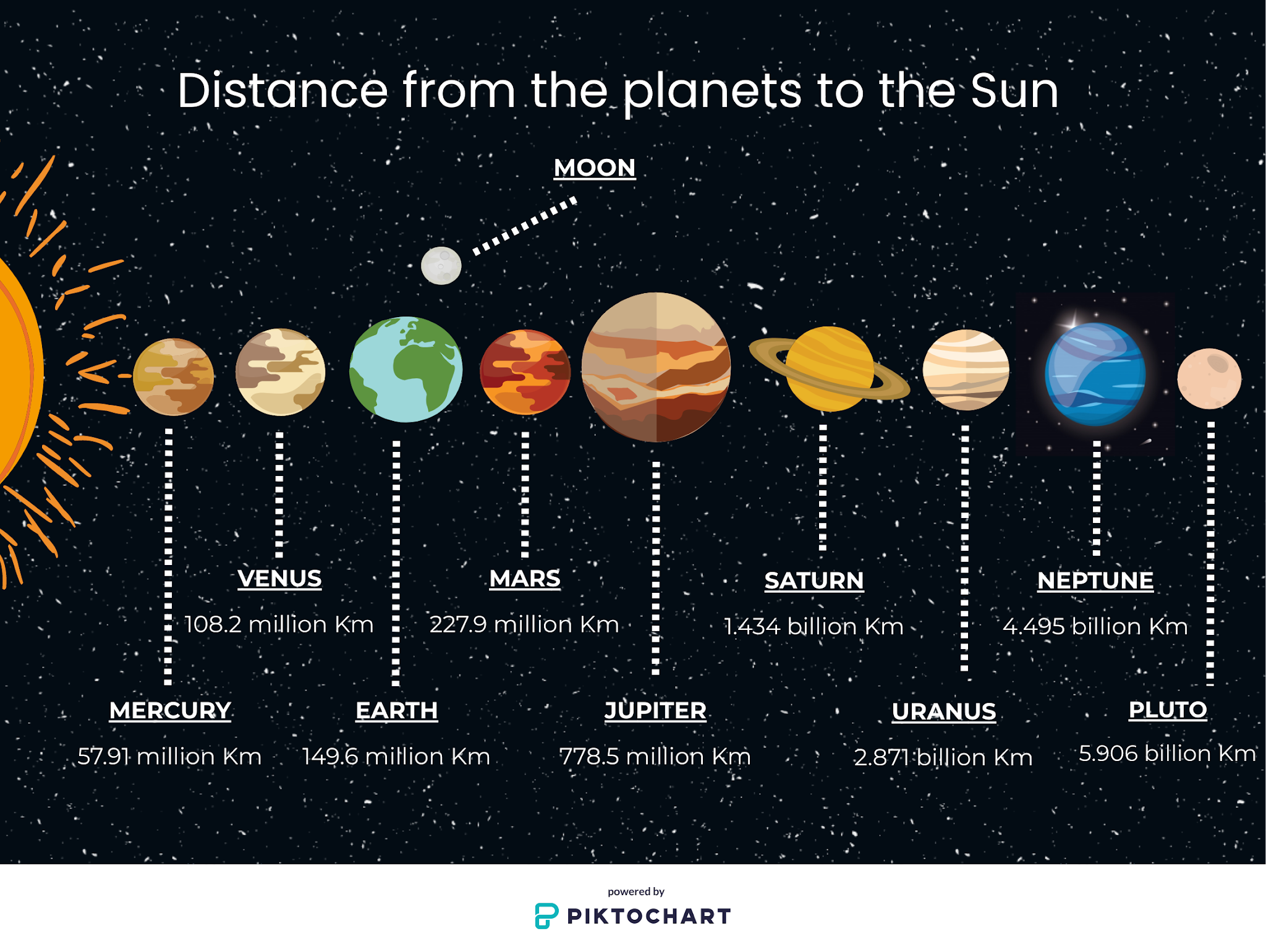
The average distance from Earth to the Sun is roughly 93 million miles, or about 149.6 million kilometers. Light travels across this vast expanse in approximately eight minutes and twenty seconds. This measurement is not a static number because Earth travels in an elliptical orbit rather than a perfect circle. Throughout the year, our planet moves closer to and farther from the star at the center of our solar system, changing the distance by millions of miles.
Understanding this celestial separation forms the foundation of modern astronomy. Astronomers use this baseline to measure distances across the solar system, defining it as one Astronomical Unit, or AU. Without knowing this exact baseline, mapping the positions of distant planets, comets, and stars would be impossible.
Defining the Astronomical Unit
The Astronomical Unit standardizes measurements across space. Because distances in the solar system are too vast for miles or kilometers to remain practical, scientists adopted the AU. One AU equals the precise average distance between the center of Earth and the center of the Sun.
The International Astronomical Union set this value at exactly 149,597,870,700 meters. Using this standardized unit simplifies calculations when studying orbital mechanics. For instance, Mars sits at an average distance of about 1.5 AU from the Sun, while Pluto reaches nearly 40 AU at its average orbit.
Historical Measurement Methods
Early astronomers struggled to calculate the distance to the Sun because they lacked precise timing and radar instruments. In the seventeenth century, scientist Giovanni Cassini and his colleague Jean Richer used a method called parallax to measure the distance to Mars. By observing Mars from two distant points on Earth simultaneously, they calculated its distance and used geometric ratios to estimate the distance to the Sun.
Centuries later, the transit of Venus became the premier method for calculating this distance. When Venus passes directly between Earth and the Sun, observers across different latitudes note the exact timing of the transit. By comparing these observations, mathematicians calculated the solar parallax with remarkable accuracy for their era. Modern astronomers rely on radar astronomy, bouncing radio signals off Venus and other inner planets to measure travel time with exact precision.
Earth's Elliptical Orbit and Distance Variations
Earth doesn't circle the Sun in a uniform round path. Instead, the orbit resembles an ellipse, meaning the distance shifts continually over the course of a year.
At the point of closest approach, known as perihelion, Earth sits about 91.4 million miles (147 million kilometers) from the Sun. This event occurs annually in early January. Conversely, at aphelion, the point of furthest separation, Earth reaches roughly 94.5 million miles (152 million kilometers) away. This happens every July.
The changing distance from the Sun doesn't cause our seasons. Earth's axial tilt of 23.5 degrees drives seasonal temperature changes by altering the angle of incoming sunlight, not our proximity to the star.
Seasonal Impacts of Orbital Eccentricity
While orbital eccentricity doesn't cause seasons, it does affect the intensity of solar radiation hitting our planet. Earth receives about seven percent more solar radiation at perihelion in January than it does at aphelion in July.
Southern Hemisphere summers occur when Earth is closer to the Sun, while Northern Hemisphere summers happen when Earth sits further away. Because the Southern Hemisphere has more oceans and fewer massive landmasses to moderate temperatures, its summers are slightly warmer and winters slightly colder on average compared to the Northern Hemisphere.
Measuring Distance in Light-Speed
Light travels through the vacuum of space at a constant speed of roughly 186,282 miles per second (299,792 kilometers per second). Even at this incredible velocity, traversing the gap between Earth and the Sun takes time.
Photons leaving the solar surface require about 500 seconds—or roughly eight minutes and twenty seconds—to hit Earth's atmosphere. When you step outside and feel warmth on your skin, that energy left the solar core minutes earlier.
Why Light-Years Aren't Used for Solar Distances
While people often wonder how many light-years the Sun is from Earth, astronomers rarely use light-years for objects within our solar system. A light-year is the distance light travels in one full Earth year, which equals roughly 5.88 trillion miles.
Using light-years to measure the Sun's distance results in unwieldy fractions. The Sun sits approximately 0.0000158 light-years away, or about 8.3 light-minutes. Light-years are reserved for interstellar and intergalactic distances, such as measuring the gap to Proxima Centauri, the nearest star system, which sits 4.24 light-years away.
The Sun's Impact on Earth Systems
The constant influx of solar energy drives Earth's climate, weather patterns, and biological processes. Photosynthesis relies entirely on this steady stream of light to convert carbon dioxide and water into oxygen and glucose, forming the base of nearly all food webs on the planet.
Variations in solar output or orbital mechanics over millennia, known as Milankovitch cycles, shift the amount of solar radiation striking different latitudes. These slow orbital shifts trigger major climate shifts, including ice ages and warming periods throughout geological history.
Frequently Asked Questions
Does the Sun's distance affect the length of a year?
No. The length of a year depends on the total circumference of Earth's orbit and its orbital velocity, not the minor fluctuations in distance caused by the elliptical shape.
How do scientists track the Sun's distance today?
Spacecraft deployed across the solar system communicate constantly with Deep Space Network tracking stations on Earth. By measuring the round-trip travel time of radio signals, scientists calculate distances to within a few meters.
What would happen if Earth moved one percent closer to the Sun?
A one-percent shift would push Earth closer by less than a million miles. While it would slightly increase global temperatures and alter weather patterns, Earth's complex climate feedback systems and atmosphere would likely buffer the change without destroying life.
Is the Sun getting further away from Earth?
Yes. The Sun loses mass through nuclear fusion and solar wind, which slightly weakens its gravitational pull. This causes Earth to spiral outward by about 1.5 centimeters every year.



