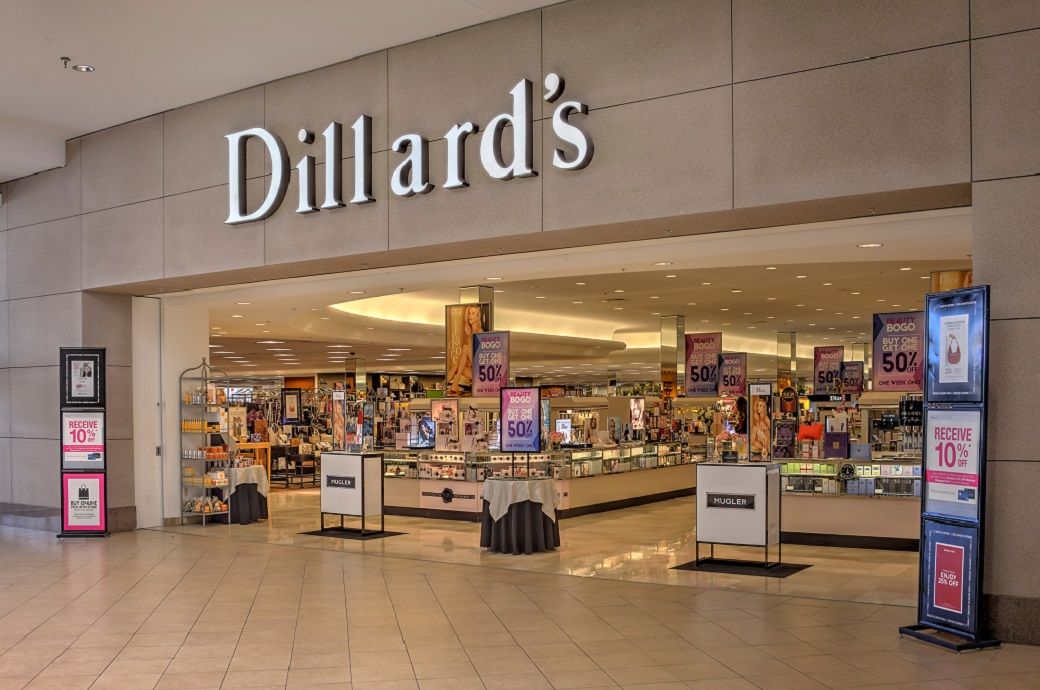
Dillard's stands as one of the most resilient department store chains in the United States, operating over 250 locations across 29 states alongside a robust digital storefront. While many traditional brick-and-mortar competitors struggled to survive industry shifts, Dillard's maintained steady profitability through conservative financial management and prime real estate choices.
The company's journey began long before modern shopping malls defined American commerce. Understanding the evolution of this retail giant requires looking at how a single small-town storefront transformed into a publicly traded powerhouse through strategic acquisitions and calculated real estate investments.
Humble Beginnings in Arkansas
The foundation of Dillard's was laid in 1938 by William T. Dillard. Armed with an $8,000 loan from his father, Dillard opened his first retail venture in Nashville, Arkansas, his wife's hometown. Early operations focused on dry goods and apparel, with an emphasis on customer service and competitive pricing.
World War II temporarily altered retail operations across the country, but the Nashville store continued to function. By the late 1940s, William Dillard sought broader horizons. He sold the original Nashville location and used the capital to acquire a controlling interest in a larger store in Texarkana, situated on the border of Arkansas and Texas. To explore the complete picture, check out the detailed article by The New York Times.
This move set the blueprint for future growth. Dillard focused on offering branded merchandise combined with accessible customer credit, a strategy that quickly made the Texarkana location a regional leader by the early 1950s.
The Expansion and Acquisition Era
Entering the mid-1950s, Dillard shifted from organic growth to targeted acquisitions. In 1956, he purchased the Mayer & Schmidt store in Tyler, Texas. This acquisition proved that Dillard's management model could successfully revitalize established regional stores.
During the 1960s, the company accelerated its expansion blueprint. Key milestones of this period included:
- 1960: Acquired a larger struggling store in Tulsa, Oklahoma, quickly returning it to profitability.
- 1964: Opened a store in an Austin, Texas shopping mall, marking the brand's pivot toward suburban mall-based retail.
- 1969: Moved corporate headquarters to Little Rock, Arkansas, which remains the home base today.
- 1969: Transitioned into a publicly traded entity, offering Class A Common Stock on the open market.
By embracing suburban shopping centers early on, Dillard's positioned itself as a primary anchor tenant for new retail developments throughout the South and Southwest.
Scaling Through the 1970s and 1980s
The 1970s and 1980s brought explosive growth. Rather than relying solely on building new locations from scratch, Dillard's absorbed struggling or regional department store chains during broader industry consolidations.
The company acquired five Fedway stores in Texas in 1971 and several Leonard's stores in Fort Worth by 1974. These deals established deep regional dominance.
The 1980s featured a rapid succession of major buyouts:
- Stix, Baer & Fuller: Acquired 12 stores in Missouri in 1984.
- Joske's and Cain-Sloan: Purchased 26 Joske's stores and four Cain-Sloan locations in 1987, securing dual anchor positions in multiple major malls.
- D.H. Holmes: Added 18 units primarily located in Louisiana in 1989.
The Joske's acquisition was particularly notable. It allowed Dillard's to split larger footprints into separate dedicated apparel and home goods stores, maximizing sales floor productivity while blocking competitors from securing valuable retail spaces. To support this rapid physical expansion, Dillard's co-founded CDI Contractors in 1987, an in-house construction firm dedicated to building and remodeling its properties.
Navigating Modern Retail Realities
As the retail landscape shifted toward e-commerce and digital storefronts near the turn of the 21st century, Dillard's continued its measured expansion by acquiring Mercantile Stores Co. in 1998. This massive deal brought brands like Gayfers and The Jones Store under the corporate umbrella.
Unlike several competitor department stores that overextended their debt and filed for bankruptcy, Dillard's adopted a unique real estate philosophy. The company owns a significant portion of the land and buildings housing its stores, reducing rental overhead during economic downturns.
Common Mistakes in Retail Growth Analysis
When analysts review the trajectory of legacy department stores, several misconceptions often arise:
- Assuming all mall-based brands failed equally: While many chains collapsed under private equity debt, Dillard's maintained a conservative balance sheet and retained property ownership.
- Overlooking family leadership: The Dillard family has maintained continuous leadership and voting control through Class B stock, ensuring long-term strategic consistency rather than chasing short-term Wall Street trends.
- Ignoring regional focus: Dillard's concentrated its footprint primarily in the American South, Southwest, and Midwest, avoiding hyper-saturated coastal markets where overhead costs are astronomical.
Today, the company balances its traditional physical footprint with a streamlined e-commerce operation, proving that traditional brick-and-mortar principles can adapt to modern consumer habits when paired with disciplined financial controls.
Frequently Asked Questions
Who founded Dillard's and when?
William T. Dillard founded the company in 1938 by opening a small store in Nashville, Arkansas.
Where is the Dillard's corporate headquarters located?
The company headquarters has been located in Little Rock, Arkansas, since the 1960s.
Is Dillard's a publicly traded company?
Yes. Dillard's is publicly traded on the New York Stock Exchange under the ticker symbol DDS, though the Dillard family retains control through Class B common stock. You can review investor disclosures directly through the Dillard's Investor Relations portal.
How many locations does Dillard's operate?
Dillard's operates over 250 full-line department stores and several clearance centers across nearly 30 states. Detailed store locator data is maintained on the official Dillard's Store Locator.


: Complete Survey Guide and Rewards](https://www.simpleeverydaymom.com/wp-content/uploads/2023/10/Pilgrim-Photo-Craft-for-Thanksgiving-image-559x1024.jpg)