A diatomic molecule is a chemical structure consisting of exactly two atoms, identical or different, bound together by chemical forces. While atomic elements form the basic alphabet of chemistry, diatomic pairings function as the words and phrases. Without these stable two-atom configurations, atmospheric pressure would collapse, aerobic respiration wouldn't happen, and the chemical foundation of biological life would cease to exist.
Understanding how two atoms forge these stable partnerships requires looking past simple atomic weights and examining quantum mechanics, electron sharing, and bond energy. From the breathable oxygen sustaining your cells to the unreactive nitrogen buffering our atmosphere, diatomic systems dictate the physical conditions of our planet.
What Defines a Diatomic Molecule?
At its most fundamental level, a diatomic molecule represents the simplest multi-atom chemical unit that can exist as an independent particle with distinct physical and chemical properties. When single atoms exist in isolation, their valence electron shells are typically incomplete, making them highly reactive and unstable. By pairing up, two atoms achieve lower energy states through covalent or ionic sharing.
The stability of any diatomic system depends heavily on its bond order, which measures the number of chemical bonds between the two atoms. A higher bond order means a shorter, stronger bond that requires significantly more energy to break. For example, molecular nitrogen features a robust triple covalent bond that makes it exceptionally inert at room temperature, while molecular fluorine features a weak single bond that makes it violently reactive.
- Electron Sharing: Atoms donate or share valence electrons to mimic the stable electron configuration of noble gases.
- Bond Dissociation Energy: The specific amount of energy needed to break the bond between the two atoms and separate them into isolated radicals.
- Molecular Symmetry: Homonuclear molecules possess a center of inversion, while heteronuclear molecules exhibit a permanent electric dipole moment due to electronegativity differences.
Homonuclear vs. Heteronuclear Diatomic Molecules
Diatomic systems divide cleanly into two major categories based on whether their constituent atoms are identical. Recognizing this distinction helps explain why certain gases float inertly in the sky while others drive aggressive chemical reactions.
Homonuclear Diatomic Molecules
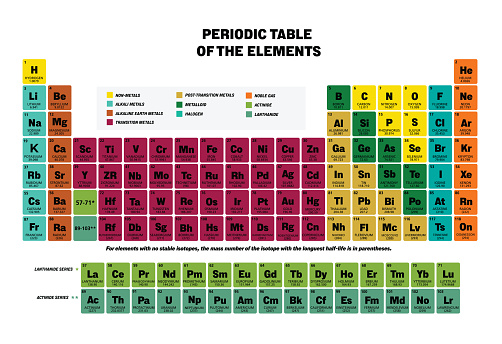
Homonuclear molecules contain two identical atoms. Under standard temperature and pressure, exactly seven elements naturally exist in this state. Chemists often refer to this exclusive group as the periodic table elements that refuse to exist alone: hydrogen, nitrogen, oxygen, fluorine, chlorine, bromine, and iodine.
Because both atoms pull with identical electronegativity, the shared electron cloud distributes evenly. These gases are generally colorless, odorless, and non-polar, which explains why atmospheric gases like nitrogen and oxygen mix seamlessly without forming complex liquid layers.
Heteronuclear Diatomic Molecules
Heteronuclear molecules consist of two different elements bonded together. Because different elements possess varying electronegativities, these molecules are inherently polar. One atom pulls the shared electrons closer, creating a partial negative charge on one side and a partial positive charge on the other.
Common examples include carbon monoxide, hydrogen chloride, and nitric oxide. This polarity fundamentally alters their behavior, dictating how they dissolve in water, interact with proteins, and participate in atmospheric chemical reactions.
The Vital Role of Diatomic Molecules in Biology
The connection between diatomic molecules and biological life is direct and non-negotiable. Complex organisms rely on specific two-atom configurations to harvest energy, transmit cellular signals, and synthesize structural proteins.
Aerobic Respiration and Oxygen
Molecular oxygen ($O_2$) is the terminal electron acceptor in cellular respiration. The compact, stable structure of $O_2$ allows it to dissolve efficiently in blood plasma and bind reversibly to hemoglobin proteins. Without the specific bond length and binding affinity of diatomic oxygen, complex multi-cellular organisms could never generate enough ATP to power active tissue.
Biological Signaling via Nitric Oxide
Despite its reputation as an industrial pollutant, nitric oxide ($NO$) serves as a crucial signaling molecule in mammalian physiology. As a tiny heteronuclear diatomic gas, it diffuses effortlessly across cell membranes. It signals vascular smooth muscle to relax, regulating blood pressure and ensuring adequate blood flow to vital organs.
Nitrogen Fixation and Amino Acids
Nitrogen makes up nearly seventy-eight percent of Earth's atmosphere, yet plants can't absorb it in its diatomic $N_2$ form because of its unbreakable triple bond. Specialized diazotrophic bacteria rely on the nitrogenase enzyme to snap this bond, converting atmospheric gas into ammonia. Plants then absorb this ammonia to build amino acids and nucleic acids, feeding the entire terrestrial food web.
Industrial Applications and Chemical Synthesis
Beyond natural systems, industrial chemistry relies heavily on the manipulation of diatomic gases to manufacture foundational products like fertilizers, plastics, and synthetic fuels.
- The Haber-Bosch Process: Combines atmospheric nitrogen gas with hydrogen gas under extreme pressure and heat to synthesize ammonia, sustaining global agriculture.
- Hydrogen Fuel Cells: Utilizes diatomic hydrogen ($H_2$) as a clean energy carrier, reacting it with oxygen to generate electricity with water as the sole byproduct.
- Halogenation: Employs diatomic chlorine and fluorine to manufacture industrial polymers, solvents, and pharmaceuticals.
For a deeper look into industrial gas synthesis and safety guidelines, consult the Occupational Safety and Health Administration.
Common Mistakes in Molecular Chemistry
When studying diatomic systems, students and early-stage researchers often fall into predictable conceptual traps. Avoiding these errors ensures accurate chemical calculations and deeper theoretical understanding.
- Assuming all elements can be diatomic: While dozens of elements can form temporary two-atom species in high-temperature plasma, only a specific few form stable, independent diatomic gases at room temperature.
- Ignoring molecular orbital theory: Relying solely on Lewis dot structures fails to explain the magnetic properties of oxygen, which requires molecular orbital diagrams to show unpaired electrons.
- Confusing bond strength with reactivity: A strong bond doesn't automatically mean a molecule is unreactive in every context; activation energy barriers dictate whether a reaction actually proceeds.
Frequently Asked Questions
Why do only seven elements form homonuclear diatomic molecules?
These specific elements achieve a stable valence electron configuration by pairing with a single identical partner rather than forming extended crystal lattices or complex chains. Their atomic radii and electronegativity make the diatomic state the lowest possible energy configuration at standard temperature and pressure.
Is carbon monoxide a diatomic molecule?
Yes. Carbon monoxide ($CO$) consists of one carbon atom and one oxygen atom bonded together, making it a heteronuclear diatomic molecule. Despite its simple structure, it exhibits a complex triple bond due to coordinate covalent bonding.
Why is nitrogen gas so unreactive?
The two nitrogen atoms in an $N_2$ molecule share three pairs of electrons, creating a nitrogen-nitrogen triple bond. This bond has an exceptionally high dissociation energy, meaning it takes a massive amount of energy to separate the atoms and start a chemical reaction.
How do diatomic molecules behave at absolute zero?
At temperatures near absolute zero, diatomic gases condense into liquids and eventually freeze into solids, often forming molecular crystals where quantum mechanical rotation and vibration freeze out into ground states.


