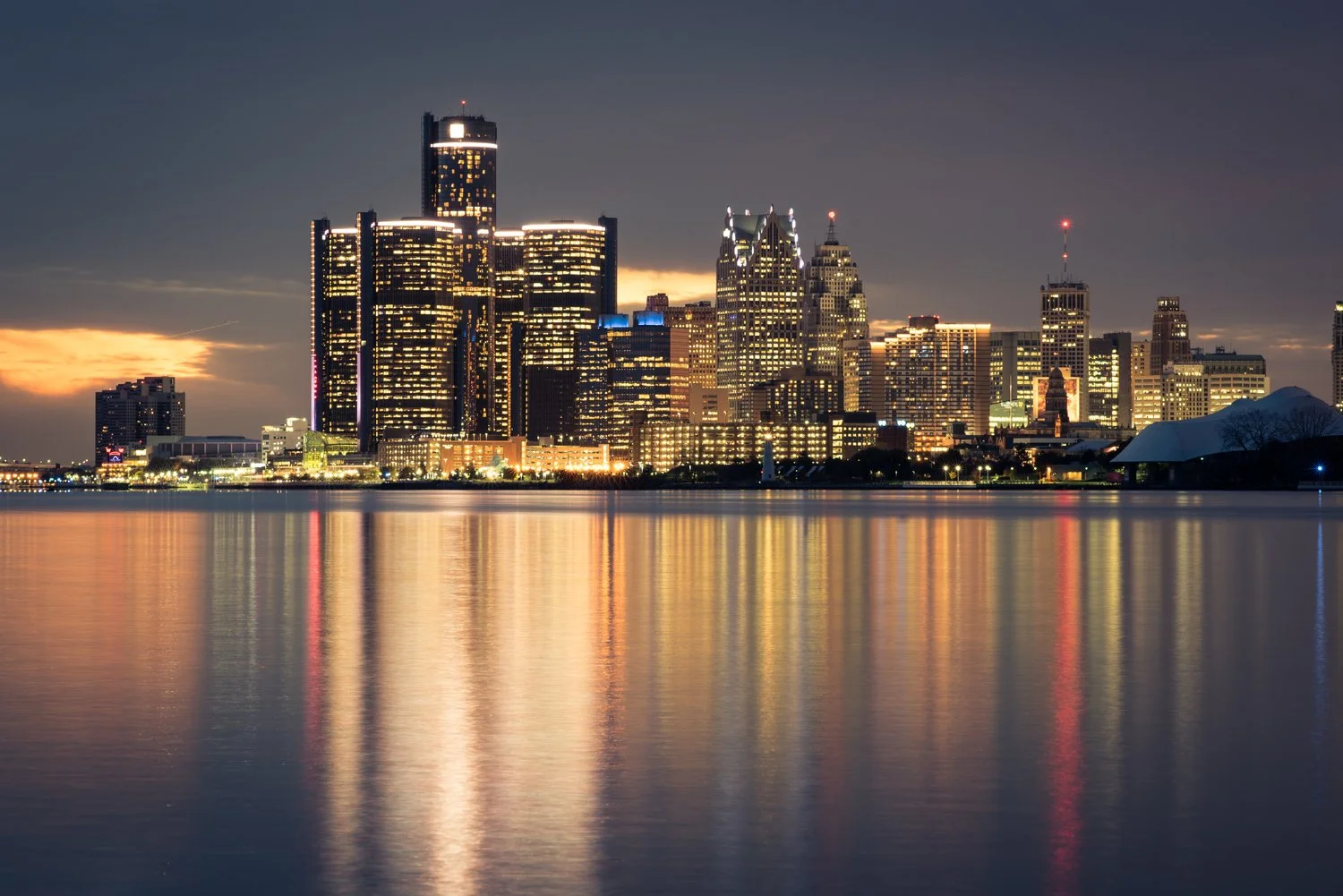
Detroit sits along the Detroit River in Southeast Michigan, functioning as a vital nexus where the upper Great Lakes corridor connects to the broader industrial and economic heartland of North America. Its geographic positioning isn't just a coordinate on a map; it's the primary reason the city transformed into a global manufacturing titan. When French explorer Antoine de la Mothe Cadillac established Fort Pontchartrain du Détroit in 1701, he chose a narrow strait linking Lake Erie to Lake St. Clair and Lake Huron. That precise waterway dictated trade routes, military strategy, and eventually, the logistics of mass production.
Understanding the city requires looking past surface-level clichés about the Rust Belt. Detroit's identity stems from an uncompromising collision of natural waterway geography, heavy manufacturing infrastructure, and a turbulent economic evolution that continues to reshape its urban landscape. If you want to grasp how a regional trading post became the Motor City—and how it operates today—you have to examine the specific physical and historical forces that built it.
The Geographic Engine of the Great Lakes
Water defined Detroit long before assembly lines ever appeared. The Detroit River acts as a natural international boundary and a deepwater shipping lane, connecting the upper Great Lakes grain and iron ore regions with the industrial markets of the East Coast.
This water highway made resource transport cheap and efficient. Iron ore shipped down from Minnesota and Michigan's Upper Peninsula met Appalachian coal via rail and lake freighters. Because flat terrain surrounded the riverbanks, laying down massive factory footprints, rail yards, and grid-patterned neighborhoods was straightforward.
- Water Access: Direct shipping routes to Lake Erie and Lake Huron.
- Resource Proximity: Easy access to Midwestern timber, iron ore, and coal deposits.
- Flat Topography: Simplified the construction of sprawling rail networks and massive manufacturing plants.
These advantages turned a quiet French outpost into an industrial superpower by the early twentieth century. When Henry Ford and other industrialists perfected the moving assembly line, they didn't just build cars; they built an integrated supply chain anchored firmly to this specific patch of North American terrain.
From Arsenal of Democracy to Post-Industrial Reality
During World War II, the region earned the moniker Arsenal of Democracy because its manufacturing plants pivoted overnight to produce tanks, aircraft engines, and military trucks. Factories like the Willow Run bomber plant showcased a staggering industrial capacity that relied entirely on centralized mass production and a massive influx of labor.
However, that exact reliance on heavy manufacturing created severe vulnerabilities. In the latter half of the twentieth century, suburbanization, global trade shifts, and decentralization emptied out central city factories. Plant closures left behind massive urban scars—abandoned brick warehouses, contaminated brownfields, and neighborhoods disconnected from economic lifelines.
Yet, treating Detroit as a static monument to industrial decline misses the point entirely. The same infrastructure that accommodated assembly lines has proven adaptable. Urban planners, local entrepreneurs, and artists have repurposed abandoned spaces into lofts, community gardens, and technology hubs, proving that industrial heritage can serve as a foundation for renewal rather than a permanent anchor.
Modern Economic Transition and Urban Renewal
Today, the local economy operates far differently than it did during the peak of the auto boom. While companies like General Motors and Ford still maintain massive regional footprints—with GM anchoring its global headquarters at the Detroit Riverfront—the job market has diversified into technology, healthcare, and finance.
- Tech Integration: Software development, autonomous vehicle testing, and advanced robotics have replaced purely manual manufacturing roles.
- Higher Education: Institutions like Wayne State University drive research and biotechnology initiatives within the urban core.
- Cultural Economy: Design, music heritage (rooted deeply in the legacy of Motown), and tourism bring millions of annual visitors downtown.
This transition isn't seamless. Gentrification pressures, property tax adjustments, and wealth disparities between downtown commercial corridors and outer neighborhoods remain persistent challenges. Municipal leaders constantly balance the push for high-end downtown developments with the pressing need for neighborhood-level stabilization.
Frequently Asked Questions
Why was Detroit originally founded in this specific location?
Antoine de la Mothe Cadillac selected the site in 1701 because the narrow strait along the Detroit River provided a defensible military position and strategic control over the fur trade moving between Lake Huron and Lake Erie.
How did the automotive industry shape Detroit's physical layout?
The industry required vast tracts of land for horizontal factory complexes, extensive rail spurs for raw materials, and grid-patterned working-class neighborhoods nearby, which ultimately shaped the sprawling transit and road networks still visible today.
Is Detroit still primarily a manufacturing city?
While manufacturing and automotive engineering remain critical, the economy has diversified significantly into technology, healthcare, design, and tourism over the last two decades.
What are brownfields, and how is the city handling them?
Brownfields are abandoned or underused industrial properties where redevelopment is complicated by real or perceived environmental contamination. Detroit has utilized targeted tax incentives and federal grants to clean up these sites for commercial and residential reuse.



