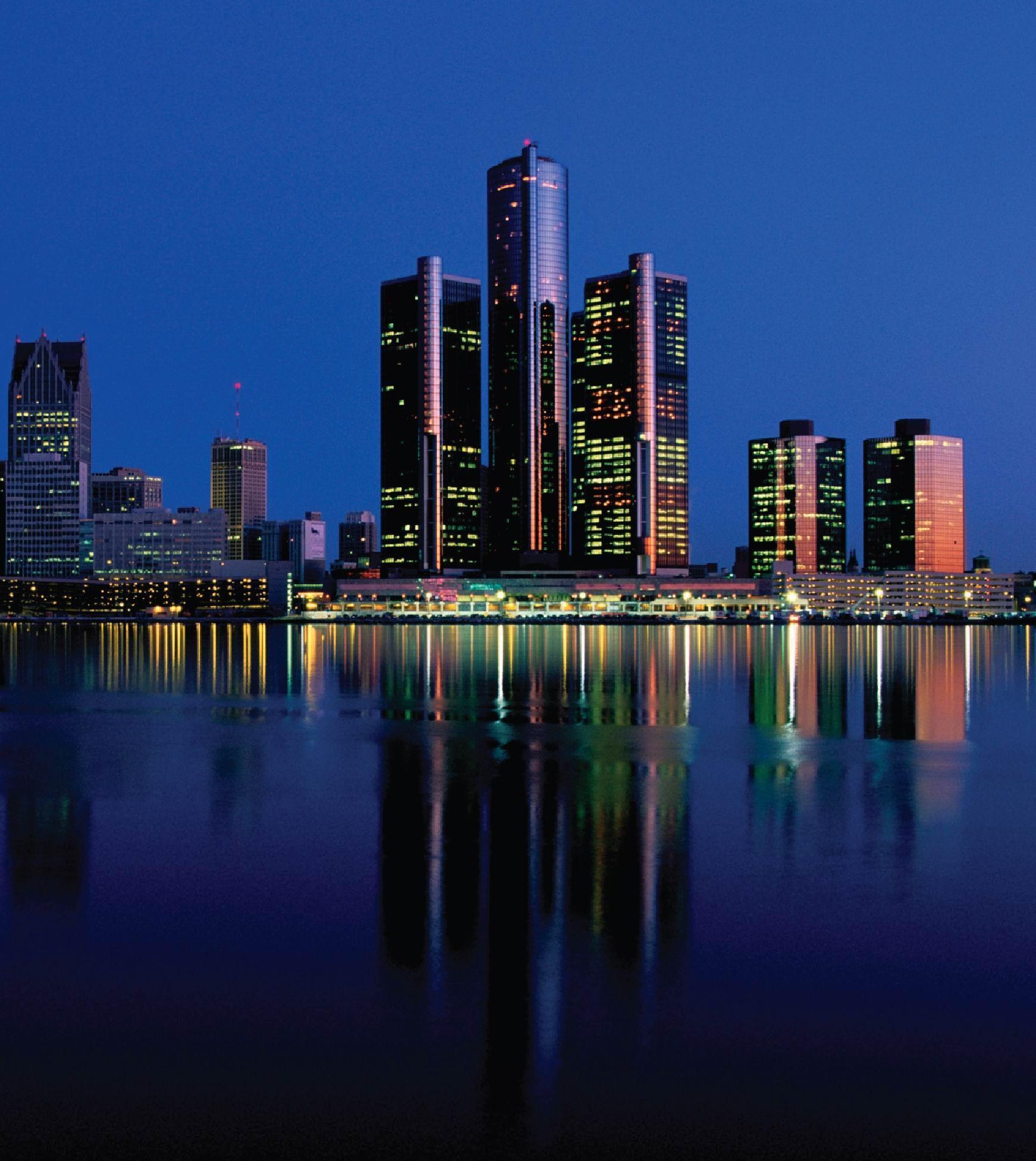
Detroit carries a complex reputation built on industry, music, and dramatic shifts in population. Far beyond its industrial legacy, the city functions as a multi-layered mosaic shaped by waves of global immigration, the Great Migration, and distinct cultural enclaves. Understanding Detroit means looking past simple headlines to examine how different communities built homes, neighborhoods, and institutions that still define the region today.
The structural makeup of Detroit didn't happen overnight. It grew from a colonial French outpost into an automotive powerhouse that drew millions of workers from the American South and various corners of the world. Today, the city navigates a renewed chapter of urban revitalization while holding onto a deep-rooted heritage of resilience.
Historical Roots of Detroit's Pluralistic Population
The demographic story of Detroit began long before assembly lines took over the landscape. Indigenous Anishinaabe and Iroquoian nations originally inhabited the river region, calling it Waawiiyaataanong. French traders established Fort Pontchartrain du Détroit in 1701, creating a fur-trading hub that mixed European merchants with surrounding Native American tribes.
As the nineteenth turned into the twentieth century, the explosion of the automotive industry acted as a massive economic magnet. Henry Ford's mass-production techniques and high factory wages drew European immigrants from Poland, Greece, Ireland, and the Middle East, alongside hundreds of thousands of Black and white migrants leaving the rural South. This rapid influx turned Detroit into a boomtown of contrasting cultures, languages, and traditions, laying the groundwork for both rich community networks and deep-seated structural tensions.
Defining Cultural Enclaves and Neighborhoods
Detroit's identity lives in its neighborhoods, many of which maintain distinct cultural identities passed down through generations.
- Corktown: Known as Detroit's oldest surviving neighborhood, Corktown was settled in the 1830s by Irish immigrants fleeing the Great Famine. It remains a historical anchor for Irish heritage alongside a modern wave of restaurants and residential restorations.
- Mexicantown: Centered around Vernor Highway in Southwest Detroit, this vibrant corridor grew significantly in the mid-twentieth century as Mexican workers found employment in local industries. It features bakeries, grocery stores, and family-owned restaurants.
- Hamtramck: Though technically its own municipality surrounded by Detroit, Hamtramck has long functioned as a vital part of the cultural ecosystem. Originally a heavy Polish enclave, it has evolved into one of the most internationally diverse communities in Michigan, welcoming waves of Yemeni, Bangladeshi, and Eastern European immigrants.
- The Greater Detroit Arab Community: Neighboring Dearborn houses one of the largest concentrations of Arab Americans in North America. Institutions like the Arab American National Museum document a rich history that stretches back more than a century, deeply influencing local commerce, food, and civic life.
Economic Shifts and Demographic Realities
While cultural variety runs deep, Detroit's modern demographic profile reflects decades of suburbanization, economic restructuring, and wealth disparity. Following the peak population eras of the mid-twentieth century, white flight and industrial decentralization left the inner city with systemic challenges.
According to data compiled by the U.S. Census Bureau, the city's population has recently experienced a stabilizing and slight upward trend, marking a notable shift after years of decline. Even so, significant income gaps persist across racial and geographic lines within Wayne County. Addressing these economic divides remains central to the city's ongoing revitalization efforts, especially as downtown investments contrast with neighborhood-level challenges.
Arts, Music, and Global Cultural Impact
Few cities have punched above their weight class culturally quite like Detroit. The friction and interplay of diverse populations birthed artistic movements that changed global culture.
- Motown Records: Founded by Berry Gordy in 1959, Motown brought Black artists to mainstream global audiences, breaking down racial barriers through pop music.
- Electronic Music: In the 1980s, Black artists such as Juan Atkins, Derrick May, and Kevin Saunderson pioneered techno music in the post-industrial landscape, blending futuristic synthesizers with urban grit.
- Design Designation: In 2015, UNESCO named Detroit a City of Design—the first in the United States to receive the title—recognizing its historic and contemporary contributions to architecture, industrial design, and public art.
You can explore more about these historical milestones through the Detroit Historical Society, which archives the industrial and social changes that shaped the modern populace.
Common Misconceptions About Detroit's Demographics
Popular media often reduces Detroit to a single narrative of economic collapse or sudden hipster gentrification. Both views miss the mark.
- Misconception 1: The city is culturally homogenous. In reality, Detroit features growing immigrant populations from Latin America, South Asia, and the Middle East, operating alongside a majority Black cultural foundation.
- Misconception 2: Revitalization reaches every corner evenly. While downtown and Midtown see intense investment and commercial growth, many outer neighborhoods still struggle with basic municipal services, vacant properties, and generational poverty.
- Misconception 3: Neighborhood identity is static. Communities across the city continually shift as new residents arrive, creating dynamic cultural fusions rather than frozen-in-time ethnic museums.
Frequently Asked Questions
What percentage of Detroit's population is Black?
African Americans make up the majority of Detroit's population, hovering around 77 percent according to recent demographic reports from the U.S. Census Bureau.
Why did so many immigrants move to Detroit historically?
The rapid rise of the automotive industry created hundreds of thousands of factory jobs offering high wages, drawing European immigrants and domestic migrants from the American South during the early and mid-twentieth century.
Is Detroit's population growing again?
Yes. Recent census estimates show consecutive years of population growth, driven by urban redevelopment, new housing projects, and stabilizing migration patterns.
Which ethnic neighborhoods can visitors explore in Detroit?
Visitors commonly explore Mexicantown in Southwest Detroit for food and culture, Corktown for historic Irish heritage, and adjacent Hamtramck or Dearborn for Middle Eastern and Eastern European traditions.


