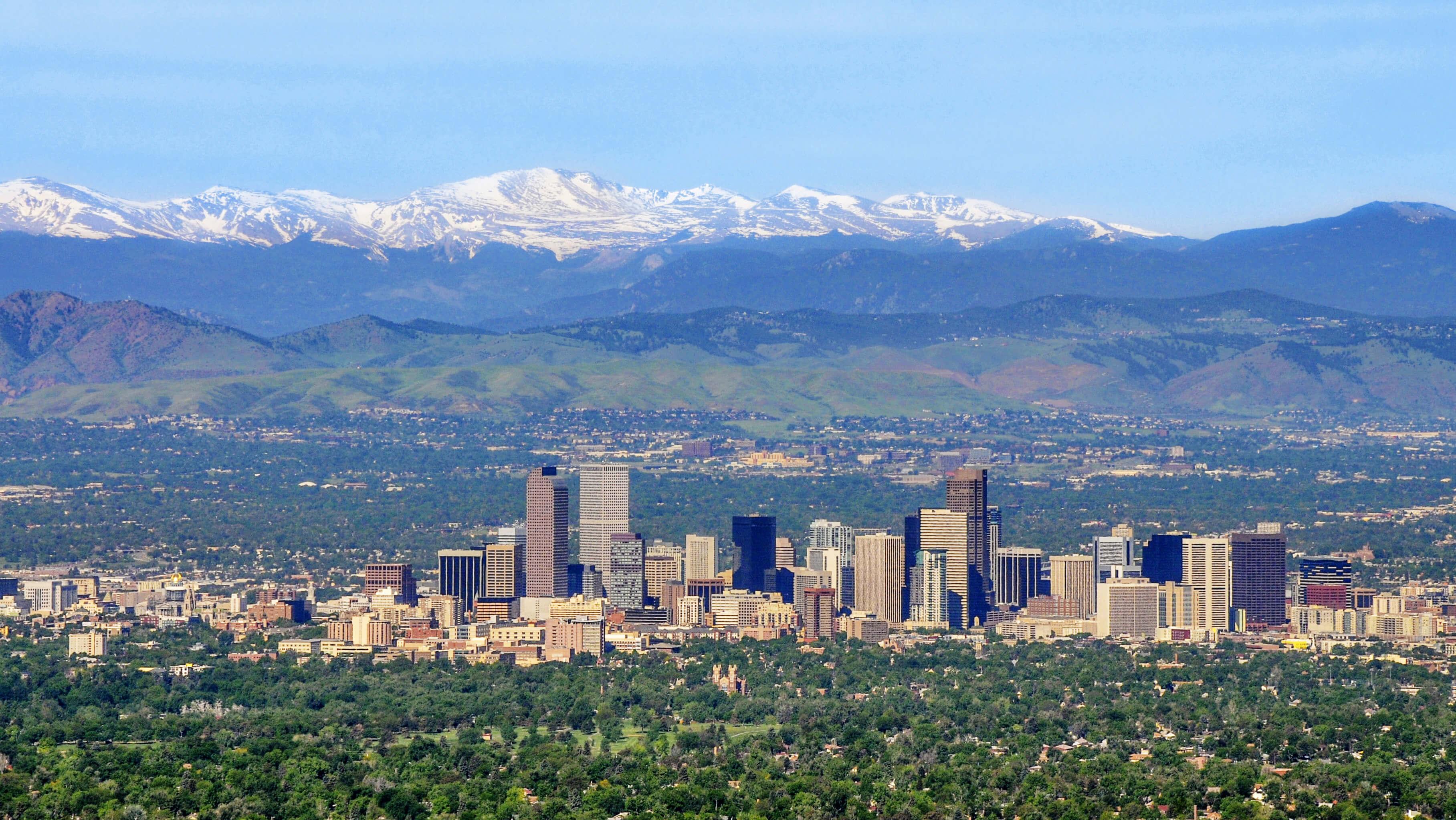
Denver's weather is famous for its sudden shifts, taking anyone off guard who relies on a standard forecast. You might step outside into brilliant sunshine wearing a t-shirt, only to face a howling wind and plunging temperatures by mid-afternoon. Looking at a standard 10-day weather forecast for Denver can often feel like guessing numbers on a lottery ticket because atmospheric conditions change so rapidly along the Front Range.
The primary driver behind this volatility is geography. Sitting at an elevation of 5,280 feet right where the high plains meet the towering Rocky Mountains, Denver exists in a complex meteorological crossroads. Pacific storm systems push over the continental divide, colliding with warm, moist air pulled north from the Gulf of Mexico. This constant tug-of-war produces quick shifts in temperature, pressure, and precipitation that standard computer models struggle to pin down accurately past a few days.
Understanding Denver’s Microclimates and Atmospheric Mechanics
To make sense of the Mile High City's skies, you have to look at how air masses interact with the local terrain. Cold air is dense and heavy. When arctic fronts roll down from Canada, they often get trapped against the western foothills of the Rockies. This meteorological phenomenon is known as a backdoor cold front.
As that shallow layer of dense, freezing air pushes westward against the slope, it forces warmer air aloft, triggering sudden clouds, fog, or upslope snowstorms. You can have 70-degree warmth in downtown Denver while neighborhoods just a few miles closer to the foothills are socked in with freezing mist.
The Upslope Effect and Precipitation Surges
Most people assume rain and snow blow in consistently from west to east across the United States. In Denver, the heaviest precipitation often arrives via upslope flow from the east.
When low-pressure systems spin counter-clockwise over the southern plains, they drag moisture westward off the high plains and slam it directly into the face of the Rocky Mountains. That air has nowhere to go but up, cooling rapidly as it rises and dumping heavy, wet snow or steady rain over the metro area. These events can double or triple initial predicted snowfall amounts within a few hours.
Why 10-Day Forecasts Fall Short in the Rockies
Relying on a 10-day outlook in Colorado requires a healthy dose of skepticism. Numerical weather prediction models use complex algorithms to simulate atmospheric physics, but small errors in initial data compound rapidly over time.
- Terrain Resolution: Global weather models simplify mountain ranges into broad bumps. They miss how local canyons, valleys, and ridges funnel wind and trap heat.
- Diurnal Heating: Intense solar radiation at 5,280 feet heats the ground quickly during the day, sparking localized thermal currents and afternoon cumulus clouds that models can't easily track days in advance.
- Rapid Frontal Passage: Cold fronts can move faster than anticipated, slicing through forecast windows and transforming a predicted 60-degree sunny afternoon into a 35-degree rain or snow event in under an hour.
Meteorologists track these trends closely using data from the National Weather Service Denver/Boulder, but accuracy drops significantly beyond a 48-to-72-hour window.
How to Adapt When Forecasts Fail
Living with or visiting Denver means accepting that the sky dictates the schedule. Instead of trusting a single numerical prediction ten days out, successful locals use a dynamic approach to monitoring daily conditions.
- Watch the Trend, Not the Number: Don't fixate on whether Tuesday's high will be 58 degrees or 64 degrees. Pay attention to the directional arrows on wind charts and whether a front is approaching from the north or east.
- Embrace Layering: The golden rule of Colorado dressing isn't a cliché; it's a survival mechanism. A shell jacket, a fleece mid-layer, and a moisture-wicking base allow you to adjust instantly when the temperature swings 30 degrees between noon and sunset.
- Check Radar Loops: In spring and summer, satellite and radar loops tell you much more than static text forecasts. Convective storms develop rapidly over the mountains and drift east toward the city.
For official updates and real-time warnings, consult the Colorado Department of Transportation travel maps, which provide live camera feeds of changing highway conditions across the Front Range.
Frequently Asked Questions
Why does Denver get snow in May or even June?
Spring transition periods feature intense clashes between lingering arctic air masses and rapidly warming spring sun. Because Denver's elevation keeps the atmosphere cold aloft, late-season moisture frequently falls as heavy, wet snow that melts within a day or two.
Are Denver's weather shifts getting more extreme?
While variability has always defined the region, shifting global climate patterns influence the intensity of individual storm systems. However, Denver's baseline climate has historically featured extreme daily temperature swings—sometimes dropping 50 degrees in a single day.
How far in advance can I trust a Denver weather forecast?
Reliability drops sharply after three days. While a 7-day or 10-day outlook gives you a general sense of upcoming weather patterns (such as a warm spell or a major cooling trend), specific precipitation timing and high temperatures shouldn't be locked in until 48 hours prior.
Does the city's urban heat island affect the weather?
Yes. Downtown Denver and its sprawling asphalt surfaces retain heat, often keeping the immediate city core a few degrees warmer than surrounding outlying areas and suburbs closer to the plains or foothills during winter nights.



