When you study physical chemistry or thermodynamics, you quickly encounter properties that describe matter. Two of the most foundational categories you'll deal with are intensive and extensive properties. While they sound similar, they represent completely different ways of measuring and understanding physical systems. Grasping the distinction helps you solve thermodynamic equations, analyze material behavior, and avoid fundamental errors in scientific calculations.
An intensive property does not depend on the amount of matter present in a system. If you take a sample of a substance and cut it in half, the intensive properties of each piece remain identical to the original whole. Temperature, boiling point, color, refractive index, and density in its standard scientific definition all fall into this category. An extensive property, by contrast, scales directly with the size or quantity of the matter in the system. If you double the amount of a substance, its extensive properties—such as mass, total volume, and total internal energy—also double.
Defining Intensive Properties
Intensive properties are intrinsic to the material itself, regardless of how much of it you have. They serve as reliable fingerprints for identifying substances because they stay constant under uniform conditions.
Temperature and Pressure
Consider a cup of boiling water at $100^\circ\text{C}$ and a massive swimming pool heated to $100^\circ\text{C}$. The thermal energy stored in the swimming pool is vastly higher, but the temperature—the measure of average kinetic energy of the particles—is identical. Temperature is intensive. Similarly, gas pressure inside a small steel cylinder is the same as the pressure inside a massive storage tank if the molecular crowding and temperature are equal. Further journalism by Nature highlights comparable perspectives on this issue.
Standard Density
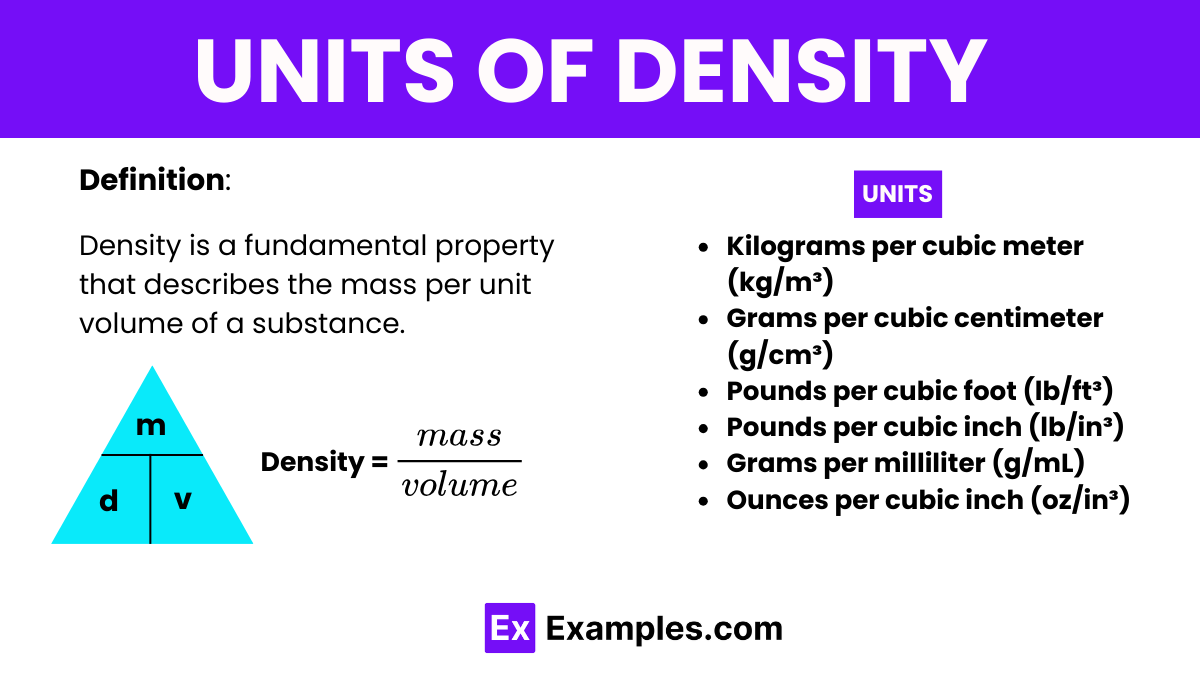
In strict thermodynamic terms, standard density ($\rho = \frac{m}{V}$) is an intensive property. It is the ratio of mass to volume. Because mass and volume are both extensive, dividing one extensive property by another extensive property yields an intensive property. Pure gold always has a density of $19.32\text{ g/cm}^3$ at room temperature, whether you are examining a tiny flake or a heavy bullion bar.
Defining Extensive Properties
Extensive properties depend entirely on the extent or size of the system. They are additive, meaning the total value for a combined system is the sum of the values for each individual part.
Mass and Volume
If you combine two separate blocks of iron, each weighing $2\text{ kg}$, the total mass of the combined system becomes $4\text{ kg}$. The mass scaled up because it is an extensive property. Volume behaves the same way. A single liter of water occupies a specific space, but ten liters occupy ten times that space.
Total Energy and Enthalpy
Thermodynamic quantities like total internal energy ($U$), enthalpy ($H$), and entropy ($S$) are strictly extensive. A large campfire has vastly more total thermal energy than a single burning match, even though the flame temperature (an intensive property) of both might be quite similar.
The Confusion Around Density Terminology
Informal discussions or poorly structured technical articles sometimes muddle the terms "intensive density" and "extensive density." In rigorous physics and engineering, standard density is always an intensive property because it characterizes the material at any given point.
However, specialized fields occasionally use modified terminology to describe spatial distribution or population metrics. For instance, urban planners or ecologists might talk about population density or spatial load, where total count is distributed over a specific geographic area. Even in these contexts, keeping the core thermodynamic definitions clear prevents conceptual confusion. When you divide an extensive property by another extensive property, you normalize it into an intensive metric.
Real-World Applications in Engineering and Science
Understanding whether a property is intensive or extensive changes how engineers and scientists approach practical design problems.
- Material Selection: Engineers selecting alloys for an aerospace application rely on intensive properties like tensile strength, melting point, and density to choose the right metal composition, regardless of whether they need a small bracket or a large wing spar.
- Structural Load Calculations: Architects calculating the weight distribution of a skyscraper use extensive properties like total mass and volume to ensure foundation stability and load-bearing safety.
- Chemical Process Control: Chemical engineers monitoring a reactor track intensive variables like pressure and temperature to keep reactions stable, while managing extensive variables like total mass flow rates to control feedstock supply.
Common Mistakes to Avoid
- Treating density as a variable that changes with sample size: Remember that standard density is intensive. A liter of milk has the exact same density as a drop of milk.
- Confusing total capacity with potential: Mixing up extensive energy totals with intensive temperature measurements often leads to severe calculation errors in thermodynamics.
- Assuming ratios are extensive: Always remember that dividing one extensive property by another (like mass divided by volume) creates an intensive property.
Frequently Asked Questions
Is density an intensive or extensive property?
Standard density is an intensive property. Because it is calculated by dividing mass (extensive) by volume (extensive), the size of the sample cancels out, leaving a ratio that remains constant for any given substance at a specific temperature and pressure.
Can two extensive properties make an intensive property?
Yes. Dividing one extensive property by another extensive property always yields an intensive property. For example, mass divided by volume gives density, and moles divided by volume gives molar concentration.
Why do extensive properties matter in thermodynamics?
Extensive properties allow scientists to track the total quantity of matter and energy moving through a system. They are essential for balancing mass and energy conservation equations in chemical reactors and power plants.
How do I tell if a property is intensive or extensive quickly?
Ask yourself: If I cut this sample in half, does this property change? If the value stays the same (like color, temperature, or density), it's intensive. If the value halves (like mass, volume, or total energy), it's extensive.



