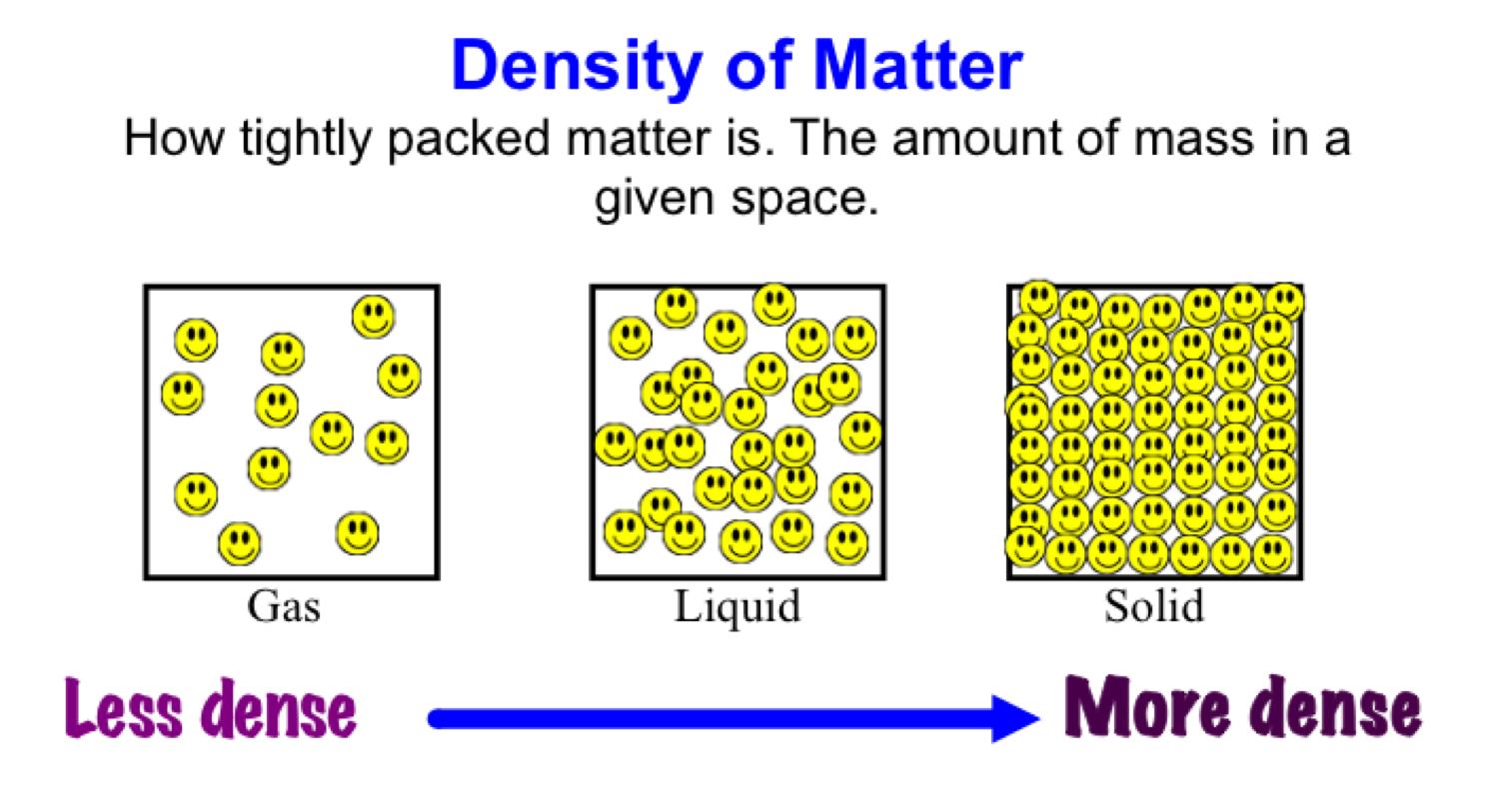
Population sizes don't climb upward forever. When a group of organisms expands past what its habitat can handle, specific biological pressures kick in to slow the spread or trigger a sharp decline. These checks are known as density-dependent factors, and their intensity rises right alongside the number of individuals packed into a given area.
Unlike weather events that strike regardless of how crowded an area is, these mechanisms respond directly to population density. As crowding increases, resources thin out, disease transmission accelerates, and predators take notice. Understanding these variables explains why natural populations oscillate around a stable limit instead of expanding into infinity.
What Are Density-Dependent Factors?
Density-dependent factors are biological variables that alter birth rates and death rates based on how crowded a population is. When a population is small, individuals have plenty of space, food, and safety. Birth rates climb, and death rates drop, allowing the group to multiply quickly.
As the population approaches the environment's carrying capacity—the maximum number of individuals an ecosystem can sustainably support—these factors tighten their grip. Resources shrink on a per-capita basis. The per-capita growth rate drops because competition intensifies and survival becomes harder. If you want more about the context here, Associated Press provides an in-depth summary.
The primary triggers operating this way include competition, predation, disease, and parasitism. Each acts as a natural brake, ensuring that a species doesn't permanently exhaust its habitat.
Major Types of Density-Dependent Factors
To see how populations regulate themselves, we have to examine the specific pressures that emerge during overcrowding.
Competition for Resources
When too many individuals rely on the same finite pool of supplies, competition begins. Ecologists divide this into two categories:
- Intraspecific competition: Rivals belong to the same species. Because they require identical resources—such as nesting sites, water, or food—this struggle is fierce. For example, if too many white-tailed deer inhabit a forest, browse lines appear as every accessible leaf is eaten, leaving weaker individuals malnourished.
- Interspecific competition: Rivals belong to different species competing for overlapping niches, such as hyenas and lions fighting over the same prey carcass.
As competition intensifies, fewer young survive to adulthood, and birth rates decline because parents lack the energy reserves needed for reproduction.
Predation and Functional Response
Predation is often density-dependent because predators naturally concentrate where prey is abundant. When a prey population surges, predators experience higher feeding success, which can boost predator reproduction rates.
As predators multiply or spend more time hunting in a crowded patch, the death rate of the prey increases. This creates classic predator-prey oscillations, such as the famous cyclical relationship between the Canadian lynx and the snowshoe hare tracked by the National Geographic Society.
Disease and Parasitism
Pathogens and parasites spread much faster through high-density populations. When hosts live close together, physical contact is frequent, and airborne droplets or waterborne spores travel short distances between hosts without dying out in the open environment.
- Direct transmission: Crowded roosting sites in bats or dense nesting colonies in seabirds allow viruses to flash through the group rapidly.
- Parasite loads: Fleas, ticks, and internal nematodes find hosts with minimal travel time when population density is high.
The resulting illness increases mortality and can wipe out a significant percentage of the group in weeks.
How These Factors Drive Population Decline
When density-dependent checks overpower birth rates, a population enters a decline phase. This isn't necessarily a sign of permanent ecosystem failure; it's a regulatory correction.
If a herd of elk overgrazes a plateau, the lack of vegetation leads to starvation. Starvation weakens the herd, making them vulnerable to disease and winter exposure. The total population drops sharply.
Once the population shrinks well below the carrying capacity, the pressure lifts. Vegetation recovers, food becomes abundant again per capita, and survivors enjoy higher reproductive success. This cycle prevents total habitat destruction, a principle detailed extensively in resources published by the Ecological Society of America.
Density-Dependent vs. Density-Independent Factors
It helps to contrast these crowd-driven pressures with forces that care nothing about population size.
| Feature | Density-Dependent Factors | Density-Independent Factors |
|---|---|---|
| Trigger Mechanism | Scales with population crowding | Operates regardless of population size |
| Primary Examples | Competition, disease, predation | Wildfires, floods, unseasonal frosts |
| Impact on Growth | Stabilizes population near carrying capacity | Can cause abrupt, erratic population crashes |
| Biological Feedback | Provides feedback loop (high density = high mortality) | No feedback loop based on numbers |
A sudden flash flood sweeps through a river valley and drowns ninety percent of a lizard population, whether there were ten lizards or ten thousand. That is density-independent. In contrast, an outbreak of mange that tears through a crowded fox den because the animals are rubbing shoulders is density-dependent.
Common Mistakes in Analyzing Population Shifts
When studying population changes, observers often misattribute causes. Avoiding these errors ensures accurate ecological analysis:
- Assuming all crashes are man-made: Natural fluctuations driven by internal biological feedback loops occur constantly without human interference.
- Ignoring lag times: Population effects don't always happen overnight. A surge in prey might support a predator population bump that only peaks after the prey numbers have already started to fall.
- Conflating weather with regulation: A cold snap might kill individuals, but unless it specifically targets the dense segments of a population harder than sparse segments, it's an independent limiting factor, not a density-dependent regulator.
Frequently Asked Questions
What happens when a population exceeds its carrying capacity?
When a population overshoots its carrying capacity, resource depletion accelerates rapidly. Starvation, disease outbreaks, and stress-induced lower birth rates trigger a rapid population crash, bringing numbers back down below the sustainable limit.
Are human populations affected by density-dependent factors?
Yes, though modern medicine, technology, and global trade have altered how we experience them. Historically and biologically, high human densities still correlate with faster disease transmission and localized resource strains, even if technology temporarily raises our effective carrying capacity.
Can a density-dependent factor turn into a density-independent factor?
Generally, no. The defining feature of density dependence is the mathematical relationship between population density and the severity of the factor's impact. If an effect doesn't scale with crowding, it belongs to the independent category.
Do plants experience density-dependent regulation?
Absolutely. Plants growing too close together experience intense root and light competition. Taller plants shade out smaller ones, and crowded seedlings often wither or fail to produce seeds, acting as a clear density-dependent check.


