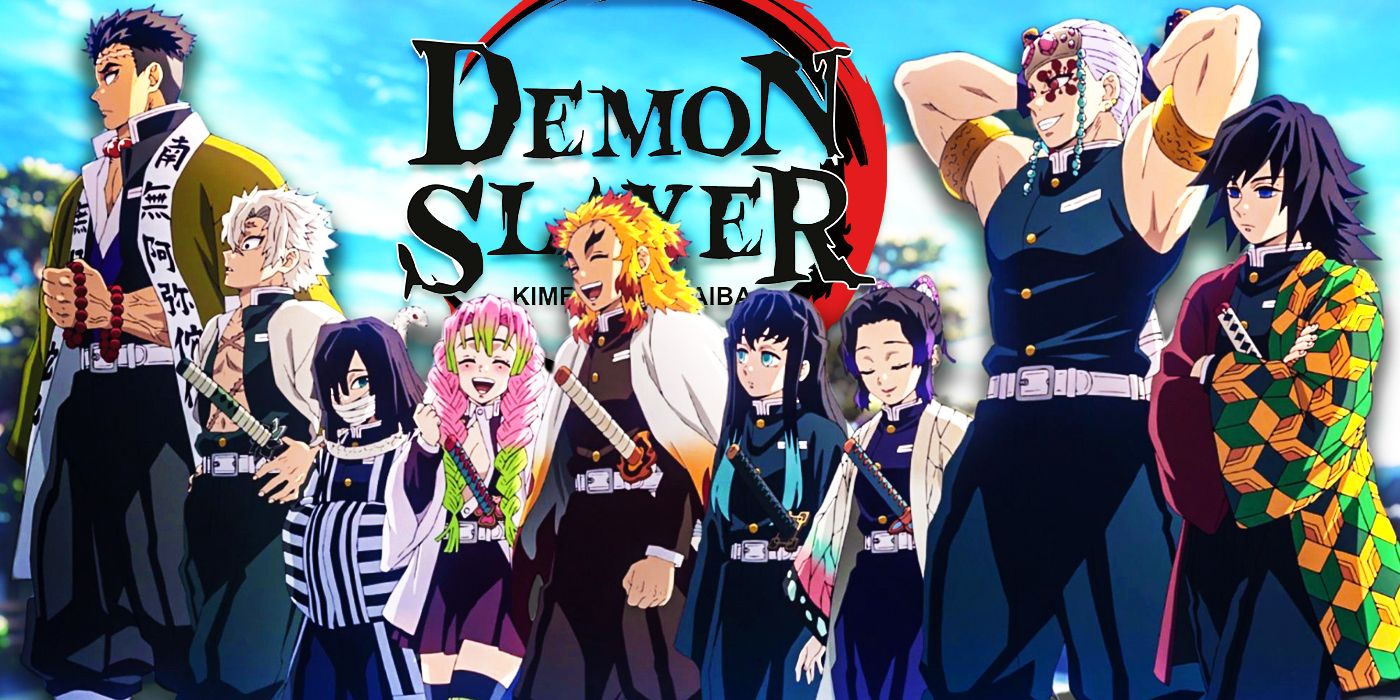
The Hashira Training Arc serves as the crucial bridge between tactical survival and total mobilization within Koyoharu Gotouge's Demon Slayer: Kimetsu no Yaiba. Rather than focusing on a single localized threat like the preceding Swordsmith Village Arc, this narrative shifts the spotlight onto institutional preparation. The elite pillars of the Demon Slayer Corps put their junior members through a rotating gauntlet of physical conditioning to awaken the Slayer Mark. Every stage tests distinct biological thresholds, turning standard swordsmen into lethal combat units capable of facing Muzan Kibutsuji's inner circle.
Understanding this rigorous curriculum requires breaking down the individual modules led by each Hashira. The training relies on progressive overload, isolating stamina, speed, flexibility, and muscle density before culminating in group coordination.
The Strategic Necessity of the Training Program
Following the events at the Swordsmith Village, the Demon Slayer Corps faced an unprecedented tactical reality. Nezuko Kamado conquered sunlight, instantly transforming her into Muzan Kibutsuji's primary target. Concurrently, multiple Hashira manifested mysterious crimson demon slayer marks during combat, pushing their heart rates past 200 beats per minute and body temperatures above 102 degrees Fahrenheit.
Kagaya Ubuyashiki and the leadership realized that standard swordsmen would become immediate casualties against Upper Rank opponents without systematic intervention. The program was designed to force latent potential to the surface. Trainees rotate through stations managed by surviving Pillars, each targeting a specific physiological attribute required to survive the impending war at the Infinity Castle.
Breakdown of the Six Hashira Training Stages
Every Pillar imposes a distinct trial designed around their unique breathing style and combat philosophy.
- Tengen Uzui (Basic Stamina): The former Sound Hashira oversees foundational physical conditioning. Trainees endure long-distance running, obstacle courses, and endurance drills to build baseline cardiovascular capacity. Uzui's module weeds out recruits who lack the raw lung capacity for advanced breathing techniques.
- Muichiro Tokito (Rapid Movement): The Mist Hashira subjects his group to high-speed drills and repetitive sparring. Tokito emphasizes spatial awareness and swift footwork, forcing recruits to react to sudden changes in trajectory without hesitation.
- Mitsuri Kanroji (Flexibility): The Love Hashira utilizes rhythmic gymnastics and stretching regimens. This station loosens muscle groups and joint mobility, ensuring swordsmen can contort their bodies to evade fatal counterattacks.
- Obanai Iguro (Sword Skill Revision): The Serpent Hashira focuses on precision and blade trajectory. Trainees must swing their wooden swords through narrow gaps and crowded formations, correcting sloppy angles under threat of physical penalty.
- Sanemi Shinazugawa (Pounding Training): The Wind Hashira runs an aggressive, high-intensity striking drill. Sanemi pushes recruits through continuous offensive onslaughts to build upper body stamina and mental resilience against relentless pressure.
- Gyomei Himejima (Muscle Reinforcement): The Stone Hashira oversees the final, most brutal tier. Recruits stand beneath bone-chilling waterfall torrents, lift massive timber logs, and push heavy boulders across rough terrain. This phase forces complete muscular failure and adaptation.
The Psychological Weight and Camaraderie
Beyond physical improvements, the arc exposes deep psychological divides among the Corps. Giyu Tomioka initially refuses to participate, burdened by survivor's guilt over Sabito's death during the Final Selection. Tanjiro's persistence breaks through Giyu's isolation, reminding him that collective survival matters more than individual penance.
Similarly, characters like Zenitsu Agatsuma and Inosuke Hashibira experience forced maturation. Zenitsu drops his usual comedic cowardice, adopting a focused, grim silence that hints at his true lightning-fast capabilities. This shared suffering forges an unbreakable unity across the ranks, ensuring the corps enters the final conflict as a cohesive phalanx rather than a loose collection of disparate fighters.
Common Misconceptions About Hashira Training
Many viewers mistake this arc for filler because it lacks a major monster-of-the-week battle format. However, narrative structure requires downtime to establish stakes and scale power progression realistically. Another frequent misunderstanding is that every swordsman who completes the training successfully awakens the Slayer Mark. In truth, the regimen only prepares the body for the extreme physiological stress required; unlocking the mark still demands near-death thresholds that only a select few ultimately cross.
Frequently Asked Questions
Which Hashira do not participate in the training program?
Shinobu Kocho and Giyu Tomioka initially sit out the main rotation. Shinobu focuses on specialized poison research alongside Tamayo to prepare biological countermeasures against Doma, while Giyu isolates himself until Tanjiro convinces him to join.
How many chapters of the manga does the Hashira Training Arc cover?
The anime adaptation covers volumes 15 and 16, specifically spanning chapters 128 through 139 of the original manga.
Why is the training necessary if demons regenerate?
The training isn't meant to kill demons with bare hands, but to elevate human biology to match demon speed and endurance. It maximizes lung capacity, blade velocity, and reaction times so swordsmen can land strikes using total concentration breathing without collapsing from exhaustion.
What event interrupts the conclusion of the training?
Muzan Kibutsuji successfully tracks down Kagaya Ubuyashiki's estate, leading to a devastating confrontation that drops the entire Demon Slayer Corps directly into the labyrinthine depths of the Infinity Castle.



