Democracy doesn't have a single official flag or a universally mandated emblem, yet it relies entirely on visual shorthand to communicate complex ideals of liberty, equality, and civic duty. Unlike monarchies defined by crowns or totalitarian regimes built on rigid iconography, democratic systems use a decentralized collection of objects, architecture, and historical artifacts to anchor public trust. Understanding these symbols reveals how societies negotiate power, protect human rights, and maintain accountability across generations.
At its core, a democracy symbol acts as a cognitive shortcut. It translates abstract constitutional frameworks into tangible objects that everyday citizens can recognize and rally behind. Whether it's the scales of justice etched into a courthouse facade or a ballot box secured on election day, these markers reinforce the social contract between the governed and the government without requiring a civics textbook.
The Core Emblems of Democratic Governance
Several key artifacts and physical structures have emerged globally to represent the mechanics and values of self-governance. While regional variations exist, these specific items carry universal weight in democratic theory.
The Scales of Justice
Originating from the classical imagery of balanced weight and fairness, the scales of justice represent impartiality within the legal system. Paired frequently with Lady Justice, who wears a blindfold to signify equal treatment regardless of wealth or status, the scales remind the public that a democracy stands or falls on the rule of law. If the judiciary bends to political pressure, the physical scale loses its balance, signaling structural decay within the democratic framework.
The Broken Chain
Few symbols capture the emancipation inherent in self-rule quite like the broken chain. Emerging heavily out of 18th- and 19th-century liberation movements, a severed link signifies freedom from tyranny, slavery, and colonial subjugation. It serves as a stark reminder that democratic systems are often forged through direct resistance against oppressive governance, requiring constant vigilance to keep the links from reforming.
The Ballot Box and the Voting Booth
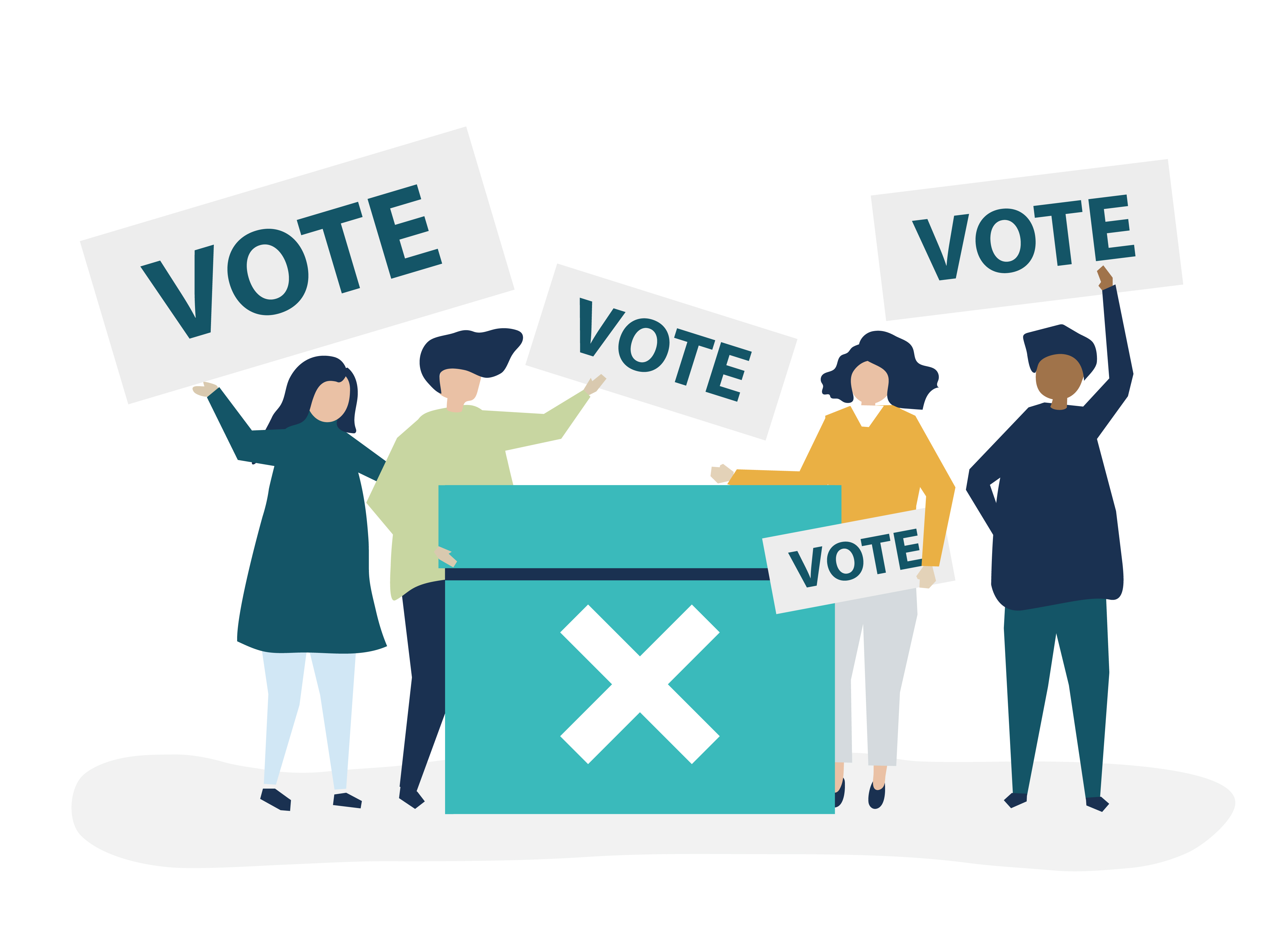
While conceptual symbols matter, operational artifacts hold immense practical weight. The transparent or secured ballot box and private voting booth are modern democratic anchors. They visualize individual political agency. By casting a ballot, a single citizen exercises direct sovereignty, demonstrating that political power flows upward from the populace rather than downward from an autocrat.
Classical Architectural Pillars
Greek and Roman revival architecture heavily influences democratic capitals worldwide. Stone pillars or columns—seen on legislative buildings and supreme courts—visualize structural support. Each pillar represents a distinct branch of government or a core constitutional pillar like freedom of speech, freedom of the press, and separation of powers. If one pillar cracks, the roof of democratic governance begins to tilt.
Historical Evolution and Cultural Context
Political iconography changes as societies evolve. What meant one thing in the 18th century can take on entirely different dimensions today.
Historically, early democracies relied on localized markers like civic crowns made of oak leaves in ancient Athens, which honored citizens who rendered exceptional service to the city-state. As nation-states expanded during the Enlightenment, symbols shifted toward universal human rights—such as the Phrygian cap worn during the French Revolution to denote freedom.
In contemporary society, these symbols face new tests. Digital media transforms physical emblems into viral digital avatars, changing how citizens protest or show civic pride. A raised fist, a specific color palette, or even a branded hashtag can mobilize thousands of voters within hours, proving that democratic iconography adapts to new technological mediums.
According to a historical overview by the Library of Congress, civic symbols are deliberately chosen to evoke shared historical memory and unify disparate populations under a common constitutional umbrella.
Common Misconceptions About Democratic Symbols
It's easy to misinterpret how political imagery functions in daily civic life. Clearing up these errors helps maintain a clearer view of how societies handle political expression.
- Assuming universal recognition: No single symbol is universally understood across every culture. A symbol of freedom in a Western parliamentary republic might carry different historical baggage in post-colonial regions.
- Confusing state branding with democracy: National flags and military insignia are often conflated with democracy, but they represent statehood and sovereignty generally—which can exist under absolute monarchies or dictatorships just as easily as democracies.
- Treating symbols as static: Symbols are not permanent artifacts with fixed meanings. As civil rights movements redefine public spaces, historical monuments and symbols undergo rigorous re-examination, removal, or recontextualization.
Frequently Asked Questions
Does democracy have an official global symbol?
No single official symbol represents democracy worldwide. While organizations like the Inter-Parliamentary Union promote democratic standards globally, cultures rely on a decentralized mix of regional emblems—such as the torch, the dove, or constitutional documents—to represent democratic values.
Why are neoclassical pillars used in government buildings?
Neoclassical architecture directly references ancient Athens, widely credited as the birthplace of direct democracy. Using stone columns signals stability, historical continuity, and the separation of powers required in a balanced republic.
How do modern protest movements create new democratic symbols?
Movements fighting for expanded suffrage or institutional reform often appropriate everyday objects—such as specific clothing items, umbrellas, or colored ribbons—to signal solidarity. Over time, these grassroot identifiers are codified into recognized symbols of civic resistance.
What is the difference between a state symbol and a democracy symbol?
State symbols (like royal coats of arms or national military flags) represent the physical territory and governmental apparatus, whereas democracy symbols specifically highlight citizen participation, civil liberties, and checks on political power.


