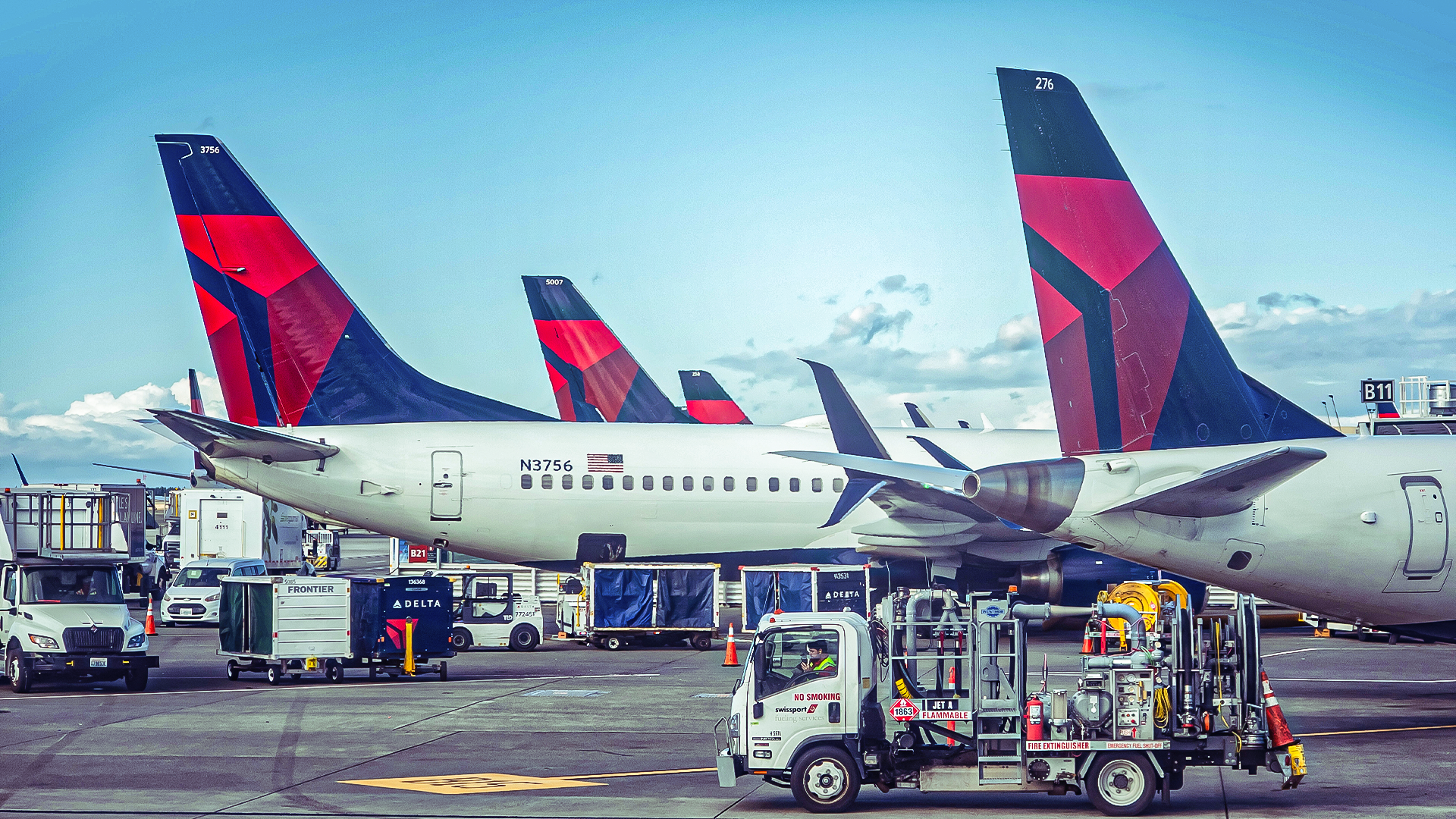
When Delta Air Lines introduced the Airbus A220-100 to its domestic fleet, the carrier changed passenger expectations for regional narrowbody flights. Originally designed by Bombardier as the CSeries CS100, this compact jet solves the historic cramped feel of short-haul travel by combining widebody-style cabin dimensions with exceptional fuel efficiency. If you're stepping onto one of these jets for a short hop between major business hubs, you'll notice oversized windows, wider seats, and quiet Pratt & Whitney geared turbofan engines right away.
Operating smaller mainline jets effectively requires balancing passenger comfort against high trip-cost economics. Delta configured its A220-100 fleet to seat roughly 109 passengers across a three-class layout, targeting thin trunk routes that don't justify a larger Boeing 737 or Airbus A320. Understanding how this aircraft performs, how its cabin is structured, and where it fits in the broader US aviation market helps frequent flyers make the most of their time in the air.
Technical Specifications and Performance
The A220-100 achieves its unique market position through advanced aerodynamics and lightweight materials. Built with carbon composite wings and lithium-aluminum alloy fuselage panels, the jet reduces structural weight while maintaining high strength.
- Length: 35.0 meters (114 feet, 10 inches)
- Wingspan: 35.1 meters (115 feet, 2 inches)
- Engines: Two Pratt & Whitney PW1500G geared turbofans
- Maximum Range: Approximately 3,100 to 3,400 nautical miles depending on payload
- Cruising Speed: Mach 0.78 to 0.80
Powering the aircraft are two Pratt & Whitney PW1500G geared turbofan engines. Unlike traditional turbofans where the fan spins at the same speed as the low-pressure turbine, a geared architecture lets the fan spin at its optimal slow speed while the turbine runs at high speed. This cuts fuel burn and emissions significantly per seat compared to older regional jets, while making takeoff remarkably quiet. To read more about the background here, Associated Press offers an excellent summary.
Delta Cabin Layout and Seating Configuration
Delta arranges its A220-100 fleet in a standard three-class configuration totaling 109 seats. Unlike cramped regional jets that force airlines to use narrow seats, the A220's wider fuselage enables a 2-3 layout in the main cabin without squeezing passengers.
- First Class: 12 seats arranged in a 2-2 layout. These feature modern contours, generous recline, and large entertainment screens.
- Delta Comfort+: 15 seats offering extra legroom in a preferred 2-3 configuration alongside dedicated overhead storage.
- Main Cabin: 82 seats in a 2-3 layout boasting 18.6-inch width—ranking as the widest main cabin seats in Delta's narrowbody fleet.
Every seat features individual power outlets, USB ports, and seatback touchscreens running Delta Studio entertainment. Furthermore, the cabin features dynamic LED ambient lighting that shifts tones depending on the flight phase.
Common Route Networks and Operations
Delta relies on the A220-100 for high-frequency business and connecting routes out of major coastal hubs. You'll frequently encounter the aircraft flying between airports like New York LaGuardia (LGA) and Boston (BOS) or Dallas/Fort Worth (DFW), as well as connecting midwestern hubs like Minneapolis-Saint Paul (MSP).
The aircraft's field performance allows it to operate out of airports with shorter runways or noise abatement procedures that restrict heavier narrowbody jets. For official corporate scheduling data and fleet announcements, visit the Delta News Hub.
Common Mistakes When Booking A220 Flights
Travelers often misjudge seating selection on this aircraft due to its unique 2-3 layout.
- Avoiding Middle Seats: Because the starboard side features a three-abreast configuration (A-C on the left, D-E-F on the right), booking blind can land you in a middle seat. Always select window or aisle options explicitly if you dislike being sandwiched.
- Overlooking Exit Constraints: Rows near emergency exits or bulkheads may have fixed armrests that house tray tables, slightly reducing internal seat width.
- Ignoring Wing Obstructions: Seats directly over the wings (typically rows 8 through 14) block downward views, though the windows themselves are roughly 15% larger than standard narrowbody cabin viewports.
To review official safety guidelines and aircraft registry standards, you can consult the Federal Aviation Administration.
Frequently Asked Questions
Does the Delta A220-100 feature free Wi-Fi?
Yes. Delta equips nearly all of its A220-100 aircraft with fast, free Delta Sync Wi-Fi for SkyMiles members, allowing streaming and web browsing throughout the flight.
How does the A220-100 differ from the A220-300?
The A220-100 is the shorter baseline variant, measuring 35 meters in length and seating around 100 to 120 passengers. The A220-300 is stretched by roughly 3.7 meters, accommodating 120 to 150 passengers with increased cargo capacity while sharing the same engine type and cockpit design.
Are overhead bins large enough for standard roller bags?
Yes. The A220 features oversized overhead bins designed to accommodate standard carry-on rolling bags wheels-first, reducing the need to gate-check bags on full flights.
What makes the A220 engine so quiet?
The Pratt & Whitney PW1500G utilizes a reduction gearbox that decouples the fan speed from the low-pressure turbine speed. This lowers blade tip speeds and reduces overall acoustic output, making the cabin noticeably quieter during taxi and climb phases.


