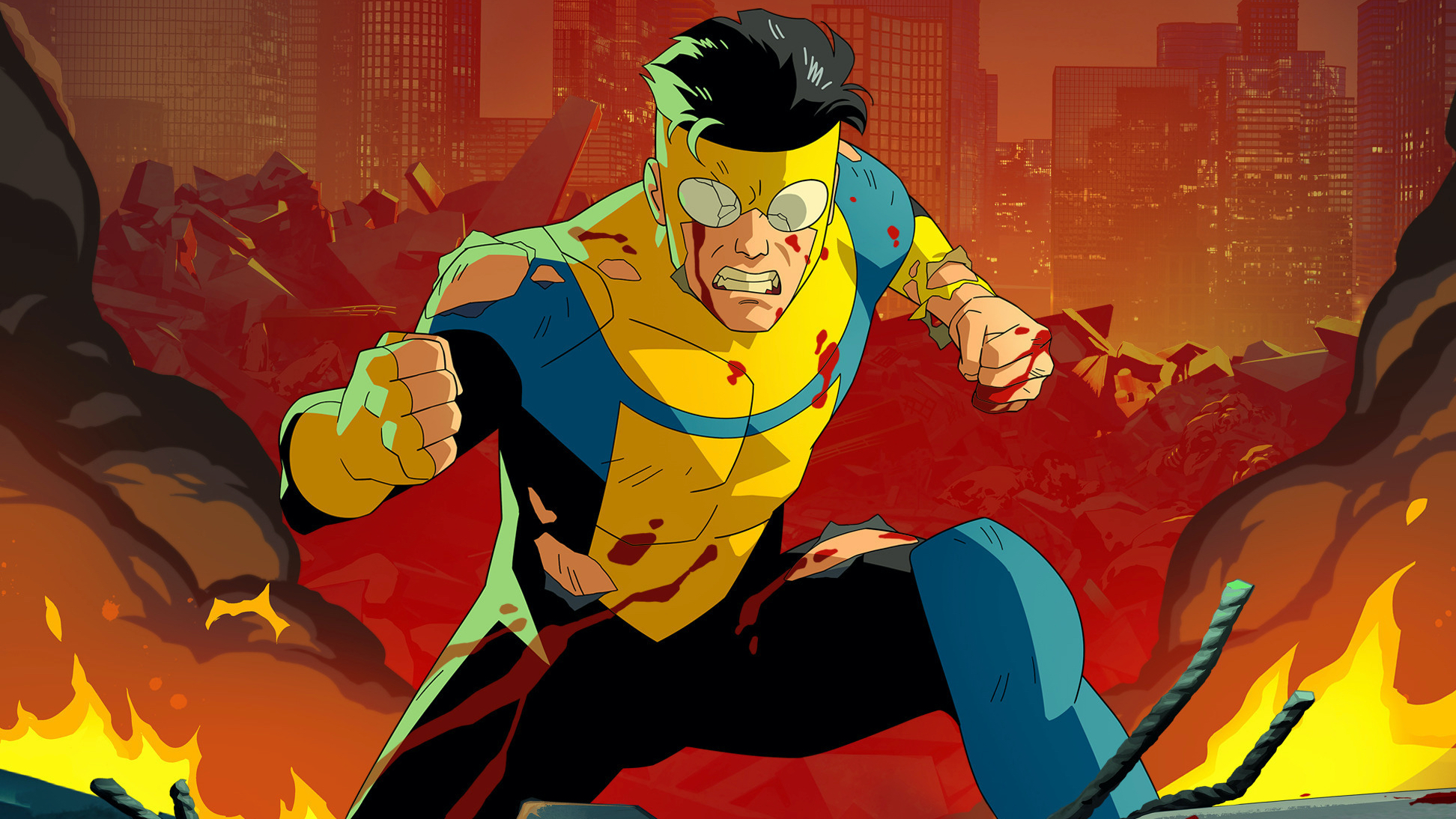
Subverting the Unbreakable Hero
Traditional comic book storytelling relies heavily on the illusion of stakes. Iconic characters face catastrophic threats, yet their cosmic status quo remains intact. Robert Kirkman’s Invincible disrupts this formula by treating invulnerability not as a clean power fantasy, but as a source of physical and psychological trauma. When a protagonist possesses near-limitless strength, the narrative doesn't become easier to write; it becomes a brutal exploration of what happens when unstoppable force meets unyielding reality.
The series uses classic tropes as a Trojan horse. It sets up familiar archetypes—the bright-eyed teenage novice, the noble alien mentor, and the shining league of protectors—only to subject them to uncompromising consequences. By examining how an unbeatable hero actually functions within a grounded ecosystem, the narrative exposes the inherent logistical and moral contradictions of traditional cape-and-cowl storytelling.
The Physics of Pain and the Myth of Easy Victories
In mainstream comic traditions, brawls between super-powered beings result in collateral damage that vanishes by the next issue. Invincible treats every punch thrown at supersonic speeds with catastrophic physical logic. When Mark Grayson takes a blow from an elite Viltrumite, buildings don't just crack; they collapse, and bystanders don't miraculously scatter out of harm's way.
- The Brutality of Durability: Being "invincible" doesn't mean feeling no pain. It means surviving injuries that would instantly kill a normal person, often while fully conscious.
- Collateral Reality: Fights have permanent architectural, economic, and emotional fallout. Cities take years to rebuild, and ordinary citizens live with the constant terror of collateral obliteration.
- The Cost of Restraint: Because Mark possesses immense power, his attempts to hold back often lead to worse outcomes, forcing him into impossible split-second calculations.
This deconstruction shatters the classic "hero's resilience" trope. Resilience usually reads as moral fortitude. Here, it reads as visceral endurance. Mark spends a significant portion of his early career hospitalized, bloodied, and questioning whether his very existence invites greater destruction to Earth.
Deconstructing the Mentor and the Legacy Hero
Every adolescent hero requires a guiding light, a pillar of wisdom to hand down the mantle of responsibility. In Invincible, that pillar is Omni-Man—an intentional subversion of the classic Superman archetype. Nolan Grayson's paternal guidance isn't built on altruism; it's an imperial conditioning program disguised as fatherly advice.
When the truth of the Viltrumite Empire comes to light, it breaks the legacy superhero trope entirely.
"We live for thousands of years. Humans are like pets to us."
This chilling revelation forces Mark to confront a terrifying question: Is morality a choice, or is it a biological trait overridden by genetic destiny? By turning the mentor figure into an existential threat, the narrative explores the burden of inherited legacy. Mark isn't just fighting villains; he's fighting his own DNA, terrified that every surge of adrenaline will turn him into his father.
The Morality of Lethal Force in a World Without Easy Answers
Traditional comic book heroes operate under a strict code against killing, resting on the meta-textual knowledge that villains will inevitably escape from prison to fight another day. Invincible exposes the systemic failure of this convention. When adversaries possess planet-shattering power, locking them in a high-tech cell is a temporary delay, not a solution.
Villains like Angstrom Levy or Conquest cannot be neutralized by a stern lecture or a punch to the jaw. They return relentlessly, putting everyone Mark loves in mortal danger. This forces a painful evolution away from the ideal hero archetype:
- The Optimistic Phase: Believing that every enemy can be reasoned with and that no life should ever be taken.
- The Pragmatic Fracture: Realizing that sparing a monster guarantees the slaughter of dozens of innocents in the next encounter.
- The Heavy Burden: Accepting lethal force not out of bloodlust, but as a tragic, necessary utility of ultimate power.
According to analysis by Comic Book Resources, this moral transition is what separates modern deconstructions from silver-age nostalgia. Mark doesn't enjoy crossing the line; it leaves permanent emotional scars, proving that taking a life—even to save thousands—diminishes the protector.
Why the Deconstruction Works Without Becoming Cynical
Many modern takes on the superhero genre lean heavily into nihilism, portraying all heroes as corrupt, selfish, or broken. Series like The Boys use satire to mock the very concept of altruism. Invincible takes a different path, functioning as a reconstruction wrapped inside a deconstruction.
Mark Grayson keeps trying to do the right thing simply because it's right, not because it's rewarded. The universe around him is cruel, unforgiving, and frequently hopeless, yet his stubborn commitment to empathy remains his defining trait. The narrative strips away the shiny veneer of superheroics to test whether pure heroism can survive in a hostile universe. By proving that it can—albeit at an immense psychological price—the story elevates itself above simple shock value.
Frequently Asked Questions
Is Invincible purely a parody of Superman?
Nolan Grayson serves as an exploration of what an alien protector with god-like powers would actually do if sent as an advance scout for an empire. However, the character evolves past simple parody into a complex study of generational trauma, ideological conditioning, and redemption.
How does the show handle the trope of secret identities?
Unlike traditional stories where secret identities protect loved ones indefinitely, Invincible demonstrates that high-profile superheroics make secrecy nearly impossible. Secrecy crumbles under the weight of brutal physical confrontations, putting family members directly in the crosshairs of cosmic enemies almost immediately.
Why are the fight scenes so graphic in the series?
The violence isn't included merely for shock value. It serves a narrative function: to strip away the sanitized abstraction of comic book combat and show the true biological and structural devastation caused by superhuman conflicts.
Does Mark ever truly become invincible?
The title is ironic. Throughout the series, Mark is consistently outmatched, beaten nearly to death, and forced to rely on resilience, strategy, and allies rather than an unbeatable status. His physical strength is constantly tested by beings who are older, faster, and far more ruthless.



