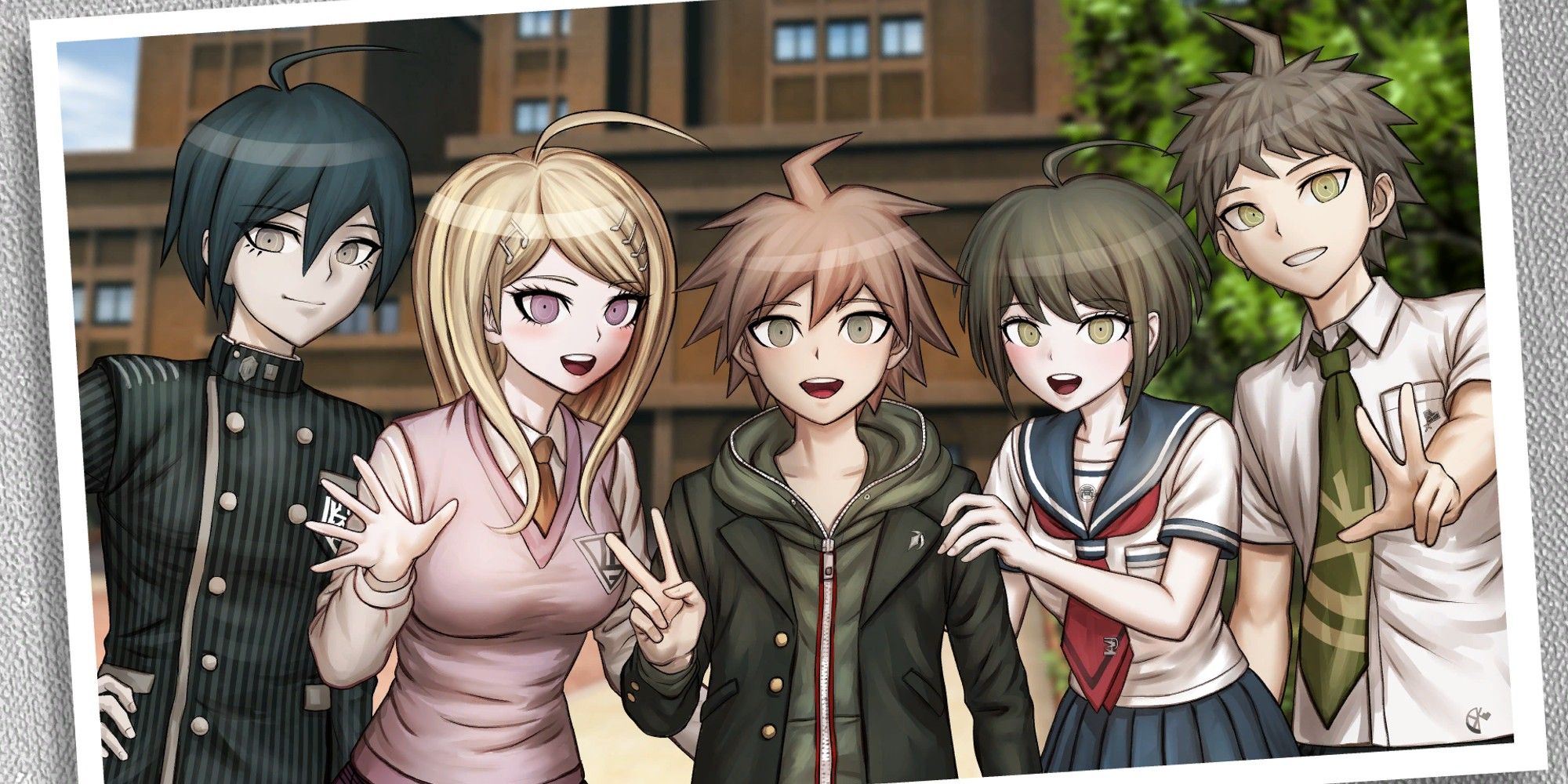
When you spend dozens of hours listening to trial arguments, execution announcements, and casual campus banter, you start recognizing vocal patterns. Voice casting directors in localization projects often double up on talent due to budget limits, studio constraints, or sheer appreciation for an actor's range. In the Danganronpa series, several primary and supporting characters across different games share the exact same English voice actors. Discovering these overlapping credits completely changes how you hear lines like hope, despair, and class trial objections.
The most notable casting overlaps span across Danganronpa: Trigger Happy Havoc, Danganronpa 2: Goodbye Despair, and Danganronpa V3: Killing Harmony. From main protagonists to bizarre Monokuma kids, understanding who shares a voice actor uncovers impressive acting range and explains why certain familiar tones keep popping up in unexpected classrooms.
The Protagonist and Antagonist Connection: Bryce Papenbrook
One of the most famous shared voice roles in the franchise belongs to Bryce Papenbrook. He brings life to two entirely different core archetypes who sit on opposite sides of the moral spectrum.
- Makoto Naegi (Trigger Happy Havoc): The ultimate average student thrust into a killing game, relying on pure optimism and absolute determination.
- Nagito Komaeda (Goodbye Despair): The brilliant, unpredictable agent of chaos obsessed with twisted ideals of hope.
Papenbrook shifts his delivery from an earnest, high-pitched everyman to a breathy, unhinged fanatic. When Nagito speaks, you can still catch tiny echoes of Makoto's vocal cadence underneath the unsettling calmness. It highlights how minor pitch adjustments and breathing styles let a single actor voice both the moral compass and the primary wild card of separate installments.
Surprising Duos Voiced by the Same Talent
Localization teams frequently push actors to stretch their vocal cords into completely opposite territories. Several pairs of characters sound nothing alike, yet share the exact same professional voice artist.
- Kyoko Kirigiri and Kaede Akamatsu: Erika Harlacher voices both the stoic, analytical detective of the first game and the warm, piano-playing protagonist of the third game. Kyoko stays low, calm, and distant, while Kaede projects bright, enthusiastic leadership.
- Hifumi Yamada and K1-B0: Lucien Dodge handles both the eccentric fanfiction creator and the earnest robot student. Hifumi's nasally, breathless projecting contrasts sharply against K1-B0's clean, slightly metallic, and composed delivery.
- Hiyoko Saionji and Kirumi Tojo: Kira Buckland pulls off one of the widest ranges in the entire series. She voices the sharp-tongued, bratty traditional dancer alongside the ultra-polite, sophisticated ultimate maid.
- Aoi Asahina and Angie Yonaga: Cassandra Lee Morris supplies the bubbly, athletic energy for Aoi and the creepy, island-cult zealot energy for Angie.
Monokuma and the Monokubs Crew
The bear himself requires a distinct, raspy personality, but the supporting robotic cast members also share roots with other human characters. Brian Beacock voices Monokuma, bringing out that iconic sadistic laugh, but he also lends his voice to Monosuke and Motherkuma.
Other Monokubs feature prominent series actors. Sean Chiplock voices Monotaro while also portraying the rigid, rule-obsessed Kiyotaka Ishimaru. Patrick Seitz handles the heavy lifting for the athletic powerhouse Nekomaru Nidai and channels a rougher tone into Monokid. Jason Wishnov pulls double duty as Byakuya Togami from the first game and the robotic Monodam from the second game, creating a hilarious mental image of the arrogant heir trapped inside a green rolling cylinder.
The V3 Voice Actor Pattern
Fans of the third mainline installment often point out a unique casting quirk: every single character in Danganronpa V3: Killing Harmony shares an English voice actor with a character from a previous game or official side project. This design choice creates a massive web of connections for long-time players.
- Shuichi Saihara shares his voice actor with Leon Kuwata (Grant George).
- Kaito Momota shares his voice actor with Kazuichi Soda (Kyle Hebert), meaning two of the most vocal, high-energy bros in the franchise come from the exact same vocal cords.
- Maki Harukawa shares her voice actor with Nagisa Shingetsu (Erica Mendez) from Ultra Despair Girls.
- Kokichi Oma shares his voice actor with Fuyuhiko Kuzuryu (Derek Stephen Prince), linking two characters known for aggressive posturing and complex defensive masks.
You can explore comprehensive actor lists and audio credits directly on Behind The Voice Actors or check detailed character relationship breakdowns on the Danganronpa Wiki.
Common Mistakes When Identifying Voice Actors
Many players assume that similar voice tones mean a shared actor, but localization studios often hire entirely different people who happen to share overlapping vocal registers. For example, some fans confuse Celeste Ludenberg's voice work with Angie Yonaga's, failing to realize different actors handled those roles across separate studio sessions.
Another common error involves mixing up the game voice cast with the Funimation anime adaptation cast. Outside of Bryce Papenbrook reprising Makoto Naegi, the anime dub recast almost every single role due to production schedules and studio locations changing between Texas and California. If you watch the anime instead of playing the games, you will hear a completely different set of voices.
Frequently Asked Questions
Do any voice actors play characters that murder each other?
Yes. Because actors frequently voice multiple roles within the same recording blocks, many voice artists have essentially had their characters argue with, betray, or murder their other characters during class trials.
Why do so many Danganronpa characters share voice actors?
Independent localization studios often rely on a localized pool of local talent based in Los Angeles or Texas. When casting a massive ensemble cast across multiple sequels, hiring trusted recurring actors ensures high quality while keeping production timelines manageable.
Are the Japanese voice actors reused as heavily?
Japanese voice casts maintain massive star power with distinct legendary voice actors like Megumi Ogata and Nobuyo Oyama, though minor background roles or non-playable characters still experience occasional doubling.
Did the voice cast change for Danganronpa S: Ultimate Summer Camp?
Most of the main English cast returned for the spin-off title, maintaining continuity for iconic roles established years prior across the trilogy.



