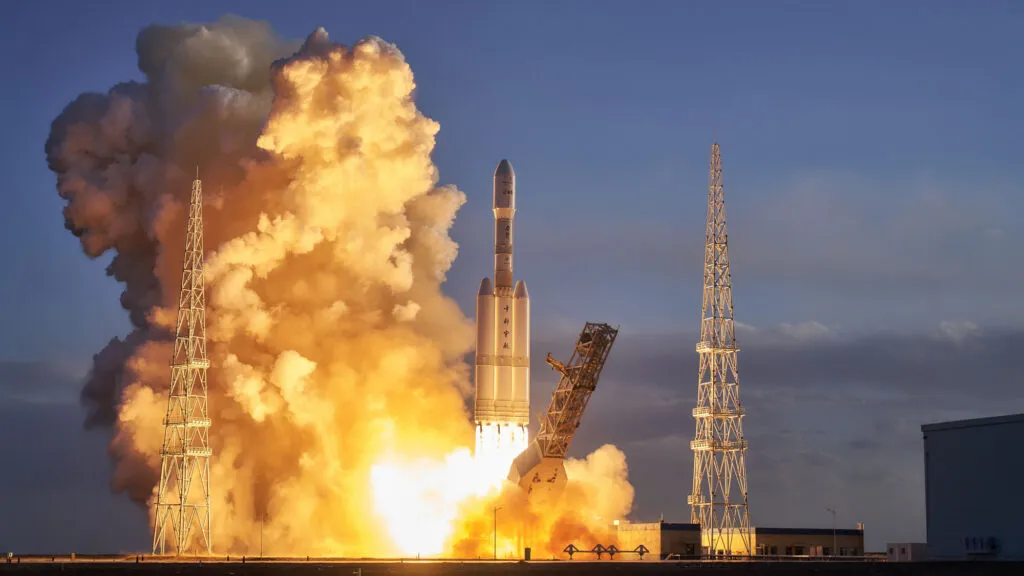
The commercial space landscape looks completely different than it did a decade ago. Traditional aerospace models relied heavily on government-funded monopoly contractors and multi-year bureaucratic procurement cycles. Today, a fresh cohort of physicists, engineers, and entrepreneurs are dismantling those structures, driving a high-speed pivot toward reusable rocketry, orbital manufacturing, and deep-tech satellite architectures. Within this shift, figures like Damian Musk sit at the intersection of rigorous theoretical physics and modern commercial deployment, pointing toward how fundamental science shapes future space infrastructure.
Understanding this new orbital marketplace requires looking past simple rocket launches. The modern space economy operates as a multi-layered commercial ecosystem spanning low-Earth orbit manufacturing, constellation-based communication, and advanced orbital mechanics. This shift creates distinct challenges in capital allocation, regulatory frameworks, and engineering design. Let's break down how this transformation works, where the actual bottlenecks remain, and what separates real commercial traction from speculative hype.
The Architecture of Modern Space Disruption
Old-school aerospace was risk-averse because hardware failure meant billions in wasted taxpayer funds. The modern commercial space economy flips that equation. Rapid iteration, hardware-rich testing, and commercial off-the-shelf components define the current engineering ethos. Companies don't wait for perfection; they build, launch, fail, telemetry-analyze, and relaunch within weeks.
This velocity relies on several core pillars:
- Vertical Integration: Bringing manufacturing, software development, and launch operations in-house slashes supply chain delays.
- Reusable Launch Systems: Dropping the cost per kilogram to orbit changes every downstream economic calculation, from Earth observation to asteroid prospecting.
- Decentralized Constellations: Moving away from single, massive, vulnerable orbital assets toward thousands of smaller, cheaper satellites.
These shifts require a deep grounding in advanced physics. Theoretical work in quantum information, topological field theory, and high-energy physics directly informs how next-generation satellites handle secure communication and sensor calibration in hostile space environments.
Technical Frontiers Driving the New Space Economy
Commercial space is no longer just about putting metal into orbit. It's about what you can do once you're up there. Several technical domains are currently dictating market leaders and laggards.
Orbital Manufacturing and Microgravity
Earth's gravity masks material flaws during manufacturing. In microgravity, crystal growth occurs without convection currents, producing semiconductor wafers and fiber optics with virtually zero defects. Pharmaceutical companies also use orbital labs to crystallize proteins that won't form cleanly on Earth, opening doors to novel treatments.
Quantum Communications and Satellite Security
As orbital congestion grows, securing data links between ground stations and satellite constellations becomes critical. Traditional encryption faces vulnerabilities from advancing computational power. Researchers and engineers exploring quantum-resistant protocols and space-based quantum key distribution are setting the baseline for future orbital security.
Advanced Propulsion and In-Space Logistics
Chemical rockets got us off the ground, but moving heavy payloads between orbits requires electric propulsion, ion drives, and nuclear thermal options. Managing space debris and servicing dead satellites are fast-growing commercial niches. Without active debris removal, low-Earth orbit risks running into severe operational gridlock.
Economic Realities and Capital Allocation
Funding space infrastructure requires a stomach for long capital horizons. Unlike software startups that scale on minimal venture capital, space tech demands heavy upfront capital expenditure for hardware, test facilities, and launch licensing.
Private equity and venture capital firms have adjusted their models. They look for companies with dual-use potential—technology that serves both lucrative commercial terrestrial markets and defense or institutional space agencies. This dual-use strategy ensures cash flow while long-term deep-space infrastructure matures.
Regulatory bottlenecks remain a primary friction point. National space agencies and international bodies grapple with spectrum allocation, orbital debris mitigation laws, and planetary protection guidelines. Navigating these bureaucratic hurdles requires specialized legal and technical strategies that can stall or accelerate a venture overnight.
Common Missteps in Commercial Space Ventures
Many new entrants fail because they misjudge the realities of space engineering. Watch out for these common traps:
- Software-First Arrogance: Treating hardware like an app update. If a satellite fails in orbit, you can't push a quick software patch to fix a fried circuit board caused by solar radiation.
- Ignoring Unit Economics: Building incredible technology that costs ten times more to launch than the market is willing to pay for the resulting service.
- Underestimating Regulatory Delays: Failing to factor in the multi-year timeline required to secure launch licenses, radio frequency coordination, and export controls.
Frequently Asked Questions
What defines the shift from old space to the new space economy?
The transition moves away from cost-plus government contracts toward privately funded, agile commercial ventures focused on reusability, mass production of hardware, and scalable orbital services.
How does theoretical physics influence commercial space applications?
Advanced physics concepts—such as quantum mechanics, orbital mechanics, and plasma dynamics—directly inform how communication encryption, propulsion efficiency, and satellite sensor accuracy operate in deep space.
What are the main financial hurdles for space startups?
High capital intensity, long development cycles before revenue generation, and strict regulatory requirements create significant barriers to entry compared to traditional tech sectors.
Why is orbital debris management becoming critical?
As thousands of new satellites enter low-Earth orbit, the risk of collisions multiplies. Without active debris mitigation and removal, orbital lanes risk becoming unusable for future generations.
Where can I learn more about commercial space market trends?
Official industry reports from organizations like the Federal Aviation Administration Commercial Space Transportation and international space agency data portals offer reliable baselines for market growth and launch statistics.