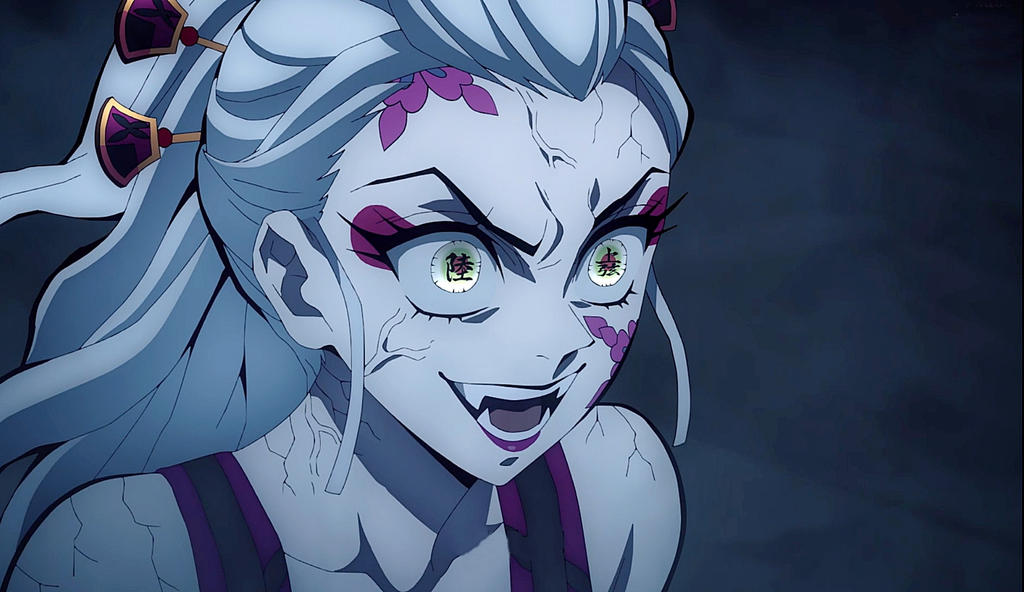
Villain writing in shonen anime often relies on pure malice or a hunger for absolute power. Daki and Gyutaro break this mold completely. As the dual-holders of Upper Rank Six in Demon Slayer, these siblings present a terrifying yet profoundly heartbreaking face to the Twelve Kizuki. They aren't evil because they want to rule the world. They are evil because society broke them before they even reached adulthood, forcing them into a brutal cycle of survival where cruelty was their only defense.
Understanding how Daki and Gyutaro redefine villain archetypes requires looking past their terrifying blood demon arts. Their dynamic exposes the thin line separating heroes from monsters, serving as a dark mirror to Tanjiro and Nezuko Kamado.
The Anatomy of Shared Monstrosity
Most anime antagonists operate as solitary units. Even when paired, they usually maintain separate identities and individual win conditions. Daki and Gyutaro defy this convention by sharing a single body and a single rank.
When Tanjiro, Inosuke, Zenitsu, and Tengen Uzui fight them in the Yoshiwara Entertainment District, they discover a unique combat mechanic: chopping off Daki's head doesn't kill her. Instead, it acts as a trigger releasing Gyutaro from inside her flesh.
- Dual Threat Design: Gyutaro possesses the lethal combat power and blood-slashing sickles, while Daki controls versatile Obi sashes capable of trapping victims across entire city blocks.
- The Shared Neck Constraint: To win, the Demon Slayer Corps must decapitate both siblings simultaneously—a near-impossible tactical requirement.
- Codependency as Power: Their strength scales directly from their emotional attachment to one another. If Gyutaro acted alone without carrying Daki's burdens, lore discussions suggest he could have climbed even higher through the Upper Ranks.
This physical integration mirrors their psychological unity. They are two halves of a fractured soul that refused to let go of each other, even when dragging one another down into hell.
The Dark Mirror to the Kamado Family
The brilliance of Koyoharu Gotouge's writing shines brightest when comparing Daki and Gyutaro to Tanjiro and Nezuko. Both sets of siblings faced unimaginable poverty and the brutal loss of their parents. Both pairs feature an older brother fiercely protecting a younger sister.
The divergence lies entirely in circumstance and choice. Tanjiro maintained his empathy despite tragedy, while Gyutaro and Ume (Daki's human name) were shaped by a society that tortured and abandoned them.
"We're the exact same," Tanjiro realizes during their clash, recognizing that bad luck and harsh winters could easily have placed him and Nezuko on the same blood-stained path.
Gyutaro was born in the lowest slums of the Yoshiwara district, despised for his grotesque appearance before he even spoke a word. People beat him, starved him, and treated him like vermin. When Ume was born with striking beauty, she became his sole source of pride and human connection. When Ume was burned alive as a child for defending her brother, Gyutaro snapped, murdering the adults who harmed her. Upper Rank Two, Doma, found them bleeding in the snow and turned them into demons, offering a monstrous salvation to children whom humanity had already discarded.
Rejecting Redemption Without Losing Sympathy
Traditional villains either receive a clean redemption arc or die unremembered. Daki and Gyutaro reject this binary. They die screaming, bickering, and blaming each other for their defeat, refusing to embrace a tidy moral lesson in their final moments.
Gyutaro hurls venomous words at his sister, accusing her of being a drag on his potential. Yet, as the flames of purgatory consume them, Gyutaro remembers his promise to protect her. He hoists her onto his back just like he did when she was a fragile human child in the snow.
Rather than walking toward redemption, they choose damnation together. Gyutaro tells Ume to run away from him in the next life so she won't be born cursed with an ugly brother, but Ume clings to his back, screaming that she wants to be with him forever. This refusal to repent makes them painfully human. They don't apologize for their sins; they only regret that they couldn't protect each other from a world that hated them first.
Why This Archetype Elevates Shonen Antagonists
By grounding upper-level villains in trauma rather than abstract greed, Demon Slayer shifts the emotional weight of battles. Every drop of blood spilled carries historical context.
- Empathy Through Backstory: Viewers understand the root of Gyutaro's toxic envy, turning what could have been a generic monster into a tragic victim of generational poverty.
- Subverting the Power Fantasy: The heroes don't just defeat an evil entity; they dismantle a tragic bond forged in absolute misery.
- Complex Morality: It forces the Hashira to question the nature of evil, establishing that many demons are simply humans who suffered beyond the breaking point.
You can explore more about how character arcs are structured across the series via the Demon Slayer Official Portal. For a broader literary look at how sibling dynamics function in modern fiction, check out analysis on Crunchyroll News.
Frequently Asked Questions
Why couldn't Daki and Gyutaro be killed by regular decapitation?
Because their life force was split and anchored primarily through Gyutaro. Even when Daki's head was severed, Gyutaro's presence inside her kept her cells regenerating, which is why both heads had to be cut off at the exact same time.
Are Daki and Gyutaro biologically related?
Yes, they are biological siblings born in the slums of the Yoshiwara Entertainment District, with Gyutaro being the older brother and Ume (Daki) being the younger sister.
Why did Gyutaro keep Daki inside his body?
Gyutaro stored himself within Daki's body as a tactical defense mechanism and a psychological shield. It kept him hidden from the Demon Slayer Corps while allowing Daki to maintain her persona as an Oiran in the pleasure houses.
How do Daki and Gyutaro compare to Akaza?
While Akaza's tragedy stems from losing his martial arts family and a deep-seated self-loathing regarding his strength, Daki and Gyutaro's tragedy is rooted in societal rejection, poverty, and mutual codependency as abused siblings.



