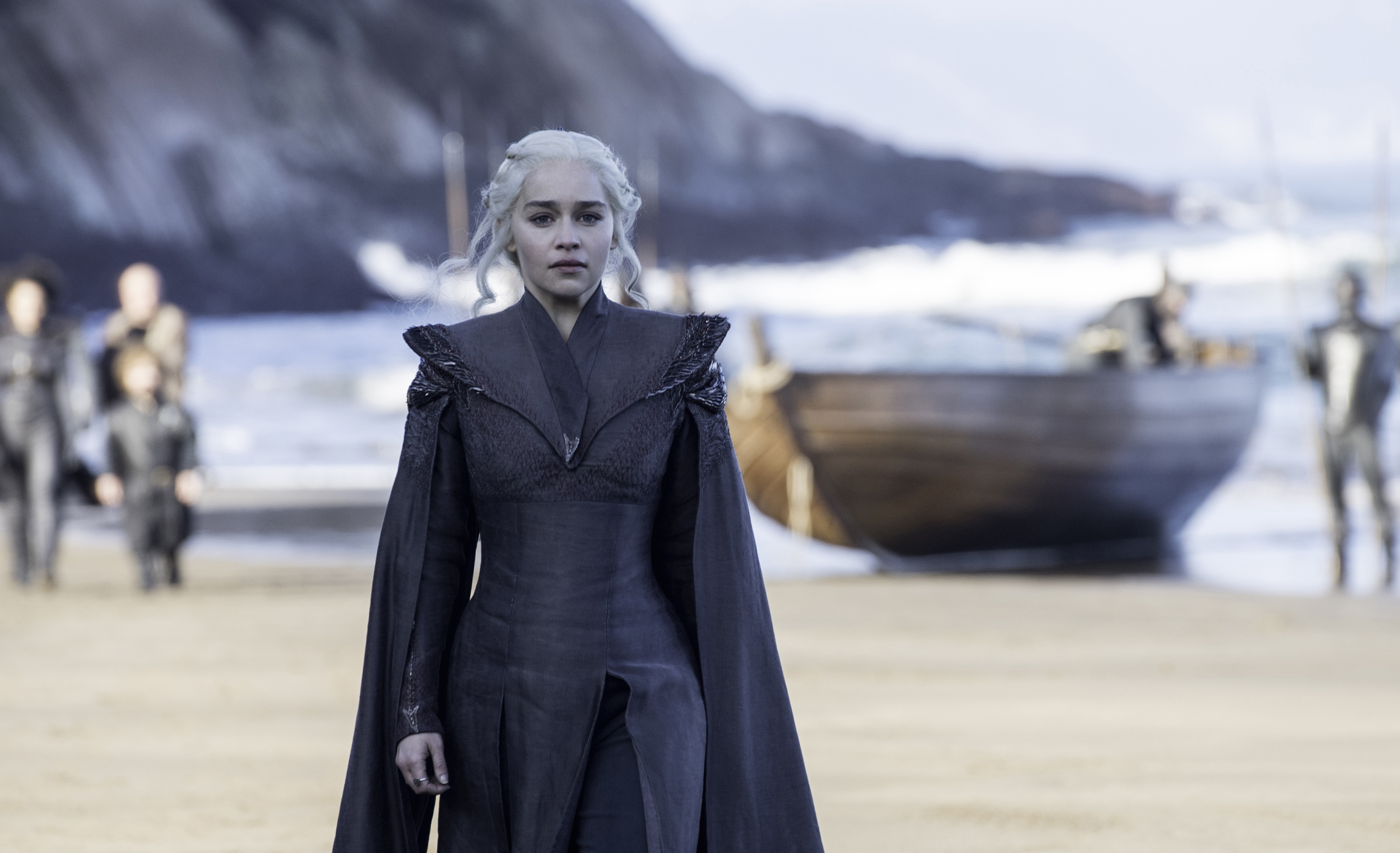
Daenerys Targaryen’s journey from a terrified exile to a conqueror consumed by fire is one of modern fiction's most debated character trajectories. Starting as a powerless pawn traded for an army, she forged an identity as the Breaker of Chains, a title that resonated with millions of viewers. Yet her narrative culminated not in a triumphant, peaceful reign, but in a descent into absolute authority that destroyed her. This transformation tracks how absolute moral certainty, combined with unchecked military might, reshaped a liberator into a tragic monarch.
Understanding this shift requires looking past simplified labels like "Mad Queen" and examining the structural pressures of her rise. Her arc exposes the dangerous friction between wanting to save the world and believing you were exclusively chosen to rule it. By tracking her journey across Essos and Westeros, we can see how her virtues gradually hardened into fatal flaws.
The Crucible of Exile: From Pawn to Icon
Daenerys begins her story stripped of agency. Sold to Khal Drogo by her abusive brother Viserys, she learns to survive within the brutal hierarchy of the Dothraki. Her adaptation isn't merely passive; she masters their language, earns the respect of her khalasar, and transforms her forced marriage into a genuine partnership.
When Drogo dies and she walks into his funeral pyre, she undergoes a symbolic rebirth. Hatching three stone dragon eggs provides her with literal and political firepower. Crucially, this moment cements her core worldview: she is not an ordinary survivor, but a figure touched by destiny. That belief in her own exceptionalism becomes both her greatest protective armor and the seed of her eventual tragedy.
The Breaker of Chains: Justice vs. Mercy
The middle phase of her journey establishes her moral authority. In Astapor, she trades a dragon for the Unsullied army, only to turn her forces against the masters, liberating thousands of slaves. Titles like Khaleesi, Mother of Dragons, and Breaker of Chains cement her status as a champion of the oppressed.
However, her time ruling Meereen exposes the grim reality of governance. Liberation is clean; administration is messy.
- Economic collapse: Abolishing slavery destroys Meereen's financial foundation, sparking civil unrest.
- Asymmetric warfare: The Sons of the Harpy wage a covert campaign of terror against her soldiers and freedmen.
- Moral compromise: To keep the peace, she makes agonizing concessions, including reopening the fighting pits and executing enemies without fair trials.
These struggles reveal an escalating pattern: whenever her authority is challenged, her instinct defaults to retributive violence. Crucifying the masters of Meereen wasn't just justice; it was an early sign that she viewed mercy as a weakness and dissent as treason.
Isolation and the Cost of Righteousness
As Daenerys finally crosses the narrow sea to Westeros, her support structure collapses. Unlike the freed slaves of Essos who viewed her as a messiah, the people of Westeros view her as a foreign invader.
Her advisors—Tyrion Lannister and Varys—frequently counsel caution, but their political maneuvering often backfires, costing her key allies and isolating her emotionally. The loss of Jorah Mormont and Missandei strips away the few voices capable of tempering her worst impulses. Furthermore, discovering that Jon Snow has a superior claim to the Iron Throne threatens the foundational myth of her entire life: that she is the rightful, singular heir destined to save the realm.
When she utters the famous line, "Let it be fear," she abandons the pretense of winning hearts. She realizes that Westeros will not love her, so she resolves to rule through terror, mirroring the tyrannical dynasty she originally set out to overthrow.
Common Mistakes in Analyzing Daenerys's Arc
Viewers and critics often misinterpret her final turn because they view her story through binary lenses. Avoiding these pitfalls yields a clearer reading of the text:
- Assuming she was "mad" from season one: Daenerys starts as genuinely compassionate. Her cruelty develops organically as a response to trauma, betrayal, and the corrupting nature of absolute power.
- Blaming bad writing alone: While pacing in the final television season accelerated her downfall, the psychological and narrative groundwork for her ruthlessness was laid years prior in both the books and the show.
- Treating her as a traditional villain: George R.R. Martin's writing explicitly subverts traditional fantasy tropes. Daenerys is a cautionary tale about how easily a savior complex morphs into tyranny when armed with unchallengeable weapons.
For a deeper dive into the broader literary themes of the series, check out the George R.R. Martin Official Website. To explore how HBO adapted these complex arcs for television, visit HBO.
Frequently Asked Questions
Why did Daenerys burn King's Landing after it surrendered?
By the time the city bells rang, Daenerys felt utterly isolated. She had lost her closest friends, her armies were decimated, her claim to the throne was contested by Jon Snow, and she realized the people of Westeros would never love her the way Essos did. Stripped of her emotional anchor, she chose to use fear to enforce her vision of a "new world," treating the entire city as complicit in her rejection.
Was her descent into tyranny foreshadowed earlier in the story?
Yes. Throughout her campaign, Daenerys repeatedly threatened entire cities with total destruction (such as Qarth, Astapor, and Yunkai) when crossed. Her execution of Mirri Maz Duur, the crucifixion of the Meereenese masters, and her frequent reliance on dragonfire to solve complex political problems signaled her willingness to employ extreme violence long before the finale.
Did her advisors cause her downfall?
Tyrion and Varys played a significant role through strategic miscalculations that weakened her military position and delayed her campaigns. However, their caution was a reaction to her inherent volatility. Her downfall ultimately stemmed from her absolute refusal to compromise her self-image as a divinely appointed ruler.
Why is her arc considered a tragedy rather than a villain origin story?
In classic Greek and Shakespearean tragedy, the protagonist possesses noble traits—courage, empathy, and a desire to help the downtrodden—that become twisted by fatal flaws like hubris and isolation. Daenerys genuinely wanted to break oppressive systems, but her belief that she alone could define justice made her the very monster she sought to destroy.


